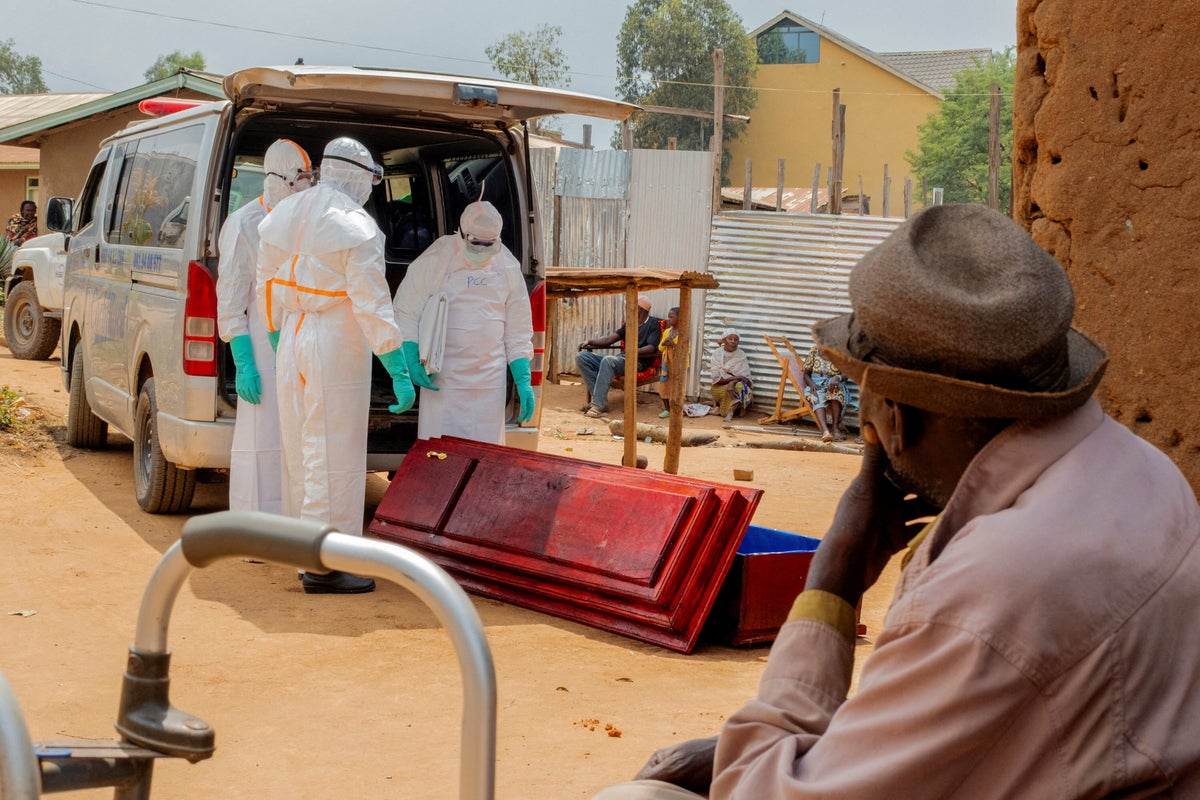
The declaration of a Public Health Emergency of International Concern (PHEIC) by the World Health Organization on May 17, 2026, exposes a critical vulnerability in global health security: the conventional containment playbook for Filoviruses is structurally incompatible with rare genetic variants. The current outbreak in the Democratic Republic of Congo (DRC) and Uganda—surpassing 300 suspected cases and 90 deaths within days of official confirmation—is driven by the Bundibugyo ebolavirus (BDBV). This marks only the third recorded emergence of this specific strain, following the 2007 outbreak in Uganda and the 2012 outbreak in Isiro, DRC.
The announcement by Congolese Health Minister Samuel Roger Kamba to establish three dedicated Ebola Treatment Centres (ETCs) in the conflict-prone Ituri province is an essential reactive step to relieve overwhelmed regional referral hospitals. However, the operational reality is that physical isolation infrastructure alone cannot compensate for a dual systemic deficit: a total absence of approved countermeasures combined with acute geopolitical volatility. Mitigating this outbreak requires a departure from standard epidemiological responses, shifting from vaccine-mediated suppression to aggressive structural containment and syndromic supportive care. Meanwhile, you can explore other developments here: The Brutal Truth About Minute Alzheimer Tests You Are Not Being Told.
The Therapeutic Deficit Framework
The primary structural bottleneck of the BDBV outbreak is the absolute irrelevance of the existing biomedical arsenal. The highly successful ring-vaccination strategies deployed in recent Zaire ebolavirus (EBOV) outbreaks are useless here.
Antigenic Divergence and Vaccine Inefficacy
The ERVEBO vaccine (rVSV-ZEBOV) and the two-dose Zabdeno/Mvabea regimen are designed specifically to target the glycoprotein of the Zaire strain. Because the amino acid sequence identity between the surface glycoproteins of EBOV and BDBV diverges by roughly 35% to 40%, these interventions yield no cross-protective immunity. The epidemiological consequence is immediate: the effective reproduction number ($R_0$) cannot be artificially suppressed via ring vaccination. Containment relies entirely on the mechanical interruption of transmission chains. To explore the complete picture, check out the detailed analysis by Psychology Today.
The Therapeutic Void
Monoclonal antibody therapies such as Ebanga (Ansuvimab) and Inmazeb (REGN-EB3)—which dramatically reduced mortality rates in recent EBOV epidemics—do not neutralize BDBV. This leaves clinicians with zero approved targeted antivirals. The clinical consequence is a forced regression to optimized supportive care (intravenous fluid resuscitation, electrolyte stabilization, and symptomatic management). Historically, BDBV exhibits a lower case fatality rate (roughly 25% to 50%) compared to Zaire ebolavirus (60% to 90%). However, the absence of targeted therapeutics means that population-level mortality will be dictated entirely by the baseline operational capacity of the local healthcare infrastructure.
The scale of this deficit was confirmed by Africa CDC Director-General Jean Kaseya, who noted that response agencies are operating without established vaccines or therapeutics, forcing a reliance on unproven candidate protocols currently undergoing emergency evaluation.
Operational Logistical Contraints in High-Velocity Vector Zones
The epicenter of the outbreak, the Mongwalu health zone within the Ituri province, presents an exceptionally hostile environment for disease surveillance and patient isolation. The interaction between geographic isolation and population mobility creates a high-velocity vector zone that accelerates transmission while impeding intervention.
The Transit Corridor Dilemma
Mongwalu is an artisanal gold mining hub characterized by high population turnover and fluid transit corridors. Miners, traders, and laborers move continuously between remote extraction sites, regional urban centers like Bunia and Goma, and neighboring countries like Uganda. This movement explains why, within 72 hours of the initial outbreak confirmation, secondary transmission chains had already been identified in Goma and the capital city of Kinshasa, over 1,000 kilometers away. When an asymptomatic or paucisymptomatic individual enters a high-density, unregulated transit network, contact tracing accuracy degrades exponentially.
Infrastructure Decay and Supply Line Disruption
The deployment of the 7 tons of medical supplies and the 35-expert response team dispatched by the WHO faces severe physical bottlenecks. Ituri possesses virtually no paved road networks connecting its interior health zones to the primary logistical hubs. Moving heavy equipment, personal protective equipment (PPE), and bio-secure construction materials across mud roads requires complex multi-modal transport lines that are highly vulnerable to seasonal weather disruptions and mechanical failures.
The logistical cost function of establishing an ETC in this environment is non-linear; as distance from a primary airfield increases, the time-to-deployment escalates dramatically, allowing the virus to outpace the perimeter of containment.
[Logistical Hub: Bunia]
       │
       ▼ (Unpaved Roads / 1,000km Transit Corridor)
[Supply Line Bottleneck: Extreme Weather & Mechanical Risk]
       │
       ▼
[High-Velocity Vector Zone: Mongwalu Mining Sites] ──(Population Flight)──► [Urban Centers: Goma / Kinshasa]
Security Metrics and Institutional Distrust
The operational efficacy of the three planned ETCs in Ituri is fundamentally contingent upon the local security environment. Eastern DRC is an active conflict zone, populated by multiple armed rebel groups and subjected to long-standing humanitarian instability.
The Security Tax on Public Health
In active conflict zones, healthcare delivery is subjected to what can be termed a "security tax." Epidemiologists, contact tracers, and burial teams cannot operate safely without armed escorts or extensive community negotiations. This introduces a lethal delay into the surveillance lifecycle:
- Delayed Identification: Suspected cases remain in the community longer, increasing the number of secondary exposures.
- Interrupted Contact Tracing: Active monitoring of exposed contacts is frequently suspended due to rebel incursions or civilian displacement events.
- Impaired Isolation: Patients flee treatment centers during security alerts, cross-contaminating new demographic zones.
The Weaponization of Health Interventions
Decades of conflict and institutional neglect have generated deep structural distrust toward centralized authorities and international organizations among local populations. When armed health teams arrive to enforce quarantine and remove sick relatives to isolated ETCs, the intervention is frequently perceived not as medical aid, but as hostile external coercion. During previous outbreaks in Beni and Butembo, this friction manifested in community resistance, avoidance of health facilities, and direct physical attacks on ETC infrastructure.
The announcement of new centers in Ituri will likely encounter identical behavioral barriers unless community-level leadership is integrated into the operational architecture from day one.
A Data-Driven Strategic Framework for Containment
Given the lack of medical countermeasures and the severe geopolitical constraints, standard containment strategies must be re-engineered. The response architecture must prioritize structural insulation and rapid diagnostic decentralization.
Decentralized Diagnostic Architecture
Relying on a centralized reference laboratory in Bunia or Kinshasa creates an unsustainable sample-to-result turnaround time. If a blood sample requires 48 hours of transit through conflict zones to undergo Polymerase Chain Reaction (PCR) testing, the patient remains un-isolated or co-mingled with uninfected patients in general triage wards. The deployment of mobile GeneXpert diagnostic platforms capable of processing assays in field conditions within hours is mandatory. Minimizing the diagnostic window is the single most effective lever to reduce nosocomial amplification.
Community-Managed Low-Complexity Isolation
Because large-scale ETCs require extensive logistical lead times and are prime targets for regional suspicion, the formal centers must be supported by a decentralized network of low-complexity, community-led isolation sites. These local units should focus on basic hydration and non-invasive supportive care, managed by trained local health workers rather than foreign personnel. This minimizes the distance patients must travel, reduces community resistance, and prevents the primary regional referral hospitals from becoming vectors of amplification.
Strict Border Health Harmonization
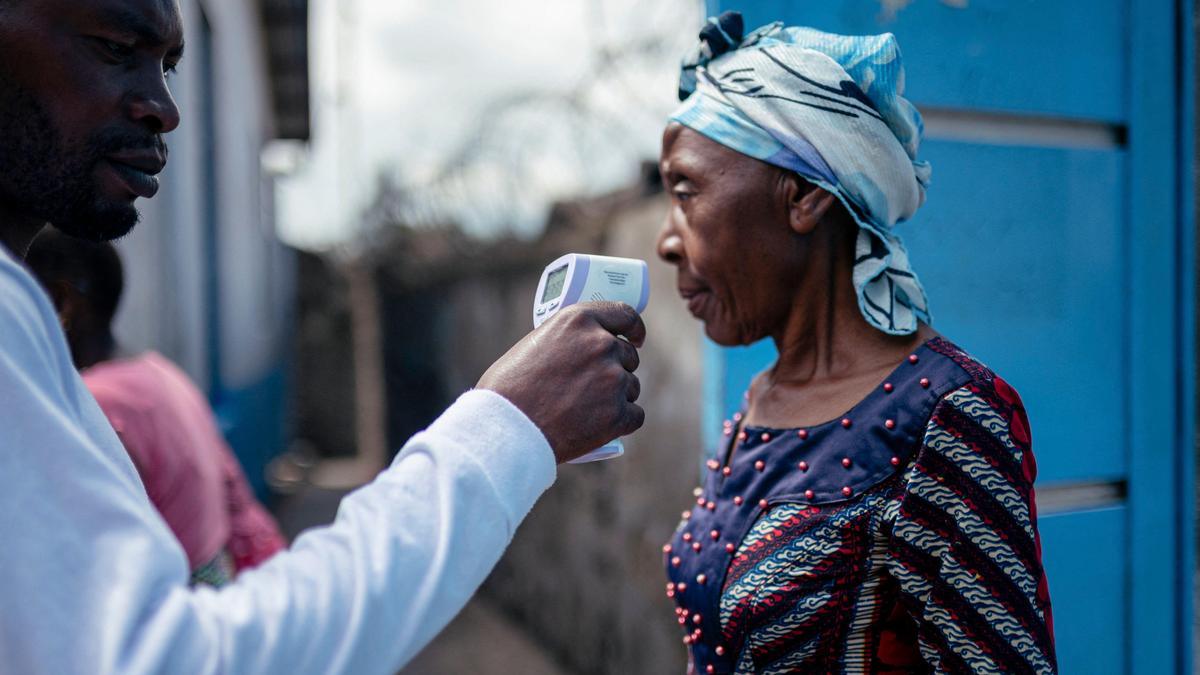
The detection of cases in Uganda highlights the cross-border nature of the Bundibugyo reservoir. The East African Community must move beyond rhetorical solidarity and establish synchronized border health screening protocols. This requires the immediate deployment of thermal imaging, rapid health questionnaires, and decentralized isolation holding bays at all major official and unofficial entry points along the DRC-Uganda border. Because the incubation period of Ebola ranges from 2 to 21 days, border screening will not catch every case; therefore, it must be paired with real-time, cross-border digital data sharing between the surveillance teams of both nations to track known contacts moving across frontiers.
The current situation in Ituri is not merely a localized health crisis; it is a stress test of global outbreak readiness when vaccines are taken off the table. The containment of the Bundibugyo variant will depend entirely on the speed of physical infrastructure deployment, the strict enforcement of infection prevention protocols within regional hospitals, and the ability to navigate a highly volatile human landscape.