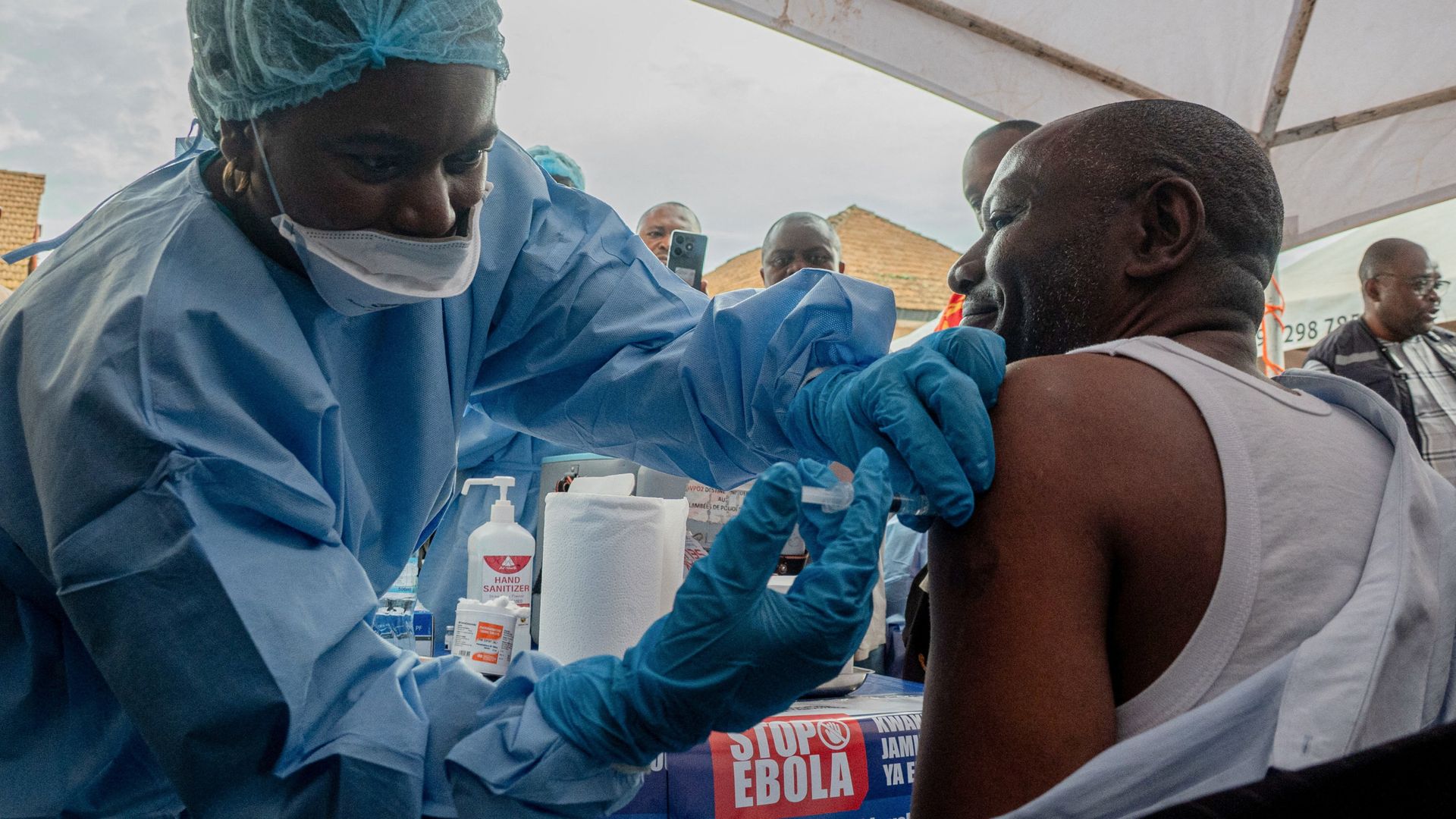
Crossing five thousand deaths in the Democratic Republic of the Congo is not merely a grim accounting milestone; it is a diagnostic signal that standard outbreak containment loops have failed to outpace transmission in a fragile environment. Conventional headline reporting treats a high death toll as an endpoint or a static measure of horror. In epidemiological operations, however, a mortality figure above five thousand in the DRC reflects a compound system failure across four operational bottlenecks: late case detection, pathogen-specific clinical gaps, armed conflict and displacement, and workforce or community trust fractures.
To understand why mortality climbs past five thousand—and what actually changes transmission trajectories—this analysis breaks down the epidemic's mechanics, distinguishes verified surveillance facts from analytical hypotheses, maps the cause-and-effect chains that standard coverage glosses over, and sets out a sequenced operational playbook with clear limits.
Deconstructing Conventional Coverage and Its Analytical Blind Spots
Standard news coverage of major Ebola outbreaks in the DRC typically relies on a predictable narrative arc: a big round death count, quotes expressing grief or alarm, a list of affected provinces, and a call for international solidarity. That structure satisfies basic awareness, yet it obscures how outbreaks actually grow or stall.
The first blind spot is treating cumulative deaths as a direct measure of current outbreak velocity. Cumulative mortality is a lagging indicator. Deaths recorded in November reflect exposures, clinical care delays, and transmission dynamics from weeks earlier, depending on the interval between symptom onset and fatal outcome. A rising cumulative total tells you severity has accumulated; it does not by itself tell you whether the effective reproduction number—the average number of secondary cases generated by one infectious person in a population with mixed immunity and control measures—is above or below one.
The second blind spot is conflating virus species and medical countermeasures. Public discussion often assumes that every Ebola outbreak in the DRC operates under the same clinical toolkit as outbreaks caused by Orthoebolavirus zairense (Zaire ebolavirus). Surveillance reporting in the 2026 DRC outbreak has identified Bundibugyo virus (Orthoebolavirus bundibugyoense), where approved vaccines or virus-specific treatments are not established the way they are for Zaire ebolavirus, shifting clinical management heavily toward supportive care, early symptom recognition, and non-pharmaceutical containment. Treating all ebolaviruses as interchangeable erases critical constraints on what health teams can deploy immediately.
The third blind spot is treating armed conflict, hunger, and weak primary care as mere "background context" rather than active variables in the transmission equation. In eastern DRC, decades of insecurity, population displacement, and severe food insecurity do not sit politely outside public health operations. They alter mobility patterns, close or damage clinics, interrupt supply chains, and force families to weigh immediate survival risks against seeking formal medical care.
Verified Surveillance Facts Versus Educated Hypotheses
Rigorous outbreak analysis requires separating confirmed public health reporting from analytical inference. Mixing the two produces false certainty; separating them clarifies where intervention will actually bite.
What Is Established by Surveillance and Clinical Reporting
- Cumulative scale and severity: Reporting on the 2026 DRC outbreak indicates that confirmed cases have climbed past 11,000 and deaths have surpassed 5,000 (reaching over 5,500–5,600 deaths in November 2026 reports), making it the largest Ebola outbreak recorded in the country.
- Geographic spread and cross-border exposure: Transmission has spanned multiple provinces in the DRC—including eastern and northern areas such as Ituri and North Kivu, alongside wider provincial reporting—with cross-border travel and imported cases documented outside the country (such as in Uganda, Kenya, and Nigeria during the 2026 wave).
- Pediatric burden and late detection: Surveillance reporting highlights a heavy toll on children—including high mortality among young children—and indicates that a large share of recorded deaths occur in the community rather than inside treatment facilities, signaling delayed presentation or unreached cases.
- Countermeasure and diagnostic realities: Bundibugyo virus lacks a licensed vaccine or specific antiviral proven for routine deployment in the same manner as Zaire ebolavirus countermeasures, meaning outbreak control relies heavily on diagnostic confirmation, isolation, contact tracing, safe and dignified burials, and community engagement while research and trials proceed.
- Operational disruptions: Health workers face severe pressures, including insecurity near facilities, displacement, and payment or staffing disputes that can interrupt care delivery.
Educated Hypotheses Requiring Ongoing Verification
- True incidence likely exceeds confirmed counts: Because healthcare access is uneven, early symptoms overlap with endemic febrile illnesses such as malaria, and insecurity restricts field teams in parts of the affected zones, confirmed case and death totals almost certainly understate total infections and community deaths.
- Faster early growth reflects network connectivity and detection shifts: When an outbreak reaches major thresholds faster than an earlier benchmark (such as crossing 1,000 confirmed cases in roughly 40 days versus ~235 days in the 2018 DRC outbreak), that acceleration likely reflects a combination of higher mobility along trade and displacement corridors, multi-focus seeding, and changes in testing and reporting capacity rather than a single cause alone.
- Community deaths amplify secondary transmission: When patients die outside specialized care units without prior isolation or full contact identification, household caregiving and traditional burial practices carry elevated exposure risk unless safe burial teams and trusted local mediators are integrated early.
The Four Structural Pillars of Outbreak Persistence
Rather than listing isolated challenges, an operational diagnosis organizes why an outbreak crosses five thousand deaths into four interdependent pillars. Weakness in any one pillar degrades the return on investment in the others.
Pillar 1: Case Detection and Triage Latency
Ebola transmission is driven largely by direct contact with blood, secretions, organs, or other bodily fluids of symptomatic infected people or contaminated materials and bodies. A patient is not maximally contagious during the incubation period before symptoms appear, which gives public health systems a theoretical window to find and isolate cases early. In practice, early symptoms—fever, fatigue, muscle pain, headache, followed by gastrointestinal symptoms—look indistinguishable from malaria, typhoid, or other common infections without laboratory testing.
When rural clinics lack rapid sample transport, reliable diagnostics, or clear triage pathways, suspected cases either stay at home or visit general facilities without strict infection prevention and control. Every day of delay between symptom onset and isolation lengthens the window during which household members, neighbors, and health workers can be exposed. High rates of community deaths point directly to this latency: patients are either arriving too late for supportive care to change outcomes or never reaching a treatment center at all.
Pillar 2: Containment Velocity Versus Transmission Speed
Outbreak control is a race between two clocks: the serial interval and infectious period of the virus on one side, and the speed of case investigation, contact tracing, ring or targeted measures, and safe burial on the other. When transmission is concentrated in a single accessible district, contact tracers can map chains of exposure before tertiary cases emerge.
Once an outbreak spans multiple provinces and active conflict zones, containment faces a combinatorial problem. Displaced people move along river, road, and border routes; armed clashes force temporary pauses in movement or evacuations; and incomplete lists of contacts leave unobserved branches of transmission alive. A containment system operating at 60% completeness in a low-mobility setting might still drive transmission down; the same 60% completeness in a high-mobility, conflict-affected setting allows chains of transmission to jump to new health zones faster than teams can close old ones.
Pillar 3: Clinical Capacity and Countermeasure Constraints
Mortality in an Ebola outbreak is shaped by both viral virulence and the quality and timing of clinical care. Early supportive care—managing fluid and electrolyte balance, treating secondary infections, and monitoring organ function—improves survival odds compared to late presentation or untreated dehydration and shock.
When a specific species such as Bundibugyo virus has no approved vaccine or targeted antiviral ready for standard rollout, clinical teams cannot rely on a silver-bullet medical intervention to offset late arrival or strained facilities. Furthermore, if healthcare workers are unpaid, under-protected, or forced to shelter from nearby fighting, bed capacity and clinical attention contract right when demand is highest.
Pillar 4: Institutional Trust and Socio-Political Alignment
Epidemiological tools fail if communities perceive them as coercive, alien, or indifferent to broader survival threats. When families are facing chronic insecurity and acute hunger, a response focused narrowly on viral containment—without addressing general healthcare, food stress, or local leadership—creates friction.
If isolation centers are feared as places people enter and do not leave, or if burial protocols clash with cultural norms without local negotiation, families may hide illness or conduct unsafe burials. Trust is not a "soft" add-on to surveillance; it determines whether symptoms are reported on day two or hidden until collapse.
Cause-and-Effect Chains That Drive Escalation
Standard reporting often lists risk factors side by side as if they add up linearly. In reality, they interact through reinforcing feedback loops.
Consider how insecurity and food stress compound transmission. Armed conflict and displacement disrupt farming, trade, and local health posts while pushing people into crowded transit hubs or temporary settlements. Households experiencing food insecurity and economic shock have fewer buffers to absorb illness: a sick breadwinner or caregiver cannot work, and families may rely on informal healers or home care rather than traveling to a distant or unfamiliar facility. That delay increases both household exposure and the risk of community death, which in turn deepens fear and economic strain in the community.
A second reinforcing loop connects workforce strain to surveillance blind spots. When frontline staff face security threats near clinics or go months without promised pay, strikes, attrition, or reduced hours follow. Fewer staffed triage points mean fewer suspected cases are screened and isolated early. Unisolated cases generate more exposures, including among remaining health workers, which further shrinks the active workforce.
A third chain links internal mobility to cross-border risk. Large, porous borders in the Great Lakes region mean that economic, kinship, and displacement movement regularly crosses national lines. Even a small number of undetected travelers incubating the virus can seed a new chain of transmission in a neighboring country or major transport hub, turning a subnational crisis into a multi-country health security event that diverts scarce senior response leadership and logistics.
Operational Playbook for Containing a High-Mortality Outbreak
Responding effectively to an outbreak above five thousand deaths requires shifting from generic emergency mobilization to disciplined, bottleneck-first execution.
- Triage by transmission risk and geographic corridor, not uniform coverage. Map active health zones by recent confirmed cases, community death share, and transit connectivity to major towns or borders. Concentrate rapid-response surge teams, diagnostic sample logistics, and isolation capacity on high-velocity corridors and active hotspots rather than spreading thin across low-risk areas.
- Compress the time from symptom onset to isolation. Decentralize suspect screening and safe holding/triage to peripheral clinics with clear referral transport, paired with rapid diagnostic workflows so patients do not wait days in limbo while infectious. Train frontline clinicians to suspect Ebola early alongside endemic febrile illnesses during active transmission waves.
- Protect the workforce as critical infrastructure. Ring-fence frontline health worker safety through clear operational security protocols, rapid evacuation or shelter contingencies when clashes approach facilities, reliable personal protective equipment supply, and transparent, timely salary and hazard-pay disbursement to prevent walkouts.
- Co-design burial and care protocols with local leaders. Pair epidemiological teams with trusted local elders, religious figures, and community health workers before conflicts erupt over isolation or funerals. Standardize safe and dignified burials that respect family presence and cultural practices while eliminating post-mortem fluid exposure, and integrate basic primary care support where communities cite non-Ebola health and hunger needs.
- Synchronize cross-border surveillance at points of entry and transit. Share real-time line-list data, alert definitions, and traveler screening protocols with neighboring health authorities along key road, lake, and border crossings so imported cases are isolated on arrival rather than discovered after secondary spread.
- Run adaptive clinical trials alongside standard care. Where no licensed species-specific vaccine or antiviral is established for routine use, maintain rigorous, ethically governed clinical evaluation of candidate vaccines and therapeutics while keeping supportive care standards consistent across treatment units.
Real-World Limitations and Trade-Offs
No operational playbook eliminates uncertainty in a complex humanitarian emergency, and pretending otherwise undermines credibility.
First, security constraints can override public health logic. Field teams cannot safely conduct contact tracing or operate mobile units inside active combat zones. When armed clashes force temporary pauses or facility lockdowns, epidemiological visibility drops regardless of how well-designed the surveillance protocol is on paper.
Second, community engagement takes time that viral transmission does not grant. Building trust with communities that have endured years of violence, broken promises, or systemic neglect is gradual work. Top-down messaging rarely overcomes deep structural grievances overnight, meaning friction over isolation and burials can recur in newly affected communities.
Third, resource allocation involves hard trade-offs. Every specialist, vehicle, diagnostic kit, and dollar deployed to a remote Ebola hotspot or border screening post carries an opportunity cost for routine maternal care, vaccination, malaria control, and food assistance in a country with massive competing health needs. Over-centralizing everything around a single pathogen can weaken the broader health system that communities rely on every day.
Fourth, scientific timelines do not bend to emergency headlines. Evaluating candidate vaccines or treatments for a less common ebolavirus species requires strict safety and efficacy standards. Deploying unproven interventions without rigorous evidence risks harm or wasted effort, whereas waiting for long-term trials leaves responders reliant on supportive care and containment in the near term.
Strategic Play
To break transmission momentum past the five-thousand-death mark, response leaders should immediately restructure operations around hyper-local corridor containment paired with guaranteed workforce protection: establish joint civil-military-humanitarian deconfliction and rapid-evacuation triggers around active treatment and diagnostic hubs, lock in ring-fenced payroll and supply lines for frontline staff, and deploy mobile community-negotiated rapid response teams into every health zone reporting community deaths or cross-corridor travel. Until those teams can reach symptomatic people earlier and keep facilities staffed through security shocks, cumulative mortality will continue to climb as a lagging shadow of unclosed transmission chains.