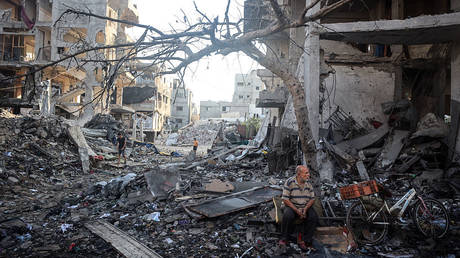
The map of Gaza is drawn in shades of dust and neon. From a desk miles away, it looks like a geometry problem, a puzzle of grids and coordinates glowing on a tactical display. On the ground, it is something entirely different. It is the sound of corrugated iron groaning under the weight of a hot wind. It is the smell of pulverized concrete hanging in the throat long after the flash has faded.
Ceasefires are drafted in air-conditioned rooms. They are written on crisp paper with heavy fountain pens, signed by men who have never had to scrape soot from their fingernails. The words are precise. Cessation of hostilities. Withdrawal of forces. Humanitarian corridors. They sound like permanent fixtures, sturdy things built to withstand the elements.
They are not. They are glass houses built on fault lines.
Consider the architecture of a fragile pause. When a diplomatic breakthrough is announced from Washington or Doha, the collective exhale is instantaneous. Sirens fall silent. Families crawl out from the corners of rooms they have shared for weeks, blinking against a harsh midday sun. For a brief, intoxicating hour, the illusion holds. You can almost convince yourself that the broken glass on the pavement is just glass, that the crater at the end of the street is just a hole in the earth.
Then, the math of war reasserts itself.
To understand why diplomatic agreements shatter before the ink dries, you have to look past the headlines and into the mechanics of mistrust. Wars do not end simply because a piece of paper says they should. They carry a momentum all their own, fueled by years of accumulated grief, tactical imperatives, and the cold, unyielding logic of deterrence.
Imagine a neighborhood where every single family has lost someone, where every wall bears the scars of a previous escalation. In this reality, a ceasefire is not a peace; it is a tactical intermission.
Military planners look at a truce through the lens of capability. If an adversary uses a pause to rearm, reposition, or dig deeper tunnels, the agreement becomes an existential threat to the other side. Every day of quiet is weighed against the future cost of inaction. When intelligence reports suggest that a network is being rebuilt behind a diplomatic shield, the pressure to strike—regardless of the political fallout—becomes immense. This is the grim calculus that drives ongoing military operations even while negotiators are shaking hands across a polished mahogany table.
The diplomatic machinery operates on timelines of months and years. The battlefield operates on seconds.
When a rocket is launched from a densely populated district, the response is calculated by algorithms designed to neutralize a threat before it can multiply. These systems do not pause to check if a high-level delegation is landing in the capital. They react to radar signatures and trajectory vectors. The disconnect between the slow, deliberate pace of international diplomacy and the violent, automated speed of modern combat is where most peace efforts go to die.
We talk about these events as if they are abstract weather patterns. A storm rolls in. A treaty fails. Lives are disrupted. But numbers on a casualty report are not statistics. They are an absence. They are a pair of shoes left by the door that nobody has the heart to move. They are a tea kettle sitting cold on a charred stove.
I remember the weight of waiting. Not in a war zone, but in the shadow of one, where every phone notification feels like a physical blow. You watch the news ticker crawl across the bottom of the screen, parsing the careful, sterile language of official statements. Sporadic clashes reported. Retaliatory strikes authorized. The sanitized vocabulary of conflict is designed to make the unconscionable sound manageable. It distances us from the reality of flesh and bone.
Behind every violated truce lies a chain reaction of broken promises and tactical calculations. One side claims the other moved heavy weaponry into a civilian zone during the grace period. The other side claims the strike was an unprovoked violation of the sovereign right to defend its citizens. The truth, buried beneath layers of competing narratives and verified intelligence, is usually messier. Both things can be true at once: a diplomatic framework can be genuinely pursued by international mediators, and local commanders on the ground can see every concession as a fatal vulnerability.
Trust is the first casualty of any conflict, and it is the hardest thing to manufacture. You cannot airlift trust into a war zone. You cannot broker it with a press conference. It has to be built brick by brick, violation by violation, through a grueling process of verification that neither side has the patience or the safety margin to afford.
When the bombs start falling again after a brief respite, the betrayal is deeper than the physical destruction. It is the psychological collapse of hope. For twenty-four hours, you let your guard down. You washed the dust from your hair. You dared to think about tomorrow. And then the night tore open.
That is the hidden cost of these cycles. It is not just the physical infrastructure reduced to rubble, though the rebuilding will take generations. It is the erosion of the human capacity to believe in an alternative. Every failed ceasefire teaches the people living through it that the only reliable constant is the next siren.
The maps on the tactical displays will keep changing. New negotiators will fly in with new drafts, speaking of frameworks and phased withdrawals. They will step off their planes, adjust their ties, and step into the air-conditioned rooms.
Meanwhile, on the ground, the dust settles only long enough for the wind to stir it up again.


