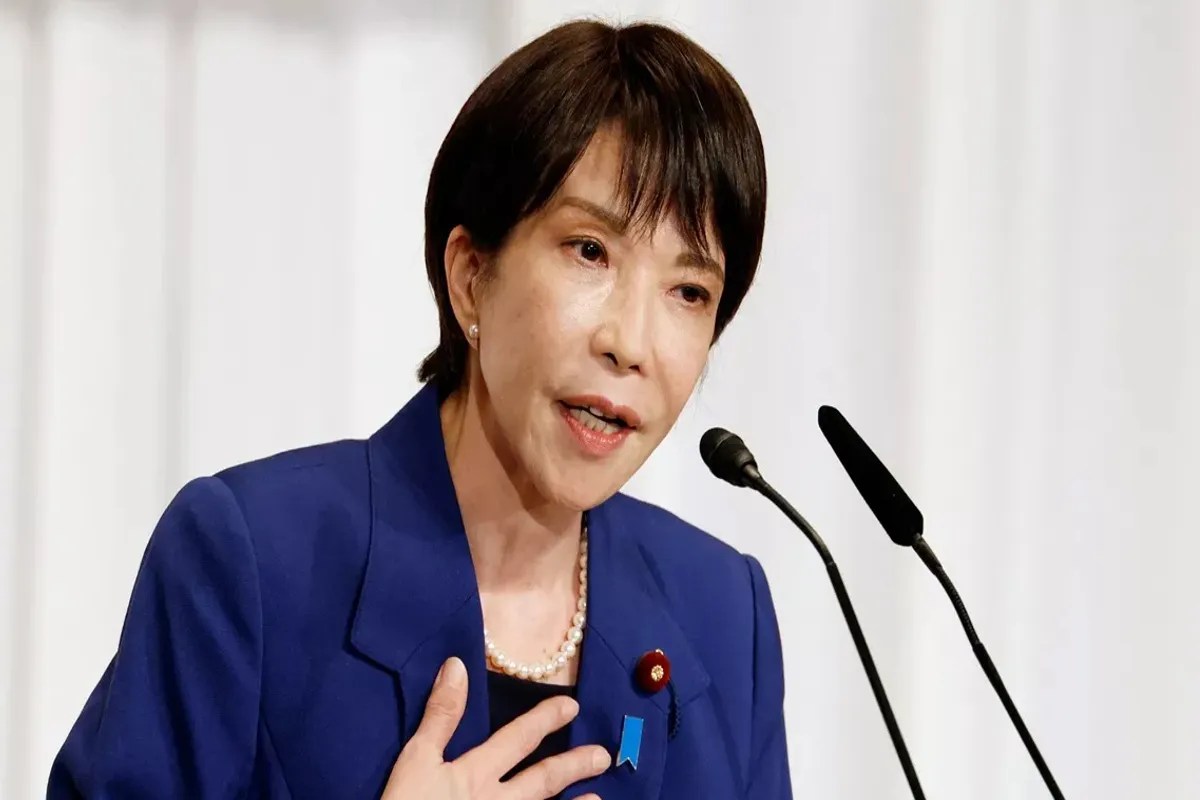
Effective governance requires minimizing friction between executive decision-making and physical logistics. When Japanese Prime Minister Sanae Takaichi detailed her domestic routine and an unexpected encounter with pests at the official state residence, public commentary focused primarily on the novelty of the anecdote. Deconstructing the administrative mechanics reveals a different reality: a systemic optimization problem involving security overhead, architectural legacy, and the psychological cost of high-intensity leadership.
The core tension in managing a modern national executive office involves balancing structural security with operational agility. The official residence, a legacy structure dating to the late 1920s, carries both historical prestige and profound operational inefficiencies. Modernizing such facilities for twenty-first-century digital connectivity and round-the-clock crisis management introduces friction. Executives must weigh the transaction costs of commuting against the resource drain of maintaining a secondary residential footprint.
Deciding to reside in the official state quarters rather than a private home is fundamentally a risk-mitigation strategy designed to compress response times during national emergencies. Operating from the immediate vicinity of the primary office cuts down transit vulnerabilities, reduces the scale of security details required for public thoroughfares, and streamlines the physical transfer of classified documentation. This consolidation lowers the overall headcount for perimeter protection and transport logistics, shifting administrative overhead from external security grids to internal facility management.
Even under rigorous domestic maintenance protocols—such as strict waste containment and localized sanitation—older urban structures present persistent environmental vectors for pests. The presence of insects in a historic administrative building highlights the limits of mechanical cleaning in aging architecture, where structural gaps bypass localized hygiene efforts. Resolving such vulnerabilities requires moving from passive sanitation to active environmental control, a transition managed by support staff rather than the principal occupant.
The psychological dimension of executive isolation compounds these operational burdens. High-density leadership models characterized by minimal sleep and continuous document review create an intense micro-environment. In this context, even minor disruptions or their subsequent resolution alter the baseline environment of a solitary occupant, illustrating the acute contrast between intense public scrutiny and private domestic isolation.
Future administrative efficiency depends on decoupling executive proximity from legacy infrastructure constraints. State residences must evolve into modular, high-security nodes that integrate digital command capabilities without sacrificing structural integrity or imposing excessive maintenance burdens on leadership.