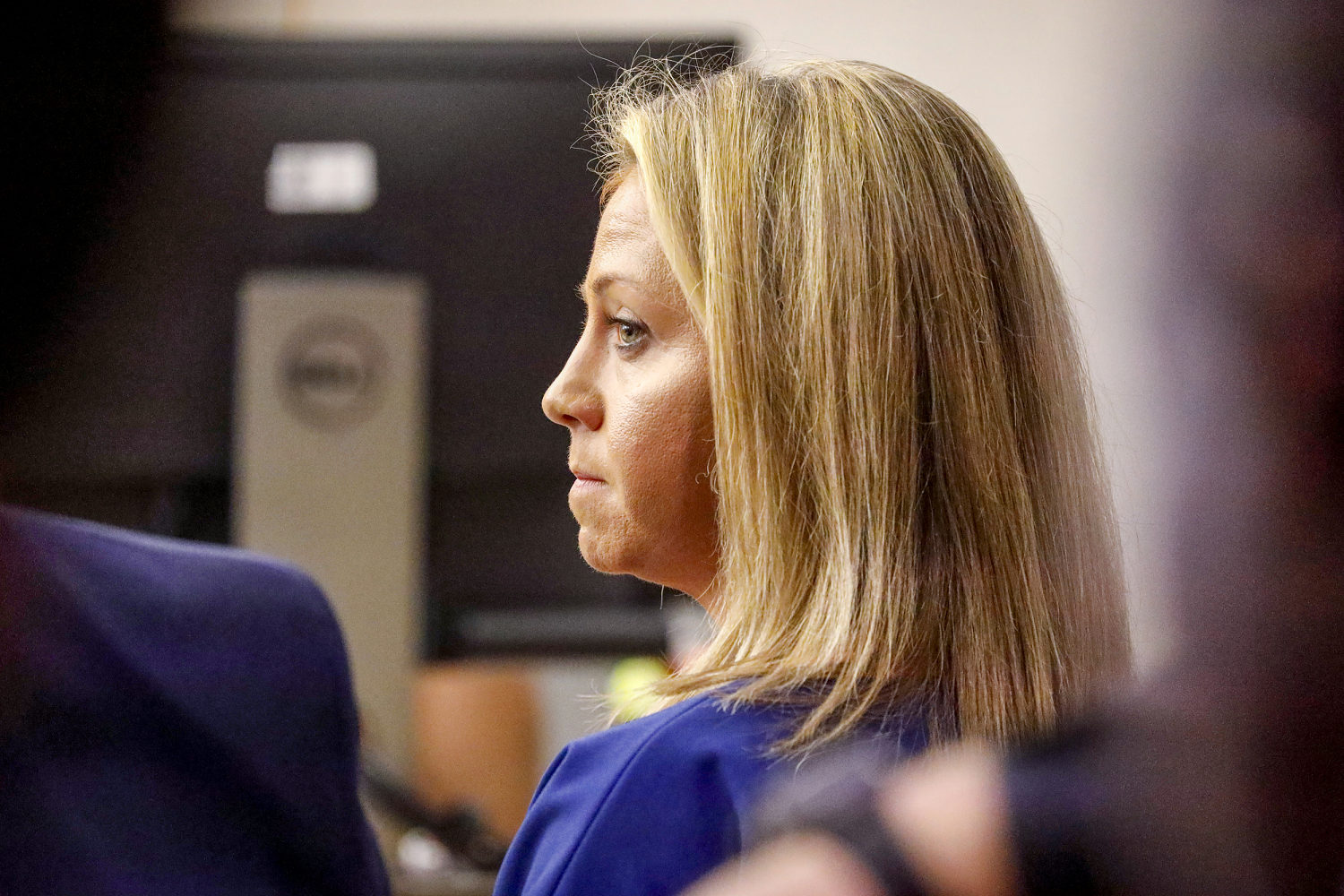
Amber Guyger getting parole after seven years behind bars is reigniting the exact argument Dallas thought had settled in 2019. Convicted of murdering her neighbor Botham Jean in his own apartment, the former Dallas police officer was approved for parole on October 1, 2026, and released on October 16, 2026, nearly three years ahead of her September 29, 2029, maximum sentence date.
A basic news summary tells you she served seven years of a 10-year prison term. That surface-level reading misses the real story.
For people who followed the case from the September 6, 2018 shooting through her 2019 conviction, her 2024 parole denial, and a massive civil judgment, the release forces a hard look at how Texas parole rules actually work. It also exposes the gap between a criminal sentence on paper and what a grieving family experiences years later.
Why Amber Guyger Getting Parole Happened Now
Honestly, if you only read headlines, the timing can look like a sudden reversal. Legally, it wasn't.
Under Texas law for serious offenses—historically referred to as 3G offenses, which include murder—an incarcerated person becomes eligible for parole after serving half of their sentence. Because Guyger received a 10-year sentence in October 2019, she first became eligible in late September 2024. The Texas Board of Pardons and Paroles denied her request in October 2024.
Two years later, the board changed course. According to reporting from KERA News and WFAA, parole officials pointed to her satisfactory institutional adjustment, the absence of documented violent or assaultive behavior in prison, and her participation in programs tied to her individual treatment plan and future employment.
That's how parole boards operate across Texas. They aren't re-trying the crime on release day. They look at institutional conduct, program completion, risk assessments, and statutory eligibility.
Still, knowing the rule doesn't make the outcome feel fair to everyone. When a case carries this much public weight, legal mechanics and moral expectations collide head-on.
How Texas Parole Rules Differ From Public Expectations
Most people hear "10-year sentence" and picture a decade in a cell. In Texas, a prison sentence sets a ceiling and a minimum eligibility window, not a guaranteed lock-up date.
Once Guyger passed the five-year mark and had her first bid rejected in 2024, another review was inevitable. By October 2026, she had completed roughly seven years of custody. Once approved on October 1 and released from a Gatesville facility on October 16, she moved from incarceration to parole supervision running through September 2029.
The Case That Shook Dallas and Why It Still Hurts
To understand why this decision sparked pushback, you have to go back to September 6, 2018, at the South Side Flats apartment complex in Dallas.
Guyger, then a working Dallas police officer coming off a long shift, walked into what she testified she believed was her own apartment. Inside was 26-year-old Botham Jean, a resident living directly above her floor. Guyger fired her service handgun twice, striking Jean in the chest. He died at a nearby hospital.
What followed was a rapid chain of events:
- The Dallas Police Department placed Guyger on administrative leave and fired her on September 24, 2018.
- Prosecutors initially filed a manslaughter charge before a grand jury indicted her on murder.
- In October 2019, a Dallas County jury deliberated for roughly six hours, rejected manslaughter, and convicted her of murder—making her the first Dallas officer convicted of murder since the 1973 killing of Santos Rodriguez.
- Appellate courts twice upheld her conviction in 2021.
That 2019 verdict was historic because police killings of civilians rarely end in a murder conviction, let alone a prison sentence. For many residents and legal observers, a 10-year sentence already felt lenient given the life taken inside a private home. Cutting off the final years via parole felt, to critics, like a second discount on accountability.
What Changes Now That She Is Out on Parole
Release from prison doesn't mean walking away with zero strings attached. Parole is conditional freedom, not exoneration.
Reporting from FOX 4 Dallas-Fort Worth and CBS News Texas highlights several concrete realities shaping her post-prison life:
- Active supervision until September 2029. Guyger must follow parole rules, report to a parole officer, and maintain full-time employment. Violating conditions can send her back to prison.
- A massive civil judgment remains. In November 2024, a civil wrongful death jury found Guyger liable and ordered her to pay Jean's family $98.65 million. Collecting anywhere near that sum from an individual is notoriously difficult, yet the judgment stands as a legal marker of civil liability.
- Sharply divided reactions from the family. Civil rights attorney Lee Merritt, representing Jean's family, argued that cutting short a 10-year sentence after seven years diminishes accountability. At the same time, Jean's brother Brandt Jean famously hugged Guyger in court in 2019, and members of the family have voiced differing personal stances on forgiveness even while opposing early release.
- Tightly guarded post-release plans. Trial attorney Robert Rodgers stated that Guyger has housing, employment, and a structured plan, though her team kept specific details private.
Common Misconceptions About This Release
When high-profile cases hit the news, rumors spread fast. A few points are worth clearing up right away.
First, parole isn't a pardon. Governor Greg Abbott didn't wipe out Guyger's conviction or erase her felony record. The Texas Board of Pardons and Paroles granted supervised release under state law.
Second, "released on parole" doesn't mean her sentence ended early in a legal vacuum. Her sentence runs through September 29, 2029. She's serving the remainder under supervision rather than behind bars.
Third, this decision wasn't a vote by the Dallas Police Department or the Dallas County District Attorney's office. Both local agencies are separate from the state parole board, and local prosecutors had opposed parole during earlier stages.
Practical Ways to Follow Cases Like This Without Getting Played by Headlines
If you want to track high-stakes criminal justice stories accurately, don't stop at the first push alert. Headlines move fast. Legal processes move slowly.
Start by checking the exact procedural posture. Ask whether an event is a parole approval, an actual release date, a conviction appeal, or a civil ruling—those four things mean completely different legal steps.
Next, read primary or local reporting from outlets covering the jurisdiction directly, such as Texas newsrooms, rather than relying solely on secondhand social media summaries. Look at statutory eligibility rules in that state so you know what was legally possible years in advance.
Finally, keep criminal accountability and civil accountability separate in your notes. A prison sentence punishes an offense against the state; a civil judgment addresses tort liability to the family. Mixing them up only muddies what actually happened in court.