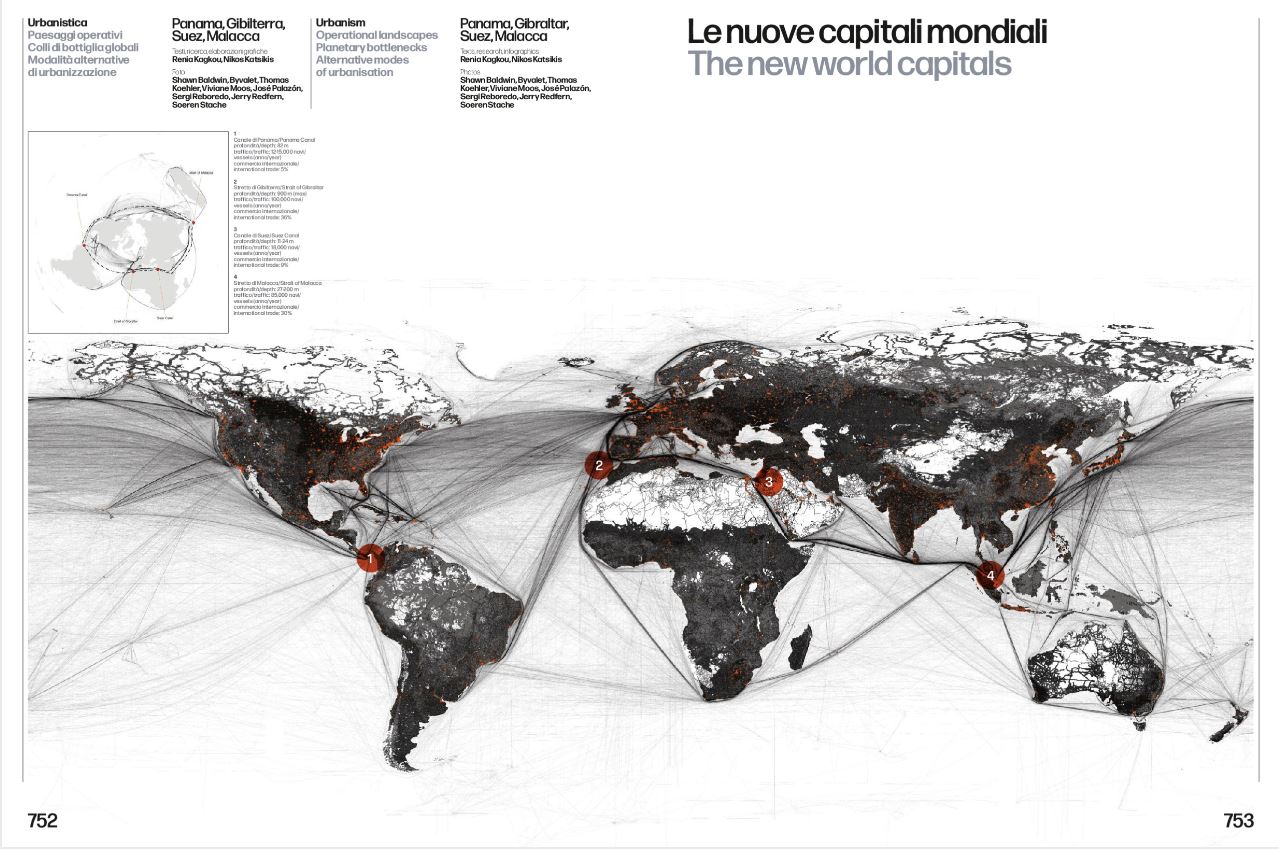
The headlines are screaming about "chaos" again. Every time a missile flies over the Middle East or a drone buzzes a restricted zone, the travel industry enters a collective state of hysterical paralysis. You’ve seen the charts: red lines curving around the Iranian border like a nervous vascular system, flight times ballooning by two hours, and the inevitable "travelers stranded" sob stories.
The mainstream narrative is that regional conflict has broken the sky. They want you to believe we are witnessing a systemic failure of global logistics.
They are wrong.
The "chaos" isn't a failure; it’s a stress test that the industry desperately needed. For decades, airlines have been addicted to the efficiency of the Great Circle route—the shortest distance between two points on a sphere. This addiction created a fragile, hyper-optimized system that prioritized fuel pennies over operational resilience. What we are seeing now isn't the death of travel. It is the forced evolution of an industry that has been coasting on luck for too long.
The Myth of the Disrupted Passenger
Let’s dismantle the biggest lie first: the idea that rerouting is a catastrophe for the traveler.
When a flight from London to Singapore has to skirt around Iranian or Russian airspace, it adds 90 minutes to the journey. The press calls this a "crisis." In reality, it is a rounding error in the life of a modern traveler. We live in an era where people spend three hours scrolling through TikTok in a departure lounge because of a minor gate change, yet we are supposed to weep because a Boeing 787 took a slightly more southerly path over Turkey and Azerbaijan?
The "disruption" is largely a spreadsheet problem for CFOs, not a survival problem for passengers.
Why Longer Routes Are a Hidden Win
- Buffer Absorption: In a hyper-optimized schedule, one late arrival at Heathrow ripples through the entire network for 48 hours. By forcing longer flight times and more conservative scheduling, the system actually builds in more "slack."
- Infrastructure Diversification: We’ve spent thirty years funneling the entire world through three or four "super-hubs." When a specific corridor closes, it forces traffic into secondary hubs and underutilized flight paths. This distributes the load and prevents the total system-wide seizure that occurs when a single point of failure (like a massive hub) gets overwhelmed.
- The End of the "Efficiency Trap": Cheap fuel and open skies made airlines lazy. They stopped planning for contingencies because the "perfect" route was always available. The current conflict is forcing a return to old-school flight planning—true navigation rather than just following a digital line.
Stop Blaming the Geopolitics
I’ve spent years watching airline operations managers sweat over fuel burn maps. The consensus in the C-suite is always to blame the "unpredictable nature of international relations."
This is a cop-out.
Geopolitical instability in the Middle East is not a "black swan" event. It is a known constant. If your business model collapses because you can’t fly through a specific 500-mile corridor of the world’s most historically volatile region, you don’t have a business; you have a gamble.
The airlines crying the loudest are the ones that refused to invest in long-range fleet flexibility. They bought aircraft with just enough range to make the "perfect" route, leaving zero margin for a 1,000-mile detour. They prioritized seat density over fuel capacity. They are now paying the price for their lack of imagination.
The Real Math of Fuel and Fear
Consider the fuel burn. Yes, flying around a conflict zone burns more kerosene. Yes, that costs money. But let’s look at the numbers.
Suppose a wide-body jet burns roughly $10,000 worth of fuel per hour. A two-hour detour costs $20,000. On a flight with 300 passengers, that’s an extra $66 per ticket. In a world where people pay $15 for a soggy airport sandwich and $50 to check a bag, a $66 "geopolitical resilience fee" is hardly the end of global commerce.
The "chaos" isn't about the cost; it's about the fact that airlines hate being reminded they aren't actually in control of the planet.
The Safety Industrial Complex
We need to talk about the "abundance of caution" that triggers these closures.
The industry is still haunted by MH17. Rightly so. But the reaction has swung from "ignore the risks" to "shut down everything if a firework goes off." This creates a perverse incentive for any regional actor to disrupt global trade simply by moving some hardware near a border.
The current "chaos" is exacerbated by a lack of granular intelligence sharing. Instead of identifying specific altitudes or windows of safety, we treat entire sovereign airspaces like radioactive zones. This binary approach—on or off, open or closed—is the hallmark of a primitive regulatory mind.
We don't need fewer flights; we need smarter routing that treats airspace as a dynamic, three-dimensional grid rather than a static map.
The Mirage of "Stranded" Thousands
Whenever a route closes, the media shows images of people sleeping on suitcases.
I’ve been in those trenches. Most of those "stranded" people aren't there because the planes can't fly. They are there because the airlines’ automated rebooking software is hot garbage.
The technology exists to reroute 50,000 people in seconds. We can trade stocks in nanoseconds and track a pizza to the doorstep, yet when a flight is canceled, the "industry leader" expects you to stand in a physical line to talk to a human named Brenda who is using a computer terminal from 1984.
The conflict isn't the problem. The industry’s refusal to modernize its backend logistics is the problem. The "chaos" is a choice.
A Brutal Truth for the Frequent Flier
You aren't entitled to the shortest path.
For the last twenty years, we’ve enjoyed a historical anomaly: a world where you could fly over almost any country for a nominal fee. That was the exception, not the rule. The "chaos" we see now is just the world returning to its natural state of friction.
If you are a business traveler complaining about a two-hour delay while sitting in a pressurized cabin at 38,000 feet with noise-canceling headphones and a glass of scotch, you aren't a victim of conflict. You are a beneficiary of a system that is still remarkably functional despite the best efforts of world leaders to break it.
The Opportunity in the Overhaul
The smart players—the ones who will dominate the next decade—aren't complaining. They are adapting.
- Fleet Agility: We are seeing a shift back to ultra-long-range aircraft (like the A350-1000ULR) that can bypass entire continents if necessary.
- Decentralized Hubs: Moving away from the "all eggs in one basket" approach of Dubai or Doha and toward a more web-like network.
- Fuel Hedging 2.0: No longer just betting on price, but betting on volume requirements for longer, circuitous routes.
The "chaos" is filtering out the weak. The airlines that can't handle a detour will go bankrupt or be swallowed. Good. We need an industry built on resilience, not just on the hope that everyone will stop shooting at each other.
The Scarcity Play
Watch what happens to ticket prices. The "chaos" provides a perfect smoke screen for airlines to tighten supply and hike fares. They will tell you it’s because of the "complexity" of the routes.
It isn't. It’s because they can.
When routes are restricted, capacity drops. When capacity drops, the value of a seat rises. The airlines aren't mourning the closure of Iranian airspace; they are salivating at the chance to justify a 20% price increase on the remaining corridors.
The Next Failure Point
If you think the current rerouting is bad, wait until the industry has to deal with the inevitable collapse of the "hub and spoke" model entirely.
The current conflict is just a tremor. The real earthquake will be when the primary hubs themselves become untenable due to climate or sustained regional instability. Rerouting around a country is easy. Replacing a city-sized airport is impossible.
Instead of asking "When will the flights go back to normal?", we should be asking "Why were we so stupid to think 'normal' was sustainable?"
Stop looking for the "all clear" signal. It isn't coming. The friction is the new baseline. The detours are the new direct flights. The "chaos" is just the sound of a bloated, lazy industry being forced to do its job for the first time in a generation.
Get comfortable with the long way around. It's the only way that's left.
The era of the "straight line" is over. Learn to love the curve.