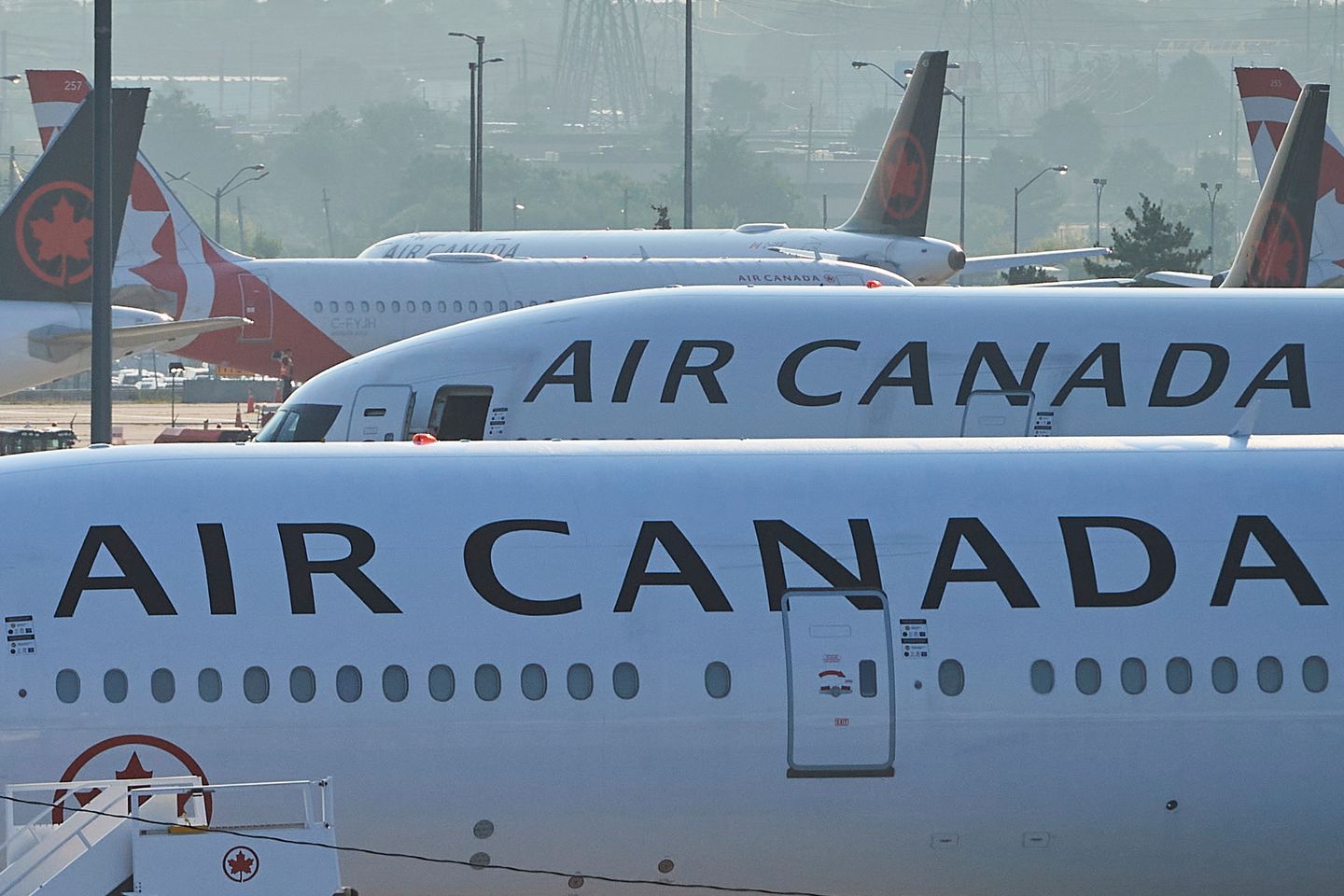
Air Canada trimming U.S.-bound routes next year isn't a retreat. It's a pulse check.
When an airline drops flights across the border, the predictable headlines write themselves. Weakness. Soft demand. Cross-border friction. Surrender to American giants.
Lazy. Shallow. Wrong.
Commercial aviation doesn't reward attachment to pretty route maps. It rewards marginal contribution per block hour. When a legacy carrier pulls back on select U.S. spokes, it isn't waving a white flag over transborder travel. It's stopping the bleed on seats that look busy on a load-factor chart while quietly torching cash behind the scenes.
Competitor coverage loves treating every route cut as a symptom of terminal rot. That framing misses how network planners actually run a carrier when fleet delivery delays, airport slot bottlenecks, labor costs, and fluctuating currency dynamics collide. A flight can leave the gate 82 percent full and still lose money once you account for discounted connecting fares, peak-hour gate charges, and aircraft utilization trade-offs.
You don't build a durable airline by flying everywhere people say they want to go. You build it by flying where your cost base, fleet gauge, and connecting traffic actually make the math work.
The Lazy Consensus Around Route Cuts
Read the standard coverage of airline schedule reductions and you'll find the same tired playbook repeated across business pages. If an airline adds a route, management is bold and expanding. If an airline cuts a route, management is shrinking, defensive, or losing share.
That binary view confuses network breadth with network quality.
In airline economics, network breadth is easy to fake and expensive to maintain. Any carrier can throw a 737 or A220 at a secondary city pair during shoulder or off-peak windows and claim a new dot on the map. Holding onto that dot when yields sag or aircraft are needed elsewhere is how carriers turn operating margin into dust.
I've watched airlines and travel operators burn millions chasing top-line market share on thin or heavily discounted routes just to protect ego and appearances. A full cabin with rock-bottom yields and high turnaround costs isn't a win. It's an expensive illusion that ties up a scarce airframe for hours at a time while keeping a rival route starved of capacity.
Load Factor Is Not Profit
The single biggest mistake outsiders make when reading route-cut news is equating load factor—the percentage of seats filled—with profitability.
Imagine a scenario where a carrier operates a twice-daily transborder hop using a narrowbody jet. On paper, both flights average 85 percent full. A casual observer calls it healthy demand. Look closer at the ticket mix: half the cabin is booked on deeply discounted promotional fares or low-margin connecting itineraries feeding a longer haul, while peak-hour business demand has shifted to alternative schedules or competitors. Meanwhile, crew overnights, de-icing or ground handling delays, and airport fees eat away at every incremental passenger.
Cutting one frequency or suspending a marginal city pair doesn't automatically mean passengers vanished into thin air. Often, those travelers can be consolidated onto a higher-yield departure or routed through a stronger hub connection without sacrificing much net revenue—while freeing an aircraft for a route with stronger pricing power.
What "Route Cuts" Actually Mean in Network Planning
"Cutting routes" sounds permanent and dramatic to casual readers. Inside network planning departments, schedule adjustments are constant triage.
Airlines adjust capacity across seasons, days of the week, and aircraft types every single cycle. A suspension or frequency trim for the upcoming year can reflect several distinct realities working together:
- Fleet and gauge discipline: When narrowbody or widebody deliveries slip or maintenance takes longer than planned, every tail number has an opportunity cost. Putting an aircraft on a borderline U.S. route means not putting it on a higher-yielding domestic, transborder, or long-haul mission.
- Yield versus volume trade-offs: Filling seats cheaply is easy; earning enough RASM (revenue per available seat mile) to clear CASM (cost per available seat mile) is the actual job.
- Hub and bank optimization: A spoke only earns its keep if the connecting waves line up cleanly. If ground delays or schedule mismatches dilute connecting value, trimming the spoke cleans up the whole bank.
- Currency and demand elasticity: Shifts in the exchange rate between the Canadian dollar and the U.S. dollar alter leisure and discretionary cross-border economics. Leisure travelers feel exchange-rate friction fast; corporate and essential travelers behave differently.
None of those drivers fits neatly into a melodramatic "airline in crisis" headline. All of them are standard blocking and tackling in modern network management.
Why People Are Asking the Wrong Questions
When an airline trims U.S.-bound flying, the public and search engines immediately jump to surface-level questions: Is cross-border travel collapsing? Is Air Canada losing to U.S. carriers? Should flyers worry about reliability?
Each of those questions starts from a flawed premise.
"Does cutting U.S. routes mean demand is dead?"
No. Aggregate demand isn't a single switch flipped on or off; it's segmented by purpose of trip, time of day, day of week, and price sensitivity.
Leisure demand to warm-weather U.S. destinations or major shopping/city hubs reacts sharply to airfare plus exchange-rate math. Business travel behaves differently—shaped by corporate travel budgets, video conferencing habits, and schedule convenience rather than a single headline. A route can see softer leisure yields on mid-week flights while remaining solid on Sunday evenings or Monday mornings. Cutting marginal frequencies is how airlines match supply to actual willingness to pay instead of flying half-empty metal out of habit.
"Are U.S. airlines automatically winning when a Canadian carrier trims?"
Not necessarily. U.S. legacy carriers like Delta, United, and American operate massive domestic networks and strong transborder hubs, and competition across the border is fierce. Yet every airline faces the same iron laws of unit economics: labor costs, fuel, airport charges, maintenance availability, and aircraft utilization.
Sometimes a U.S. carrier with a massive local feed can make a thin route work where a foreign carrier cannot—or vice versa, where a Canadian hub captures connecting flow a U.S. competitor doesn't serve as cleanly. Route pruning isn't a zero-sum scoreboard where every cut is a concession and every addition is a triumph. Sometimes stepping back from a low-return fight leaves you stronger on the routes where you hold structural advantages.
"Should passengers panic about their bookings?"
If you don't fly that specific route or time slot, nothing changes for you. If you do, a schedule trim is an annoyance—not an apocalypse.
Airlines routinely re-accommodate booked passengers onto alternative flights, partner carriers, or connecting routings when schedules shift. The real friction happens when travelers wait until the last minute or book rigid, non-refundable itineraries without checking schedule resilience.
The Heavy Hitters and the Iron Laws of Aviation
If you want to understand why route cuts happen without falling for sensationalism, look to the foundational thinkers and industry realities of airline economics.
Classic aviation economics—from the deregulation era and work by industry analysts and economists studying hub-and-spoke networks—established a core truth: hub-and-spoke carriers win through connectivity density and cost discipline, not vanity point-to-point flying. When a spoke stops contributing enough margin or connecting feed to justify its seat miles, keeping it alive is charity, not strategy.
Industry veterans and network executives across major global carriers have said the same thing in different ways for decades: you cannot manage an airline by falling in love with routes. Aircraft are capital-intensive assets that only generate return when flying productive hours at compensatory fares. If an asset underperforms, redeploying it is basic stewardship.
Where My Contrarian Take Can Backfire
Being contrarian for sport is lazy. Honest analysis means admitting where a disciplined pullback carries real risks.
First, cutting too deep erodes network relevance. Frequent flyers—especially higher-yield business travelers—value schedule depth and non-stop convenience. If a carrier trims so much frequency on a corridor that departure times become inconvenient, high-value customers may drift to a rival with better timing and never come back.
Second, shrinking fixed-cost absorption hurts if done carelessly. Airlines carry substantial fixed and semi-fixed overhead. Retrenching without corresponding cost flexibility or smart aircraft redeployment can leave unit costs elevated on a smaller base.
Third, ceding marginal routes today can create competitive blind spots tomorrow. Markets evolve. A route that looks soft during one cycle can rebound when currency shifts, tourism campaigns hit, or capacity tightens elsewhere. Pull back with precision, not recklessness.
What Flyers and Industry Watchers Should Do Instead
Stop reading route announcements like a soap opera and start reading them like an operator.
- Judge airlines by margin and fleet deployment, not route count. Look at whether capacity is moving toward higher-yield markets, peak demand windows, or better-suited aircraft gauges rather than obsessing over every suspended line.
- Watch frequency and timing, not just city pairs. For travelers, going from three daily flights to two—or dropping a midday flight—matters far more than abstract headlines about "route cuts." Fewer frequencies mean less recovery cushion during irregular operations.
- Book with schedule shifts in mind. Schedules published months ahead are living plans, not carved stone. Know your rebooking options, pay attention to minimum connection times at major hubs, and avoid tight, high-risk connections when weather or congestion is a factor.
- Separate macro noise from route-specific math. Exchange rates, seasonal travel patterns, and regional competition affect different city pairs differently. A cut in one market tells you about that market's economics—not the fate of every flight across the border.
Route cuts aren't the end of the story. They're the edit that keeps the rest of the network alive.