Server racks don't drink water on their own. People do.
Around Santiago, the AI data center boom is turning outer municipalities into a tug-of-war between global cloud ambitions and basic local survival. If you're wondering why facilities ringing the Chilean capital draw such fierce resistance, the short answer is simple: massive power and cooling demands collide directly with a prolonged drought and strained grid infrastructure.
Honestly, it's easy to see why tech giants love Chile on paper. Political stability, solid connectivity, and abundant solar potential in the north look great in a slide deck. Yet out on the ground around Santiago, communities aren't seeing a magical tech windfall. They're watching dry wetlands, fighting over local permits, and asking a blunt question: who actually pays for this compute?
How AI Data Centers Surrounding Santiago Reshape Local Politics
Data centers used to be quiet background infrastructure. Now they're flashpoints.
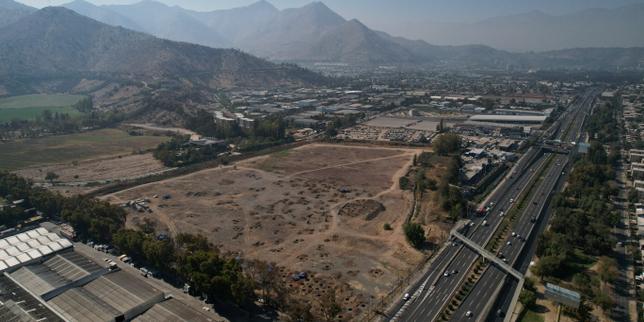
As artificial intelligence workloads push operators toward larger, higher-density facilities, projects keep clustering around the Santiago basin rather than spreading evenly across the country. When a facility plans to draw millions of liters of water daily in a region dealing with a multi-year drought, locals notice right away. In Quilicura, on Santiago's northern edge, residents and activists have pointed to parched wetland conditions alongside heavy industrial and infrastructure pressure. Further south in Cerrillos, community pushback helped stall plans for a second major Google facility in 2024.
That kind of local friction changes the math for developers. You can't treat environmental review as a formality when neighbors are organized and paying attention.
At the same time, national politics shifts the ground beneath both sides. Under President Antonio Kast's administration—which took office in March 2026 on a deregulatory push and quickly rolled back dozens of environmental decrees—pro-investment messaging has gained momentum. Still, court battles, municipal zoning rules, and public scrutiny don't disappear overnight just because executive priorities shift. A permit won on paper can still get bogged down in community opposition and legal challenges.
Water Scarcity Meets Server Cooling
Let's be real about cooling. Running dense AI hardware generates serious heat, and traditional evaporative cooling uses water.
In a place like central Chile, where water scarcity has been a lived reality for well over a decade, proposing heavy water use for server cooling triggers immediate alarm. Even when companies argue their usage is small compared to agriculture or mining, residents look at dry marshes and stressed watersheds and see an avoidable burden.
Operators aren't blind to the PR or operational risk. Industry analyses highlight a clear push toward closed-loop cooling systems and water-free or low-water designs so facilities don't depend on scarce local supplies. Closed-loop setups recirculate water instead of constantly drawing and losing huge volumes through evaporation.
Still, switching cooling architectures isn't free or instant. Retrofitting designs takes engineering time, higher capital expenditure, and careful trade-offs with energy efficiency. In hot weather, air-cooled or closed-loop systems can sometimes require more electricity to reject the same heat. That brings us straight to the next bottleneck.
Grid Bottlenecks and the Power Crunch
Water gets the emotional headlines, yet electricity may be the harder ceiling.
AI compute is hungry. Projections for Chile point to data center electricity demand climbing dramatically by the early 2030s—rising from hundreds of megawatts into well over a gigawatt as new capacity comes online. Meanwhile, transmission bottlenecks in areas like Quilicura and Lampa already show how tight local grid connections can get.
You can't plug a gigawatt-scale wave of demand into congested lines and hope for the best. Long grid-connection queues force developers to look at alternatives, from green power purchase agreements and storage to backup generation or slower phased rollouts.
"We all love the internet – but not at the cost of our water." — Rodrigo Vallejos, law student and activist in Quilicura, via The Guardian.
That quote captures the core tension better than any industry forecast. Most people use cloud tools and AI every day. Very few want their neighborhood's water table or local power stability treated as expendable collateral.
What Policymakers and Operators Usually Get Wrong
From watching infrastructure clashes play out, I see three recurring mistakes whenever a region tries to ride the AI buildout:
- Treating local jobs as a slam-dunk selling point. Data centers require skilled technical talent and specialized contractors, not huge permanent headcounts once built. Promising "hundreds of jobs" when long-term staffing is small breeds cynicism fast.
- Ignoring cumulative local impact. A single facility might look modest on a national spreadsheet. Five or ten clustered near the same substations and basins look completely different to residents.
- Announcing capacity before grid and water limits are settled. Moving fast on land deals while transmission upgrades or water sourcing remain fuzzy invites delays later.
Chile's National Data Centre Plan (2024–2030) recognizes several of these gaps—pointing toward better energy planning, clearer permitting rules, regional decentralization away from congestion, and technical workforce development. Good policy frameworks help, though execution is where promises get tested. Talent shortages—including thousands of annual IT openings across the country—also remind everyone that servers alone don't run a digital economy.
Practical Next Steps for Stakeholders
If you're tracking, investing in, or regulating data center growth around Santiago, focus on concrete checks rather than hype:
- Audit water and grid realities before locking in sites. Check substation queue times, transmission constraints in districts like Quilicura and Lampa, and local watershed stress before assuming a fast build.
- Require transparent cooling and power disclosures. Push for clear numbers on water withdrawal versus closed-loop recirculation, plus verifiable renewable power sourcing rather than vague sustainability slogans.
- Engage municipalities early with real mitigation. Bring local leaders and residents into the conversation before permitting fights harden, and tie community benefits to verifiable local needs like water resilience or technical training.
- Look beyond the Santiago ring. Evaluate regional sites where grid capacity and renewable generation align better with long-term expansion goals.