The modern travel industry has successfully convinced urbanites that manual labor is a luxury vacation.
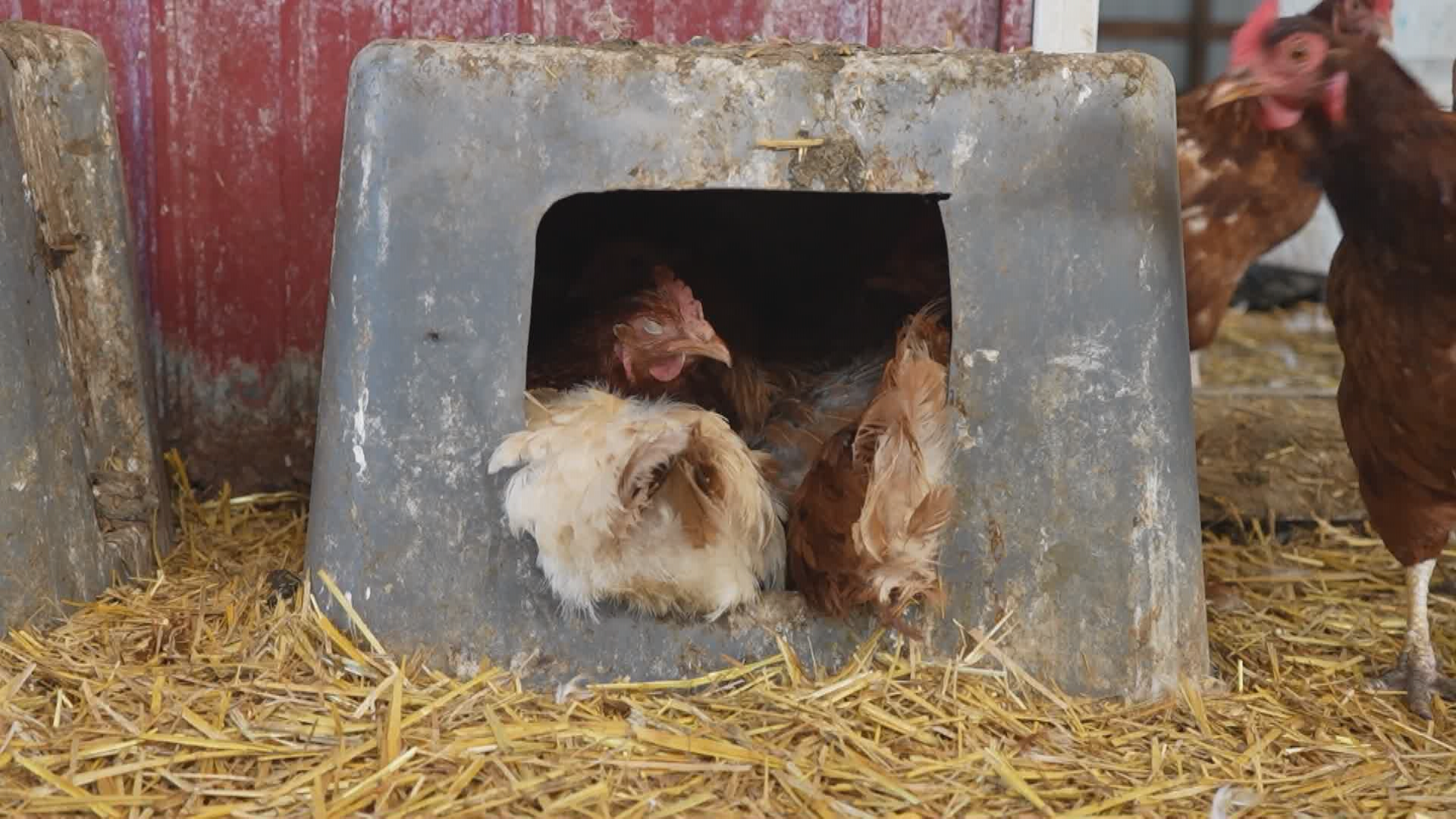
Marketing brochures paint a serene picture of the Canadian prairies. They show you golden wheat fields under an endless Saskatchewan sky, a historic red barn, and the wholesome joy of waking up at dawn to collect fresh eggs. They call it an "authentic farm stay experience."
Let's call it what it actually is: paying someone else for the privilege of doing their chores.
For decades, the agritourism narrative has escaped critical analysis. The lazy consensus suggests that urban disconnection can be cured by spending a weekend pretending to be a homesteader. Tourism boards push these experiences as a win-win. The tourist gets grounded, and the rural economy gets a boost.
But having spent fifteen years analyzing rural economic models and agricultural supply chains, I have watched this trend devolve into an exploitative gimmick. The romanticized "farm life" sold to tourists is a sanitized illusion that insults real producers while shortchanging the consumer.
The Economics of Voluntary Serfdom
The premise of the standard agritourism getaway is fundamentally flawed.
Consider the average transaction. A traveler pays $250 a night to stay in a renovated granary. During the day, they participate in "interactive chores" like mucking stalls, repairing fences, or picking berries.
In any other industry, this is called an unpaid internship. In worst-case scenarios, it borders on labor code violations. Yet, because it happens under the banner of experiential travel, consumers happily hand over their credit cards.
Real farming is not an aesthetic. It is a high-capital, high-risk business defined by razor-thin margins, global commodity markets, and volatile weather. When a farm pivots to tourism, it is rarely out of a desire to educate the public. It is a survival mechanism driven by financial distress.
+------------------------+------------------------+
| Real Agriculture       | Agritourism Illusion   |
+------------------------+------------------------+
| Volatile grain markets | Fixed nightly rates    |
| Heavy machinery upkeep | Curated petting zoos   |
| Disrupted sleep cycles | Optional morning yoga  |
| Generational debt      | Gift shop preserves    |
+------------------------+------------------------+
By participating in the sanitized version, tourists do not learn about agriculture. They consume a theme park version of it. You are not experiencing Saskatchewan farm life if your day ends with artisanal wine tastings and premium linens. You are experiencing a boutique hotel with a high density of dirt.
Dismantling the People Also Ask Mythos
Can a weekend farm stay teach you self-sufficiency?
No. It teaches you how to follow basic instructions in a controlled environment. True agricultural self-sufficiency requires an intimate understanding of soil chemistry, veterinary medicine, mechanical engineering, and risk management. Feeding a goat a handful of pellets does not bridge the urban-rural divide. It patronizes it.
Do agritourism dollars save family farms?
Only by changing the nature of the farm entirely. When a producer shifts their focus from crop yields to hospitality metrics, they stop being a farmer and start being a hotelier. The land becomes a backdrop rather than a resource. Agricultural economists have long noted that heavy reliance on tourism diversification often signals the end of a property's viability as a production-first enterprise.
The Operational Reality You Aren't Told
Real operations cannot afford to have tourists wandering around.
A functioning grain or livestock operation is a hazardous industrial site. A modern combine harvester costs upwards of $800,000 and requires specialized training to operate safely. High-voltage fences, unpredictable 1,200-pound cattle, and toxic agricultural chemicals do not mix with vacationers looking for a selfie.
The Liability Paradox: To make a farm safe for the general public, a producer must actively remove the elements that make it a real farm.
What remains is a staged set. The animals are chosen for their docility, the machinery is outdated equipment kept for display, and the schedule is timed around guest comfort rather than the dictates of nature. You are paying to witness a performance.
The Dark Side of the Rural Aesthetic
There is a subtle condescension inherent in the agritourism boom. It operates on the assumption that rural life is simpler, slower, and intellectually less demanding than city life.
Urban professionals trapped in corporate routines view the farm as an escape hatch into a simpler past. But modern agriculture is driven by data analytics, satellite-guided tractors, and complex hedging strategies on the Chicago Board of Trade.
When tourists demand a retro, low-tech experience, they force operators to perform poverty or backwardness to satisfy an urban fantasy. It encourages the preservation of inefficient, outdated practices because that is what looks good on Instagram.
How to Actually Support Rural Communities
If you want to understand the reality of food production and support rural ecosystems, stop buying curated farm stays. Change your consumer behavior where it actually matters.
- Engage with the Commodity Chain: Skip the local boutique farm gate that sells $12 jars of honey to tourists. Look at how your regional grain elevators operate. Support independent processors who handle large-scale distribution.
- Buy from Producers, Not Entertainers: Buy your meat and grain directly from working operations that do not have a public relations budget or a gift shop. If a farm has an active TikTok strategy, you are paying for marketing, not food.
- Acknowledge the Industry: Accept that true agriculture is loud, dirty, smells bad, and does not care about your vacation schedule.
Stop looking for a pastoral playground. The prairies are an industrial powerhouse, not a wellness retreat. Treat them with the respect that industrial reality demands.
Turn off the highway, pass the property with the cute painted sign and the petting zoo, and go look at the grain terminals. That is where the real story lives. Everything else is just expensive chores.