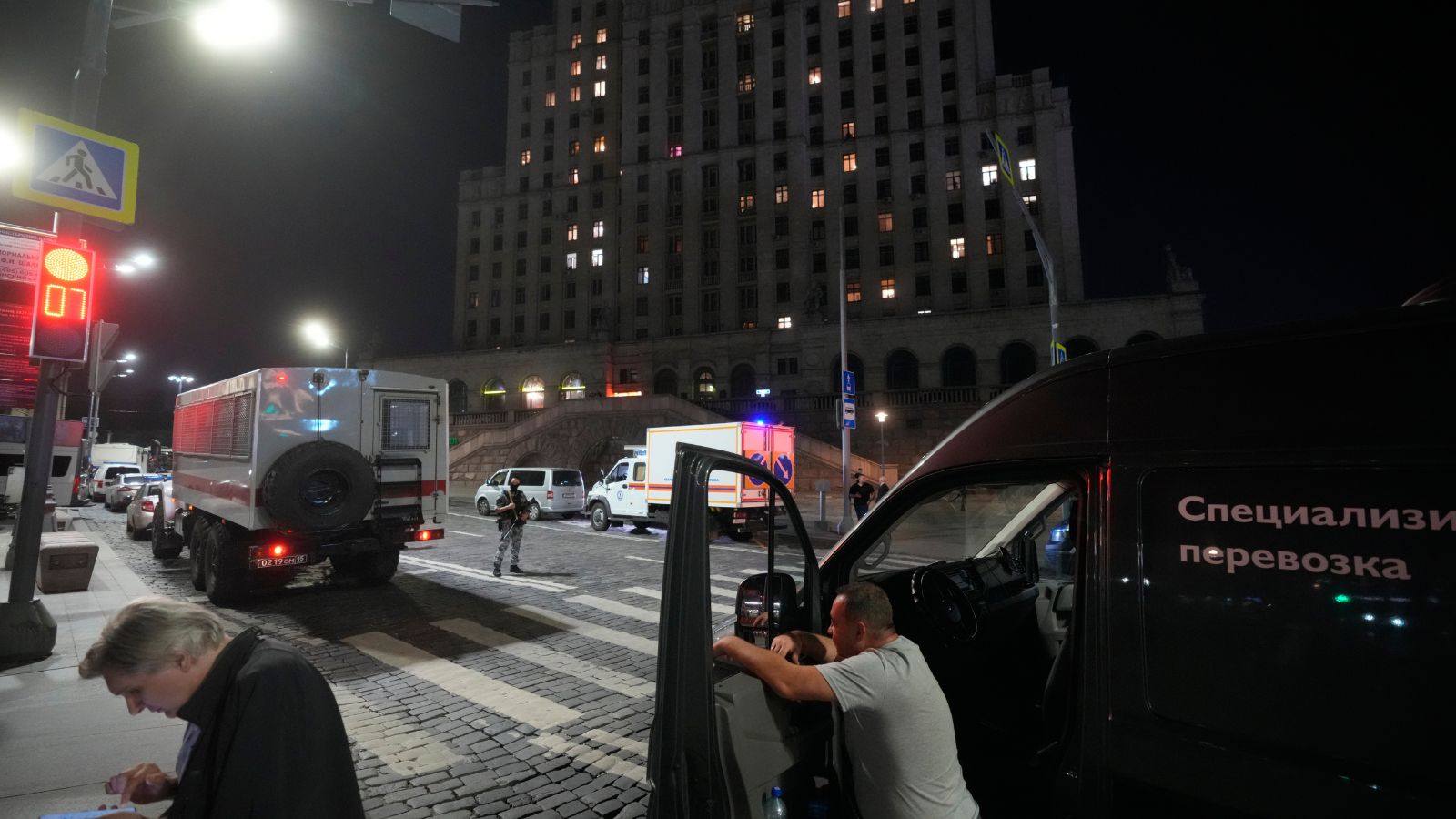
The air smelled of damp earth and woodsmoke, the kind of heavy, unbothered evening that settles over the Russian countryside before the frost fully takes hold. Outside a modest restaurant near Moscow, ordinary conversations drifted between tables. Plates clinked. The hum of traffic hummed a dull, rhythmic background noise. People were simply wrapping up their weeks, untethered from history, expecting nothing more complicated than the drive home.
Then came the fracture.
It did not sound like thunder. Thunder has a rolling shape, a descending weight that gives the ear a second to brace. This was sharp. A sudden, violent tear in the fabric of the afternoon that instantly swallowed the sound of the street. Glass rained down like coarse gravel. The shockwave arrived as a physical blow, a heavy hand pressing against the chest of everyone within a hundred yards.
When the dust settled, the geometry of the street had changed entirely.
Authorities would later piece together the anatomy of the devastation with cold, administrative precision. A woman carrying an explosive device. Three lives extinguished instantly. Twenty-one others scattered across hospital beds with wounds that would require months, or years, to heal. Sirens began to stitch the silence back together, weaving a frantic red-and-blue pattern across the darkened brick facades.
Numbers are comfortable. Numbers let us categorize horror. Twenty-one injured. Three dead. A location near Moscow. Investigators on the scene.
Yet numbers refuse to tell you about the coat hanging on the back of an empty chair. They do not capture the exact pitch of a siren echoing off concrete, nor the sudden, sickening stillness that fills a room when a phone rings endlessly on a table where someone was sitting just moments before.
We look at events like this from thousands of miles away through the flat glass of a screen. We read the headline. We measure our distance. We feel a brief, sharp pinch of empathy before scrolling down to the next update, comforting ourselves with the invisible boundary of geography. That is over there. This is here.
Consider what happens next in the quiet rooms behind the headlines.
First responders do not just lift stretchers; they carry the weight of an unpredictable world. Investigators sift through smoking fragments, searching for triggers, wires, and motivations, trying to impose logic on an act designed explicitly to defy it. Every wire traced and every security camera footage reviewed is an attempt to rebuild a wall against chaos.
We want a neat narrative. We want to believe that violence arrives with a warning sign, that danger wears a distinct face, and that safety is a natural state of being rather than a fragile agreement we negotiate every single day.
History teaches us a harder truth. Peace is not an absence of danger; it is a shared, delicate illusion sustained by millions of ordinary people choosing to trust their neighbors, walk down the street, and sit down for a meal without looking over their shoulders. When that illusion is violently pierced, the shock travels far beyond the blast radius. It touches the grandmother buying bread in a different district, the commuter waiting for a train across town, and the reader half a world away who suddenly remembers how thin the ice really is.
The smoke outside the Moscow restaurant cleared long ago. The glass was swept from the pavement. The injured began the long, quiet labor of healing beneath the sterile lights of hospital wards.
Yet the sound remains. A sharp tear in the air. A reminder that the world can change in a fraction of a second, leaving us to find our footing in the quiet wreckage left behind.