Love is supposed to feel safe. We are taught from childhood that physical touch is a comfort, a universal language of warmth and security. A embrace is meant to soothe anxiety, lower blood pressure, and remind us we are not alone in the dark. But what happens when the very gesture meant to comfort becomes an instrument of sudden, violent pain?
Imagine walking through life feeling completely normal. No cast. No cane. No warning sirens from your body. You go to work, you cook dinner, you share a routine evening with your partner. Then, an ordinary greeting occurs. A husband wraps his arms around his wife in a standard, everyday embrace. There is no malicious intent. There is no wrestling match or violent fall. Just a hug.
And then, a sickening crack.
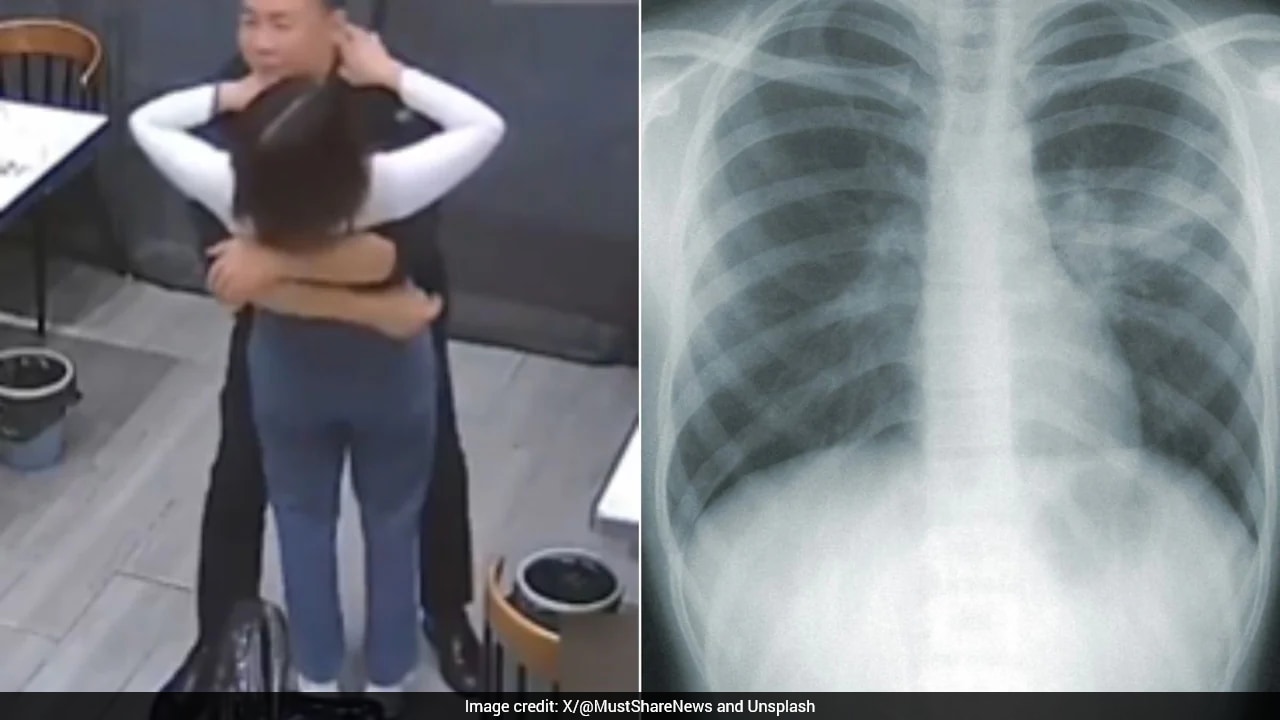
That is the terrifying reality faced by a woman in China who recently suffered five broken ribs simply because her husband hugged her too tightly. To the outside observer, it sounds like an absurd headline, a medical impossibility, or an exaggerated fiction. How can human bones snap under the weight of human affection?
The answer lies in a silent, invisible thief that erodes the human skeleton long before a single symptom appears.
The Invisible Erosion
Bones are not static chalk sticks. They are living, breathing organs constantly breaking down and rebuilding themselves in a delicate biological dance. Throughout childhood and early adulthood, your body builds more bone than it loses. You reach peak bone mass around your thirties. After that, the tide turns.
For most people, this decline is slow and manageable. But for millions worldwide, particularly women navigating hormonal shifts later in life, the dismantling outpaces the construction at an alarming rate. This condition is often known as osteoporosis, though lesser-known metabolic bone disorders and severe nutritional deficiencies can also strip skeletons of their structural integrity.
When bone mineral density plummets, the architecture of the skeleton changes. Inside a healthy bone, microscopic trabeculae form a dense, spongy lattice that absorbs shock and withstands pressure. In a compromised bone, that lattice thins out. The pillars break. The bridges collapse. What looks solid on the outside becomes hollow and fragile on the inside, resembling ancient honeycomb left out in the rain.
Yet, because bones lack pain receptors on their surfaces, you cannot feel them weakening. There is no soreness. There is no fatigue warning. The skeleton simply quietly surrenders its strength until a single, everyday event forces the truth into the light.
The Anatomy of an Everyday Accident
Let us examine the mechanics of the embrace that made international news. The ribs are curved, elastic arches designed to protect vital organs like the heart and lungs while expanding and contracting with every breath we take. They have natural give. They are engineered to flex.
However, elasticity has limits. When bone density drops significantly, the threshold between safe flexibility and catastrophic fracture shrinks to almost nothing.
A standard hug applies compressive force across the thoracic cage. In a healthy individual, the ribcage absorbs this pressure effortlessly, distributing the load across the sternum and spine. For the woman in question, the compromised ribs could not handle even moderate lateral pressure. As the arms tightened around her torso, the structural breaking point was breached not once, but five times.
Pain arrived instantly. Sharp, breathless, and overwhelming.
What followed was a jarring psychological shock. The confusion in the room must have been palpable. Domestic spaces are sanctuaries; we do not expect our homes to be sites of physical trauma from gentle gestures. The husband was likely paralyzed by guilt, wondering if his strength had suddenly turned monstrous. The wife was left grappling with a profound betrayal by her own body.
Facing the Silent Threat
Stories like this circulate on social media as bizarre anomalies, strange viral snapshots of human fragility. But laughing them off as one-off oddities misses the larger, more urgent lesson.
Bone health is rarely discussed until it fails. We track our cholesterol, our blood pressure, and our daily step counts with obsessive precision. We buy supplements for glowing skin and increased energy. Yet, the framework holding us upright is often ignored until a sneeze causes a micro-fracture or a friendly hug shatters the ribs.
Protecting that framework requires intentional effort. It demands adequate calcium and vitamin D, yes, but it also requires mechanical stress. Weight-bearing exercise—lifting heavy things, walking briskly, jumping, dancing—signals to the body that the skeleton needs to reinforce its pillars. It is a biological use-it-or-lose-it mandate.
When we neglect our bone density, we aren't just risking old age; we are living on borrowed structural stability.
The woman who went to the hospital with five broken ribs from an embrace walked out with more than just a medical chart. She walked out with a new, unwelcome understanding of her own physical boundaries. Her story is a stark reminder that sometimes, the most dangerous things in life are the ones we cannot see coming, hidden quietly beneath the surface, waiting for the slightest pressure to reveal just how fragile we really are.