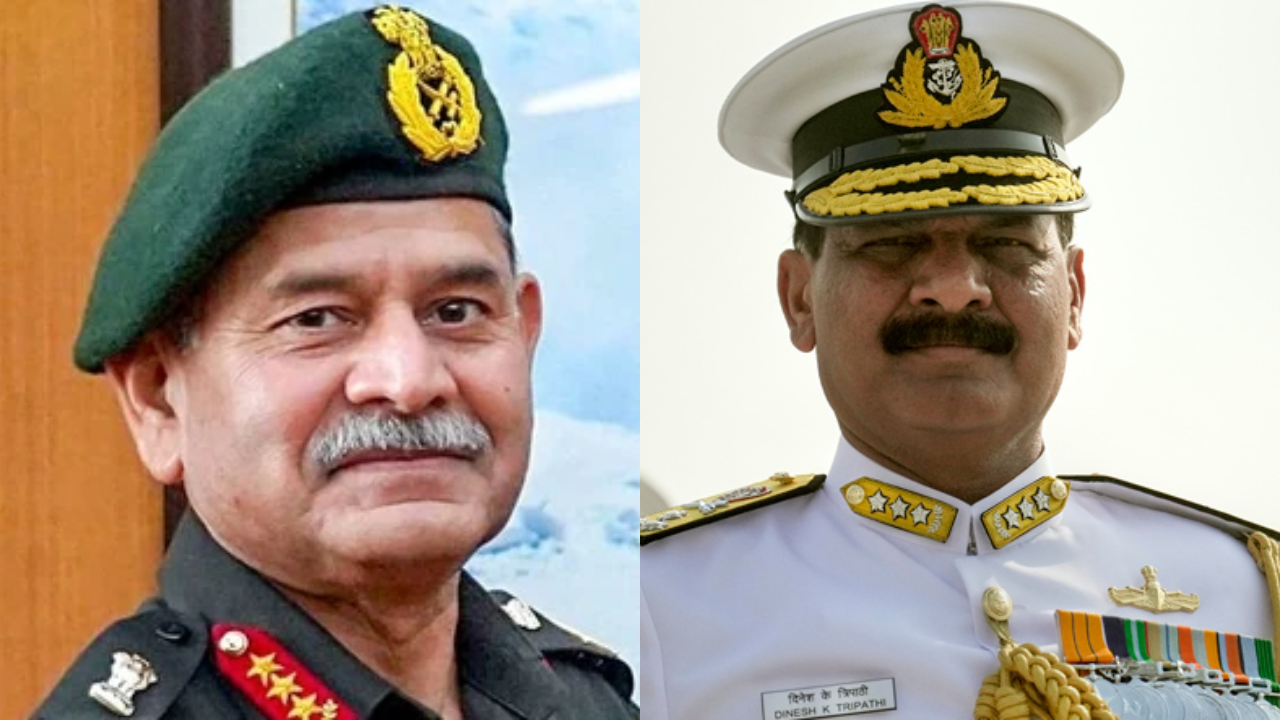
Admiral Dinesh K. Tripathi, India’s Chief of the Naval Staff, has landed in Myanmar for a four-day visit that officially centers on maritime cooperation and regional security. While the public narrative focuses on "capacity building" and "technical expertise," the trip is a calculated move to secure India's eastern flank as the civil war next door threatens to spill over the maritime border. New Delhi is not just sending a message of goodwill; it is attempting to maintain its grip on the strategically vital Kaladan Multi-Modal Transit Transport Project while ensuring that the growing Chinese footprint in the Bay of Bengal does not become a permanent stranglehold.
The Geography of Survival
New Delhi does not have the luxury of choosing its neighbors. Myanmar is the only ASEAN country that shares both a land and maritime border with India, making it a critical pillar of the "Act East" policy. When Admiral Tripathi meets with the senior leadership of the Myanmar Navy, the conversation will likely pivot around the security of the Sittwe Port. Meanwhile, you can read other events here: The Public Order Architecture of the Starmer Administration.
India has invested hundreds of millions of dollars into Sittwe to bypass the "Chicken’s Neck" corridor, the narrow strip of land that connects mainland India to its northeastern states. If Myanmar collapses into total anarchy, or if the military junta loses control of the Rakhine State coastline, India’s investment becomes a stranded asset. The Admiral’s presence is a signal to both the ruling State Administration Council (SAC) and the various ethnic armed organizations (EAOs) that India intends to protect its maritime interests regardless of the internal political turmoil.
The Chinese Shadow over the Bay of Bengal
You cannot talk about Myanmar without talking about Beijing. China has been aggressively pushing the China-Myanmar Economic Corridor (CMEC), which includes a deep-sea port at Kyaukpyu. This port gives China a direct gateway to the Indian Ocean, effectively bypassing the Malacca Strait. To understand the bigger picture, check out the recent analysis by NBC News.
For the Indian Navy, this is a nightmare scenario. A Chinese-operated port in Myanmar allows the People’s Liberation Army Navy (PLAN) to monitor Indian naval movements near the Andaman and Nicobar Islands with ease. Tripathi’s visit serves as a counterweight. By offering training, hydrographic support, and "Made in India" defense hardware, New Delhi is trying to ensure that the Myanmar Navy remains integrated with Indian standards rather than becoming an extension of the Chinese fleet.
Security is a zero-sum game in these waters. Every Indian offshore patrol vessel sold or gifted to Myanmar is one less opening for a Chinese frigate.
The Dilemma of the Junta
Indian diplomacy is currently walking a razor-thin tightrope. On one hand, the international community has largely shunned the Myanmar military since the 2021 coup. On the other, India’s security establishment knows that the military remains the only institution currently capable of negotiating maritime boundary issues and managing insurgent groups that hide in the dense jungles along the border.
Admiral Tripathi’s visit will be criticized by human rights advocates who argue that high-level military engagement legitimizes a regime accused of widespread atrocities. However, the Navy views the world through a lens of "maritime domain awareness." If India pulls back, the vacuum is instantly filled by actors who do not have India’s best interests at heart. This is not about endorsing a political system; it is about preventing a maritime blind spot.
Technical Cooperation as a Trojan Horse for Influence
The "cooperation" mentioned in official press releases is often a euphemism for creating long-term dependency. When India provides training for Myanmar’s naval officers at the National Defence Academy or the Indian Naval Academy, it builds a generation of officers who are familiar with Indian doctrine and equipment.
- Hydrography: India is a regional leader in mapping the seabed. By helping Myanmar map its waters, India gains intimate knowledge of the underwater terrain where submarines might hide.
- Maintenance and Repairs: Providing technical support for Myanmar’s aging fleet ensures that Indian engineers and parts are always present at Myanmar’s naval bases.
- Information Sharing: The White Shipping Information Exchange allows both countries to track commercial vessels, but it also provides a framework for tracking "dark targets" or vessels that have turned off their transponders.
Beyond the Horizon of the Civil War
The internal conflict in Myanmar has reached a stalemate that favors the insurgents on the ground but leaves the military in control of the seas and the air. The Myanmar Navy is the junta's most stable wing, largely because the resistance groups lack a significant maritime presence. This makes the Navy the safest point of contact for India to maintain a bridge to Naypyidaw.
But this strategy has a shelf life. If the Arakan Army (AA) continues its sweep through Rakhine State, they may eventually control the coastline surrounding the very ports Admiral Tripathi is trying to secure. New Delhi is likely already opening back-channel communications with these groups, but for now, the formal military-to-military relationship remains the primary tool for regional stability.
The Andaman Sea Watch
The Indian Navy has been transforming the Andaman and Nicobar Command (ANC) into a formidable "unsinkable aircraft carrier." As India ramps up its presence in the eastern Indian Ocean, it needs a friendly or at least a neutral Myanmar to act as a buffer.
Tripathi's discussions will undoubtedly touch upon the coordinated patrols (CORPAT) that both navies conduct. These patrols are designed to combat drug trafficking, human smuggling, and illegal fishing. However, their true value lies in the "interoperability" they build. In the event of a regional crisis, the ability for two navies to communicate and move in tandem is the difference between containing a threat and letting it spiral out of control.
The Hard Reality of Maritime Realism
Critics will point to the instability of Myanmar as a reason to disengage. They are wrong. In the world of naval strategy, disengagement is a form of surrender. The Bay of Bengal is becoming a crowded theater. With the US, China, and regional powers all vying for influence, India cannot afford to be a passive observer of its own backyard.
The Admiral’s visit is a reminder that while the land border is a mess of insurgents and refugees, the sea remains a space where sovereign states can still project power and forge alliances. India is betting that by anchoring its relationship with the Myanmar Navy, it can weather the storm of the civil war and emerge with its maritime interests intact.
The success of this visit won't be measured by the warmth of the handshakes in Naypyidaw. It will be measured by whether Indian ships can continue to dock at Sittwe ten years from now without asking Beijing for permission.
India is playing a long game in the Bay of Bengal, and the Navy is the lead player. If the government fails to secure this maritime partnership, the "Act East" policy will be nothing more than a slogan buried under the weight of Chinese expansionism and regional instability. The stakes are too high for anything less than a permanent, aggressive presence in Myanmar’s waters.
Ship-to-ship transfers, joint exercises, and hardware sales are the currency of this diplomacy. As long as the guns are firing in the Myanmar interior, the quiet cooperation at sea remains India’s best hope for regional containment. New Delhi must keep its eyes on the water, even as the smoke rises from the shore. This is the brutal reality of neighborhood watch in a failing state.
India’s naval diplomacy is the only thing standing between a secure eastern seaboard and a Bay of Bengal dominated by a hostile northern neighbor. Every hour Admiral Tripathi spends on the ground is an investment in that security. Failure to maintain this link would be a strategic blunder that would take decades to correct. New Delhi knows it. Beijing knows it. And the generals in Myanmar certainly know it. The map of the Indian Ocean is being redrawn, and the Navy is ensuring India holds the pen.