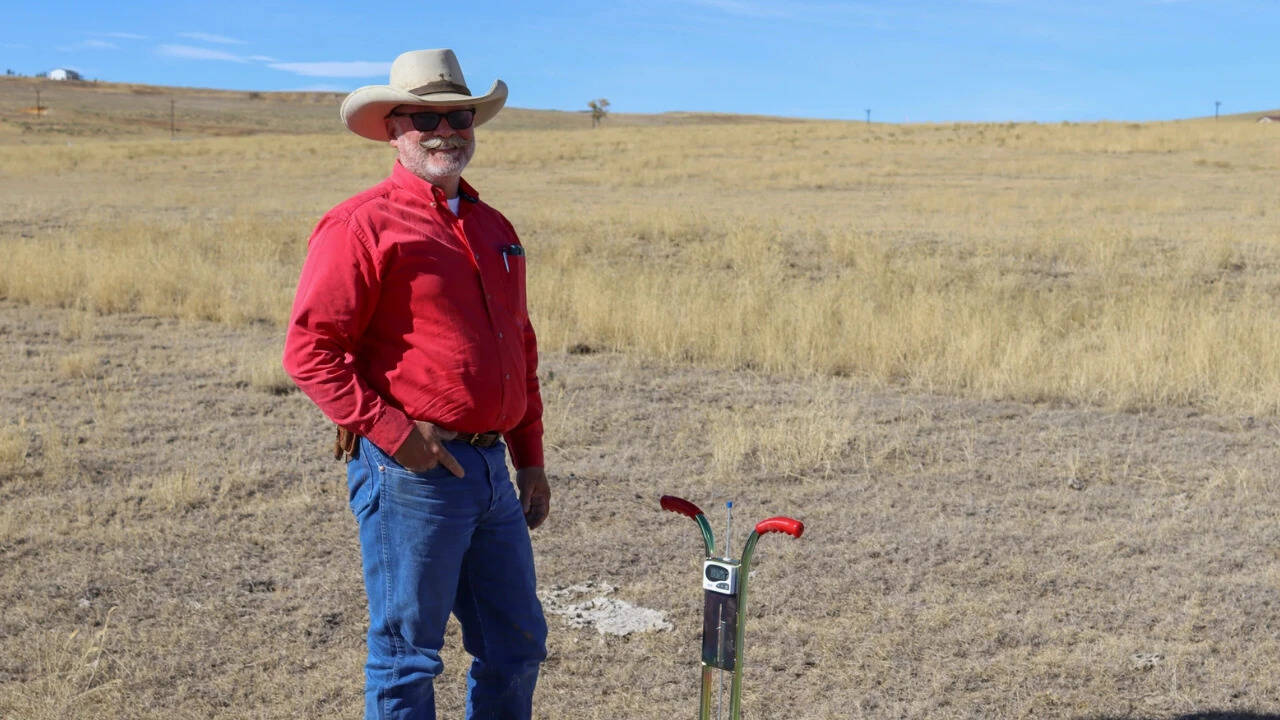
When a Colorado ranching operation doubles its bird detections through adaptive grazing, the agricultural press tends to paint a picture of effortless ecological harmony. Birds return. Grass grows taller. Nature heals. But spending thirty years covering rural economies and Western land management teaches you to look past the press releases and examine the balance sheet, the labor costs, and the stubborn resistance of old habits.
Adaptive grazing is not a magic trick. It is a grueling, daily operational shift that trades predictability for biological complexity.
The Mechanics Behind the Numbers
To understand why avian populations double on properties shifting away from continuous stocking, you have to look at the ground. Traditional grazing leaves cattle in the same pasture for months. Animals selectively graze their favorite forage down to the roots, trample the rest, and compress the soil until it resembles concrete. Rain runs off instead of sinking in. Bare earth bakes in the dry Colorado sun.
Adaptive management turns that logic inside out. Cattle are moved frequently—sometimes multiple times a day—mimicking the tight, predatory-driven herds of historical bison. They graze a paddock hard, trample organic matter into the surface, deposit manure evenly, and then vanish for months to let the pasture recover.
Ground-nesting birds like grasshopper sparrows and western meadowlarks need dense, undisturbed cover to hide their nests from predators. Under continuous grazing, that cover gets sheared off before breeding season peaks. Under rotational systems, ungrazed pastures provide the sanctuary those species require.
- Soil armor: Litter accumulation shades the soil, dropping ground temperatures and retaining precious moisture.
- Root depth: Periodic intense defoliation followed by long rest periods forces plants to drive roots deeper into the subsoil.
- Insect abundance: Higher organic matter triggers a surge in beetle, grasshopper, and spider populations, creating a high-protein buffet for nesting birds.
The Financial Reality Check
Nobody shifts a multi-generational cow-calf operation because they want to boost the local sparrow count. They do it because continuous grazing margins are razor thin and getting thinner. Feed costs escalate. Fertilizer prices fluctuate wildly. Water rights become more expensive and harder to secure.
Yet, adopting this method requires a massive upfront investment in infrastructure. You cannot practice high-frequency rotation without miles of electric fence, reliable livestock water points in every single paddock, and the labor to move animals constantly.
A rancher operating solo across five thousand acres cannot simply walk out and shift fifty cow-calf pairs every afternoon. The labor bottleneck is real. If you hire help, your payroll climbs. If you don't hire help, your fences fail, your cattle break out into the neighbor's hay field, and your marriage hits a rough patch.
The Cost Equation
- Water infrastructure: Installing solar pumps and pipeline networks can cost tens of thousands of dollars before you see a single pound of extra beef.
- Fencing materials: High-tensile polywire and step-in posts add up quickly across rough terrain.
- Management bandwidth: The mental load of tracking forage height, weather forecasts, and animal health replaces the simple routine of checking a herd once a week.
Separating Science From Ideology
Environmental advocates often frame regenerative agriculture as a moral crusade, while traditionalists dismiss it as an urban fad. The truth sits uncomfortably in the middle.
Adaptive grazing works brilliantly on properties with productive soils and adequate baseline moisture or irrigation. But trying to apply intense multi-paddock rotation to fragile, arid rangelands with low carrying capacity can backfire. If you concentrate too many hooves on brittle desert soils during a drought, you do not regenerate the land; you accelerate desertification.
The Colorado ranching families succeeding with this model are not dogmatic. They measure forage mass with a ruler, track animal body condition scores religiously, and adjust their stocking rates downward when dry years hit. They understand that biology dictates the rules, not a textbook written by consultants from three states away.
What Happens When the Grant Money Ends
Much of the initial adoption in regions like Colorado is currently greased by conservation grants, carbon market pilots, and nonprofit partnerships. Financial incentives help offset the risk of changing operational routines.
However, long-term survival depends entirely on whether the system generates more profit per acre than the old way of doing things. Early data suggests that once the soil health reaches a critical threshold, input costs for synthetic fertilizers and winter hay drop enough to offset the higher labor requirements. Carrying capacity increases because the land captures and holds more effective moisture from every thunderstorm.
The birds are simply the earliest and loudest indicator that the machine is working. When the insects return and the perennial grasses start choking out the cheatgrass and thistle, the whole ecosystem stabilizes.
The hard work is not convincing ranchers that biodiversity matters. The hard work is designing supply chains and local processing infrastructure that reward producers for raising beef in a way that heals the dirt beneath their feet, ensuring that the next generation can afford to keep the gates open.