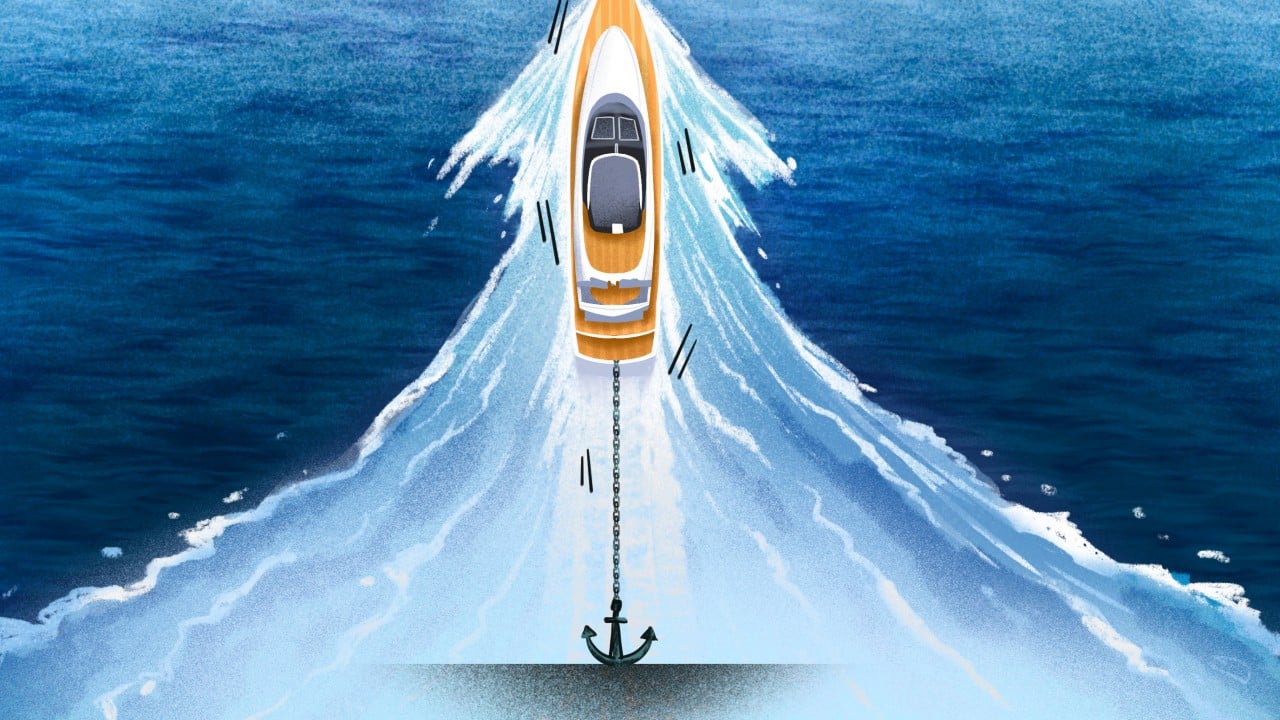
Mainstream travel media is currently swooning over Europe’s newest infrastructure darling: an 800-mile mega-railway line set to debut on June 25. The headlines read like copy-pasted press releases from a transport ministry. They promise a glorious return to the golden age of rail, a triumphant victory for sustainable travel, and a viable alternative to short-haul aviation.
It is a beautiful fantasy. It is also completely detached from reality.
Building massive, cross-continental rail lines to solve the climate crisis is the transport equivalent of treating a broken leg with a premium organic band-aid. The cheerleaders of this project are celebrating a triumph of civil engineering while ignoring the brutal mathematics of logistics, economics, and human behavior.
The industry is congratulating itself on an 800-mile achievement. They should be apologizing for a misallocation of capital that sets sensible transit back by decades.
The Myth of the Short-Haul Killer
The lazy consensus dominating this launch is that longer tracks equal fewer planes. The logic seems simple: connect point A to point B across an entire continent, and travelers will eagerly trade their airport security lines for a scenic train cabin.
They won't.
High-speed rail has a distinct psychological and economic breaking point. Data from decades of European transit networks proves that rail dominates when a journey takes under three hours. At three to four hours, it competes fiercely. The moment a train journey crosses the five-hour threshold, the market share collapses off a cliff.
An 800-mile route, even assuming sustained speeds of 180 mph, cannot compete with commercial aviation on time when factoring in stops, switching yards, and terrain bottlenecks. By the time a passenger factors in an eight-to-ten-hour journey, the target demographic shifts from "busy business traveler trading a flight for a train" to "leisure tourist with days to burn."
We are not replacing flights. We are subsidizing a slow-travel luxury product for a fraction of the population while the low-cost carriers keep flying overhead, completely unbothered.
The Carbon Footprint of Heavy Steel
Let's address the sacred cow of the rail lobby: environmental impact. The narrative insists that trains are inherently green. This assumes a train operates in a vacuum, magically appearing on tracks that grew out of the earth like trees.
I have spent years analyzing capital expenditure and asset deployment in heavy infrastructure. The carbon debt accumulated by pouring millions of tons of concrete, boring through mountain ranges, forging steel tracks, and disrupting local ecosystems is astronomical. This upfront environmental deficit takes decades of high-capacity operation just to break even against the status quo.
Imagine a scenario where a newly constructed mega-rail line operates at 60% capacity because consumers balk at the ticket prices or the grueling travel times. The carbon amortization schedule stretches out into infinity. You cannot claim to be saving the planet in 2026 by deploying an infrastructure model that won't achieve net-zero neutrality until 2060.
By contrast, aviation is aggressively pursuing sustainable aviation fuels (SAF) and aerodynamic efficiencies. While rail enthusiasts are busy cutting ribbons on tracks that took twelve years to clear environmental lawsuits, the aviation industry is decarbonizing the existing fleet without laying a single square inch of concrete.
The Opportunity Cost Failure
Every billion euros funneled into a single, high-profile mega-line is a billion euros stolen from the projects that actually matter: regional commuter networks.
The true crisis of modern transportation is not the executive who can't get from one side of Europe to the other without flying. The crisis is the suburb-to-city commuter trapped in gridlock because their local transit authority runs three buses a day and a rusted-out diesel train once an hour.
If your goal is carbon reduction, the math is clear. You get exponential returns by moving millions of daily car commuters onto clean, electric regional rail. You get microscopic, single-digit returns by moving a few hundred luxury travelers off a Ryanair flight onto an expensive cross-continental sleeper train.
The mega-railway is a vanity project for politicians who want a legacy photo-op next to a sleek aerodynamic nose cone. It does nothing for the working-class commuter breathing emissions on a jammed ring road.
The Hidden Cost of Cross-Border Bureaucracy
The press releases promise a seamless experience across 800 miles. They ignore the institutional nightmare of European rail interoperability.
Unlike aviation, which operates under globally unified airspace control standards, European rail is a fractured kingdom of competing national track authorities, distinct signaling systems (despite the slow rollout of the European Rail Traffic Management System), and unionized labor forces with vastly different strike schedules.
When an air traffic control strike happens in one country, planes can often reroute. When a rail strike hits a single national segment of an 800-mile line, the entire multi-country route paralyzes instantly. A breakdown in track maintenance five hundred miles away strands passengers across three borders. By tying an entire transit corridor to a single physical thread, operators inherit a fragile system that crumbles at the first sign of friction.
Stop Asking if We Can Build It
The public is asking the wrong question. People see a massive construction achievement and ask, "Isn't it incredible that we can build this?"
The correct question is, "Is this the most efficient way to move people and goods in the 21st century?"
The honest answer is an uncomfortable no. If we stripped away the romantic nostalgia of train travel, no sane analyst would design a transportation strategy around massive, inflexible corridors that take a decade to construct and cost billions to maintain.
We need to stop romanticizing the steel track. We need to focus on building agile, decentralized regional electric networks, scaling automated bus rapid transit, and accelerating the decarbonization of flight.
The 800-mile line opening on June 25 is not a glimpse into the future. It is a monument to a 19th-century concept wrapped in modern marketing. Enjoy the inaugural ride if you have the time to waste, but don't pretend you're saving the world.