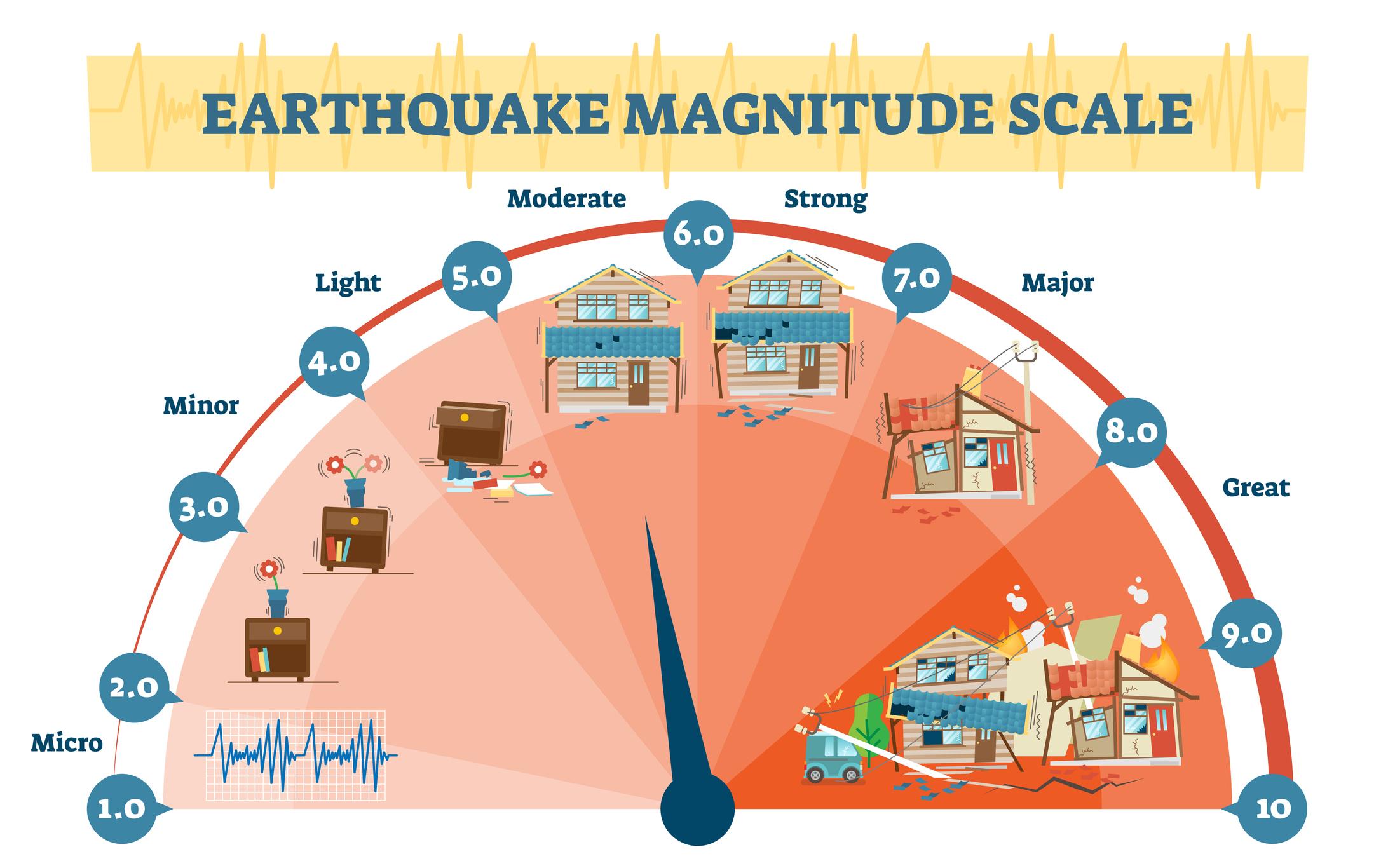
A massive 7.5 magnitude earthquake just ripped through the seabed of the South Pacific Ocean. When the earth shakes that hard, the world feels it—literally. This wasn't a minor tremor or a localized rattling of dishes. We're talking about a significant release of energy that caught the attention of every major seismic monitoring station from the USGS to Geoscience Australia.
If you're living on the Pacific Rim, you probably felt that familiar spike of adrenaline. The first question is always the same. Is there a tsunami? The South Pacific is a complex network of tectonic plates, and when a 7.5 hits, the displacement of water is the primary concern for everyone from Fiji to New Zealand. In similar updates, we also covered: The Strait of Hormuz Trap and Why the Gulf Alternatives Are Failing.
The Reality of the South Pacific Seismic Zone
The South Pacific isn't just a vacation destination; it's one of the most geologically violent places on the planet. This recent 7.5 magnitude quake happened along the boundary where the Australian plate meets the Pacific plate. It's a subduction zone. One plate is literally diving under the other. When they get stuck and then suddenly slip, you get the kind of power that can move entire islands.
Most people think of earthquakes as a single event. They aren't. An earthquake of this size is a sequence. You have the mainshock, but then you have the aftershocks. These aren't just little "echoes." Some aftershocks can reach magnitudes of 6.0 or higher. They can finish off buildings that were only cracked by the first hit. If you're in a coastal area, you don't just wait for the first wave; you stay on high alert for hours, sometimes days. NPR has also covered this critical issue in great detail.
Why 7.5 is a Critical Threshold
Magnitude scales are logarithmic. A 7.0 is ten times stronger than a 6.0. By the time you hit 7.5, the energy release is staggering. To put it in perspective, a 7.5 magnitude earthquake releases roughly the equivalent energy of 5.6 million tons of TNT.
I've looked at the data from similar events in the Tonga-Kermadec Trench. That area is a factory for big quakes. The depth matters just as much as the magnitude. If a 7.5 happens 500 kilometers down, it might barely be felt. But when it's shallow—say, 10 to 30 kilometers deep—that's when the ocean floor moves enough to trigger a tsunami.
Tsunami Physics 101
A tsunami isn't a giant surfing wave. It's a wall of water. Imagine the entire column of the ocean being pushed upward. When that energy hits the shallow water near a coastline, it slows down and grows tall. Even a one-meter tsunami can sweep cars off the road. It has incredible mass.
In the case of this South Pacific quake, the Pacific Tsunami Warning Center (PTWC) jumped into action immediately. Their job is to calculate the wave arrival times before the water even starts moving. It's a race against physics. You've got minutes to get to high ground if you're near the epicenter.
Common Misconceptions About Pacific Quakes
People often assume that if they don't see a giant wave within ten minutes, they're safe. That's a dangerous mistake. Tsunami waves can travel at the speed of a jet plane across the open ocean. They can also wrap around islands. Just because you're on the "protected" side of an island doesn't mean the water won't find you.
Another mistake is returning to the beach after the first wave recedes. Usually, the first wave isn't the biggest. The second or third waves can be much more destructive because they're hitting a coast that's already been weakened and cluttered with debris.
Monitoring and Technology in 2026
We've come a long way in how we track these events. The Deep-ocean Assessment and Reporting of Tsunamis (DART) buoy system is our frontline defense. These buoys sit on the ocean floor and sense pressure changes as small as a few millimeters. When a 7.5 magnitude quake hits, these sensors go into "event mode" and beam data to satellites every few seconds.
We also use Interferometric Synthetic Aperture Radar (InSAR). This allows scientists to use satellites to see exactly how much the earth's surface deformed. We can literally see the ground move from space. It's not just cool tech; it helps us predict where the next pressure point is building up.
The Ring of Fire is Waking Up
It's a cliché, but it's true. The Ring of Fire is where 90% of the world's earthquakes occur. This 7.5 event is part of a larger pattern of increased activity we've seen lately. While we can't "predict" an earthquake to the day or hour, we can see the clusters. The South Pacific has been particularly restless this year.
If you look at the historical data from the USGS, we're seeing a slight uptick in major seismic events in this specific corridor. It's a reminder that our planet is a living, moving thing. We're just living on the crust.
Practical Steps for Seismic Safety
If you live in a coastal area or a known earthquake zone, stop treating your emergency kit like a "maybe" project. You need it now. A 7.5 magnitude quake doesn't give you a heads-up.
- Check your altitude. Know exactly how many meters you are above sea level. If you're under 30 meters, you need an evacuation plan that doesn't rely on a car. Roads get blocked instantly.
- Secure your furniture. Most injuries in big quakes aren't from collapsing buildings; they're from flying TVs and falling bookshelves.
- Digital backups. If a quake hits and you have to run, you aren't grabbing your desktop. Keep your essential documents in an encrypted cloud and on a physical thumb drive in your "go-bag."
- Communication plan. Cell towers usually fail or get jammed during disasters. Have a designated out-of-area contact person that everyone in your family knows to call. Long-distance lines often work when local ones don't.
Pay attention to the official alerts from the PTWC and your local disaster management office. Don't rely on social media rumors. In a 7.5 magnitude event, seconds count. If the ground shakes so hard you can't stand up, and you're near the coast, don't wait for a siren. Just head for high ground immediately.
The South Pacific will continue to shake. That's the nature of our geography. The goal isn't to live in fear, but to live with a plan. Check your supplies today. Make sure your family knows the drill. It’s the only way to stay ahead of the curve when the earth decides to move again.



