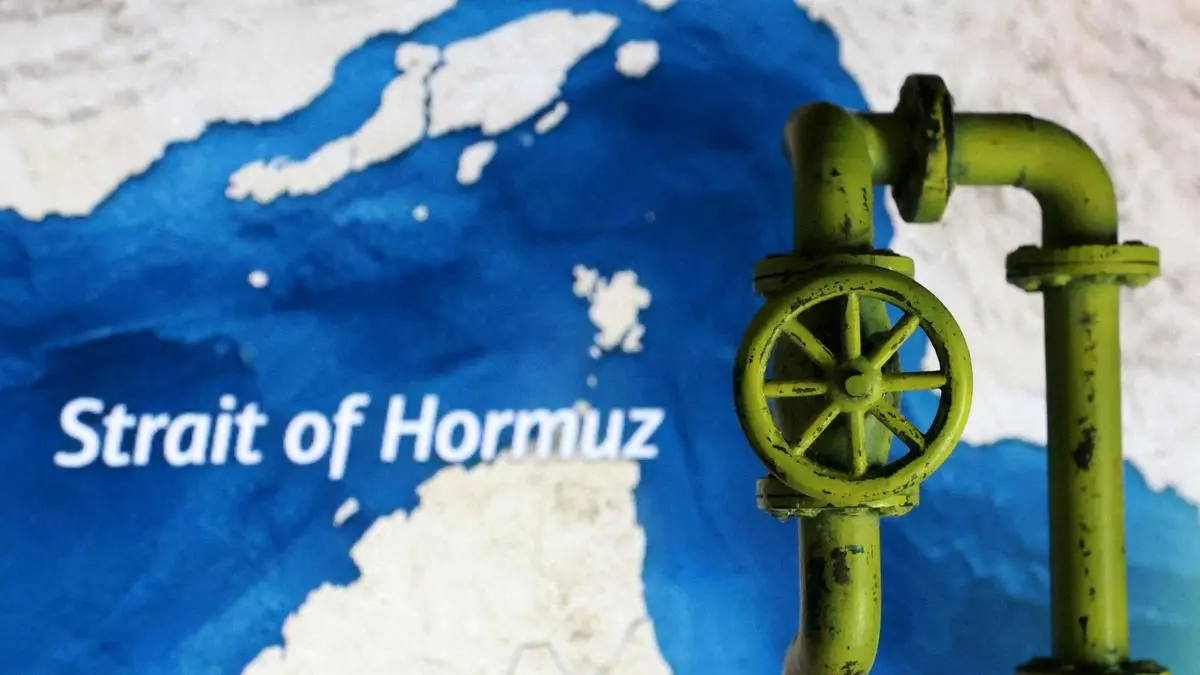
The consensus among the beltway hawks is as lazy as it is dangerous. They see a $500 million daily price tag on the Strait of Hormuz and assume Tehran is the one sweating. Donald Trump is currently broadcasting to the world that Iran is desperate to reopen the waterway because they are "losing" half a billion dollars every sunrise.
It’s a neat, digestible lie. It fits perfectly into the 20th-century logic of "maximum pressure." But it misses the fundamental shift in 2026 warfare: Iran isn't losing $500 million a day. The global economy is hemorrhaging it, and Tehran is just waiting for the check to bounce.
The Math of a Failed Siege
Trump’s claim that Iran "wants" the Strait open to make $500 million a day is a fundamental misreading of Iranian leverage. When the U.S. and Israel launched Operation Epic Fury on February 28, they didn't just target nuclear sites; they decapitated the old guard and forced the new leadership, under Mojtaba Khamenei, into a corner where they have nothing left to lose.
The "blockade" Trump brags about is actually a self-inflicted wound. Yes, Iran’s oil exports are strangled. But let’s look at the "bullwhip effect" that current analysts are too timid to mention.
- Energy Realism vs. Energy Idealism: 20% of global oil and 25% of LNG (Liquefied Natural Gas) are currently sitting behind a wall of Iranian sea mines and USV (Unmanned Surface Vessel) swarms.
- The Price Floor has Vanished: Brent Crude didn't just "rise." It shattered the ceiling, hitting $126 last month.
- The Food Crisis: The GCC states (Saudi Arabia, UAE, etc.) rely on the Strait for 80% of their caloric intake. We aren't just talking about expensive gas; we are talking about a region that is three weeks away from a famine because the "blockade" stops food just as effectively as it stops fuel.
Why Tehran is Winning by Losing
The competitor's narrative suggests Iran is "saving face." This is a classic Western projection. In reality, Tehran has effectively weaponized the "Just-in-Time" (JIT) delivery model of the West.
By closing the Strait, Iran has achieved what decades of diplomacy couldn't: they have made the survival of the global economy dependent on their domestic political stability. When Trump says he won't lift the blockade until there is a "DEAL," he is essentially holding a gun to the head of the American consumer and blaming the guy across the street.
Imagine a scenario where the U.S. successfully maintains this blockade for another six months. The $500 million "loss" Trump cites for Iran is pennies compared to the trillions in lost GDP currently accumulating in the EU and Asia. China, which receives a third of its oil through the Strait, isn't going to sit by and watch its industrial base evaporate for the sake of a "Great Deal."
The Technological Asymmetry Gap
The "blockade" isn't a 1940s-style naval ring. It is a high-tech siege. I have watched military contractors blow billions on "unbreakable" systems, only to see them neutralized by a $20,000 drone swarm.
The U.S. Navy is currently playing a losing game of "Whack-a-Mole." They seize a ship like the Touska, and in response, the IRGC launches a drone that spikes insurance premiums by another 0.4%. For a supertanker, that’s a quarter-million-dollar surcharge just to sit in the Gulf of Oman.
The "deal" Trump wants is predicated on the idea that Iran is a rational economic actor seeking profit. They aren't. They are a revolutionary state in survival mode. You cannot bribe a martyr with $500 million a day when he believes he is fighting an existential war.
The Misconception of "Market Stability"
Investors are currently assessing "peace talks" in Islamabad as if they are a standard diplomatic hurdle. They aren't. They are a desperate attempt to prevent a global stagflation event that makes the 1970s look like a boom period.
The mistake the "insiders" are making is believing that reopening the Strait fixes the problem. It doesn't. The "Hormuz Shock" has already broken the structural trust in maritime security. Even if the blockade ends tomorrow, the "Geopolitical Risk Premium" (GRP) is now baked into every barrel of oil for the next decade.
Stop Chasing the "Deal" and Start Building Redundancy
The advice being peddled by mainstream analysts—to "wait for the deal"—is a recipe for bankruptcy. If you are a business leader relying on Middle Eastern energy or transit, the "status quo" is never coming back.
- Airlift is the New Maritime: Companies like Lulu Retail in the GCC are already airlifting staples. This isn't a temporary fix; it's a new logistics reality.
- Energy Sovereignty over Globalism: The era of "cheap energy from somewhere else" is dead. If your business model doesn't account for $150 oil as a baseline risk, you don't have a business model.
- Sanctions are a Double-Edged Sword: We have reached the point of diminishing returns. Sanctioning a country that has already disconnected itself from the global financial grid is like trying to unplug a TV that’s already on fire.
Trump’s $500 million figure is a ghost. It’s a number from a world that ended on February 28. The real cost of this blockade is the permanent de-globalization of the energy market.
Tehran knows this. Washington seems to be the only one still looking at the 2024 playbook while the 2026 world burns. The blockade isn't a tool for a deal; it's the funeral of the old world order.
Stop looking for the reopening. Start preparing for the permanent closure.