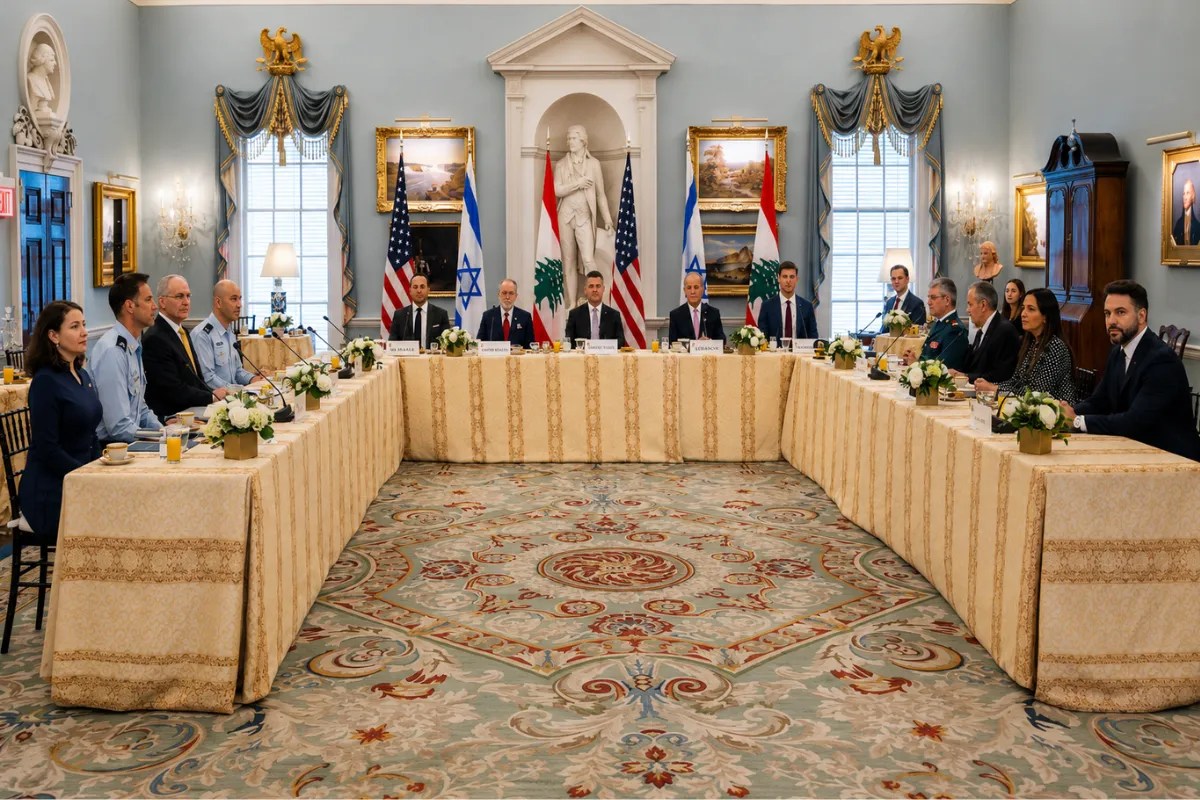
The international diplomatic corps is currently patting itself on the back. Headlines across the globe are flashing news of a 45-day ceasefire agreement between Israel and Lebanon, asking with naive optimism if this signals the beginning of the end for border warfare.
It does not.
To view a 45-day pause in hostilities as a step toward peace is to fundamentally misunderstand the mechanics of modern asymmetric warfare. This is not a peace process. It is an operational reset masquerading as diplomacy. Mainstream commentators are treating this truce like a fragile glass structure that needs to be protected, failing to realize that both combatants are using the quiet to reload, re-target, and re-finance.
The Lazy Consensus of Temporary Truces
The prevailing narrative suggests that a 45-day window allows for the implementation of UN Resolution 1701, pushing armed groups north of the Litani River and allowing displaced civilians on both sides to return home.
This premise is deeply flawed.
In conflict zones managed by deeply entrenched non-state actors, a temporary cessation of airstrikes does not lead to disarmament; it facilitates replenishment. During active bombardment, supply lines are choked, command structures are forced underground, and logistics are a nightmare. A 45-day window of safety provides a low-risk environment to rebuild shattered infrastructure, establish new hidden launch sites, and smuggle hardware across porous borders.
I have spent years analyzing regional security architectures and watching western intelligence agencies misread these pauses. In 2006, the immediate aftermath of the month-long war was heralded as a new era of stability guaranteed by international peacekeepers. Instead, it became a fifteen-year incubation period for a massive missile arsenal.
To believe that 45 days will result in a sudden compliance with international law is historical blindness.
Who Actually Benefits From the Pause?
Let us break down the cold, transactional reality of this ceasefire for both major actors.
The Institutional Actor
For state militaries facing multi-front engagements, time is a scarce commodity. A 45-day pause on one border allows for several critical operational adjustments:
- Active Duty Rotation: Troops who have been operating under extreme high-tempo conditions for months can finally be rotated out, reducing combat fatigue and operational errors.
- Supply Chain Refurbishment: Precision-guided munitions, air defense interceptors, and armored vehicle spare parts are consumed at unsustainable rates during high-intensity conflict. This window allows domestic and foreign supply lines to catch up with demand.
- Intelligence Re-calibration: Satellites and reconnaissance drones can shift their focus from immediate targeting to long-term mapping of deep-soil fortifications without the distraction of moving battles.
The Non-State Actor
For an embedded paramilitary force, a ceasefire is an absolute strategic victory, regardless of what territory they temporarily concede on paper.
- Command Reconstitution: Loss of senior leadership is the hardest blow to recover from during active warfare. A pause allows the survival elements to appoint successors, establish secure communication channels, and rebuild the chain of command without fear of targeted strikes.
- Public Relations Reconstruction: The civilian population bearing the brunt of the collateral damage gets a breathing spell. The militant group can use this time to distribute aid, project an image of governance, and control the narrative by blaming the economic devastation entirely on external aggression.
- Static Defense Realignment: If forced to move back from a specific line, 45 days is more than enough time to plant new underground networks slightly further back, rendering previous intelligence targeting arrays obsolete.
Dismantling the Return of the Displaced Myth
The most emotionally potent argument used to defend this ceasefire is the return of tens of thousands of displaced civilians to their homes along the blue line.
This is a dangerous illusion.
No rational civilian returns to a border town to rebuild a life when they know the lease on their safety expires in exactly 45 days. What actually happens is an influx of look-sees: people returning briefly to salvage personal belongings, evaluate property damage, and secure structures before retreating back to safer urban centers or temporary shelters further inland.
By treating the civilian return as a metric of success, international observers are confusing a short-term desperate salvage operation with genuine regional stabilization.
The Downside of Critical Realism
The uncomfortable truth about exposing the fallacy of this ceasefire is that it offers no easy alternative. The counter-argument to my position is obvious: Should the bombs just keep falling indefinitely? Is a temporary reduction in human casualties not worth the strategic risk?
It is an agonizing calculation. From a purely humanitarian perspective, 45 days without civilian casualties is an unalloyed good. But from a geopolitical perspective, an artificial pause that fails to address the underlying structural drivers of the conflict simply guarantees that the next outbreak of violence will be significantly more lethal. By allowing both sides to optimize their capabilities under the umbrella of a diplomatic truce, we are not preventing a war; we are underwriting a bigger one.
The Flawed Questions We Keep Asking
Look at the public discourse surrounding this event. The questions driving the news cycle are fundamentally wrong.
Wrong Question: Will the ceasefire hold for the full 45 days?
Right Question: How much military hardware will cross the border on day 44?
Wrong Question: Can diplomacy broker a permanent solution during this window?
Right Question: Which geopolitical patrons are using this pause to hedge their financial bets on the next phase of escalation?
If you want to understand where the Middle East is heading, stop looking at the signatures on the ceasefire drafts. Look at the shipping manifests, the troop rotations, and the structural depth of the concrete being poured just beyond the camera lenses.
This isn't the end of a war. It's intermission.