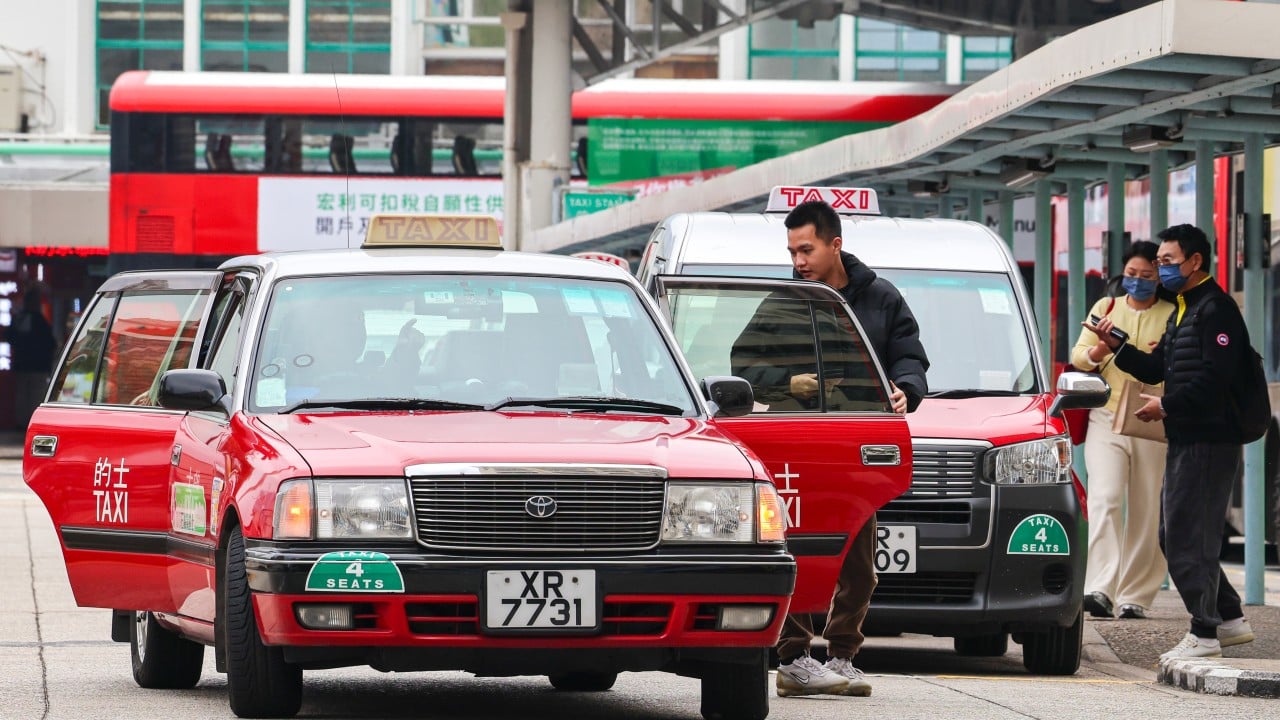
The press release masquerading as news claims victory: 40,000 Hong Kong taxi drivers have "registered" to accept Octopus payments. The narrative is tidy. It suggests a city finally dragging its most stubborn relic into the digital age. It paints a picture of modern efficiency where the friction of the "broken $500 note" disappears into a beep.
It’s a lie.
Registration is not adoption. Enrollment is not usage. In the high-stakes, low-margin theater of the Hong Kong taxi trade, the "digital revolution" is a PR stunt designed to satisfy regulators and tourists while the actual backbone of the industry—the drivers—clings to the physical bill for reasons that Silicon Valley or the Octopus Cards Limited boardroom will never acknowledge.
The Fee That Kills the Deal
Let’s talk about the math that the "cashless" evangelists ignore. A taxi driver in Hong Kong isn’t a corporate employee; they are a micro-entrepreneur operating on razor-thin spreads. When a passenger taps a card, that money doesn't hit the driver's pocket instantly. It enters a settlement cycle.
More importantly, after the initial "honeymoon" periods where transaction fees are waived, the house always takes a cut. For a driver netting a few hundred dollars after a grueling twelve-hour shift, a 1% or 2% fee isn't "the cost of doing business." It’s the difference between a hot meal and a cup of noodles.
To the passenger, $1.50 in fees on a $75 fare is invisible. To the driver, that’s a tax on their labor that provides zero incremental value. Cash has a 0% transaction fee. Cash settles in real-time. Cash buys gas at the end of the shift without waiting for a bank transfer. Until digital payments offer a negative fee—effectively subsidizing the driver for the data they provide—cash remains the superior technology.
The Great Liquidity Myth
The "People Also Ask" sections of the internet are obsessed with why Hong Kong taxis are "behind the times." The premise is flawed. They aren't behind; they are optimized for a specific type of survival.
Drivers operate in a shadow economy of immediate needs. They need to pay the fleet owner for the vehicle rental (the "stall" fee) in cash. They often split fuel costs or minor repairs in cash. When the entire ecosystem of taxi operations runs on physical liquidity, forcing a digital layer onto the final transaction creates a massive bottleneck.
Imagine a scenario where a driver collects $2,000 in digital payments over two days. Their rental fee is due daily. If that $2,000 is sitting in a digital clearinghouse, the driver has to tap into their personal savings or credit just to keep the car on the road. The digital payment isn't an "improvement"; it's a debt trap.
The Myth of Speed
The "seamless" argument is the most insulting. If you've ever actually sat in a Hong Kong taxi trying to use a digital wallet, you know the dance.
- The driver fumbles for a mobile device.
- The connection lags in the concrete canyons of Central or the tunnels under the harbor.
- The QR code fails to scan because of the glare on the plastic partition.
- The passenger waits for the "success" chime.
Compare this to the efficiency of a veteran driver. They’ve calculated the change before the car has even come to a complete stop. The bill is exchanged, the coins are dropped into the palm, and the door is open. In the time it takes for a 5G signal to handshake with a payment processor, the cash-paying passenger is already ten yards down the sidewalk.
Privacy is a Feature, Not a Bug
The push for 100% digital adoption is, at its core, a push for 100% surveillance. The "40,000 registered" headline is a dog whistle for tax authorities.
The Hong Kong taxi industry has long operated with a level of autonomy that scares the bureaucrats. Cash allows for a fluid, undocumented flexibility in how hours are worked and how income is reported. While the "transparent" crowd argues this is a bug that needs fixing, for the driver, it is a defensive wall against an increasingly expensive city.
Every digital transaction leaves a footprint. For a workforce that feels increasingly squeezed by rising fuel costs and competition from unregulated ride-hailing platforms, privacy isn't about hiding—it's about survival. They aren't "Luddites" for rejecting Octopus; they are rational actors protecting their autonomy.
The Ride-Hailing Shadow
The competitor's article ignores the elephant in the room: Uber. The only reason the government and Octopus are pushing this so hard is to compete with the ease of ride-hailing apps. But they are attacking the wrong problem.
People use Uber in Hong Kong not because they hate cash, but because they hate the "no-go" zones, the refused fares during shift changes, and the deteriorating quality of the vehicles. Fixing the payment method is like putting a fresh coat of paint on a sinking ship.
If the government actually wanted to modernize the industry, they would focus on:
- Derequation of the license system to lower the barrier to entry.
- Direct fuel subsidies tied to service quality.
- Mandating vehicle age limits.
Instead, they give us a "registered" Octopus reader that half the drivers will keep buried in their glove box or "accidentally" lose the charging cable for.
The Strategy for the Cynical Passenger
If you want to move through Hong Kong with the least resistance, stop waiting for the 40,000.
Carry $20 and $50 notes. Treat the Octopus reader as a "break glass in case of emergency" option, not a standard. If you want the driver to actually take the fastest route and not "lose their way," show them the color of your money upfront.
The industry insiders know the truth: registration is a metric for the board of directors. Actual usage is a metric of the street. Until the street gets a better deal than the board, the beep of the Octopus card will remain a rare sound in the front seat of a red cab.
Stop asking why the taxi industry won't change and start realizing that for the men and women behind the wheel, the current system isn't broken—it’s the only thing keeping them afloat.
Pay in cash. Get out of the car. Move on.