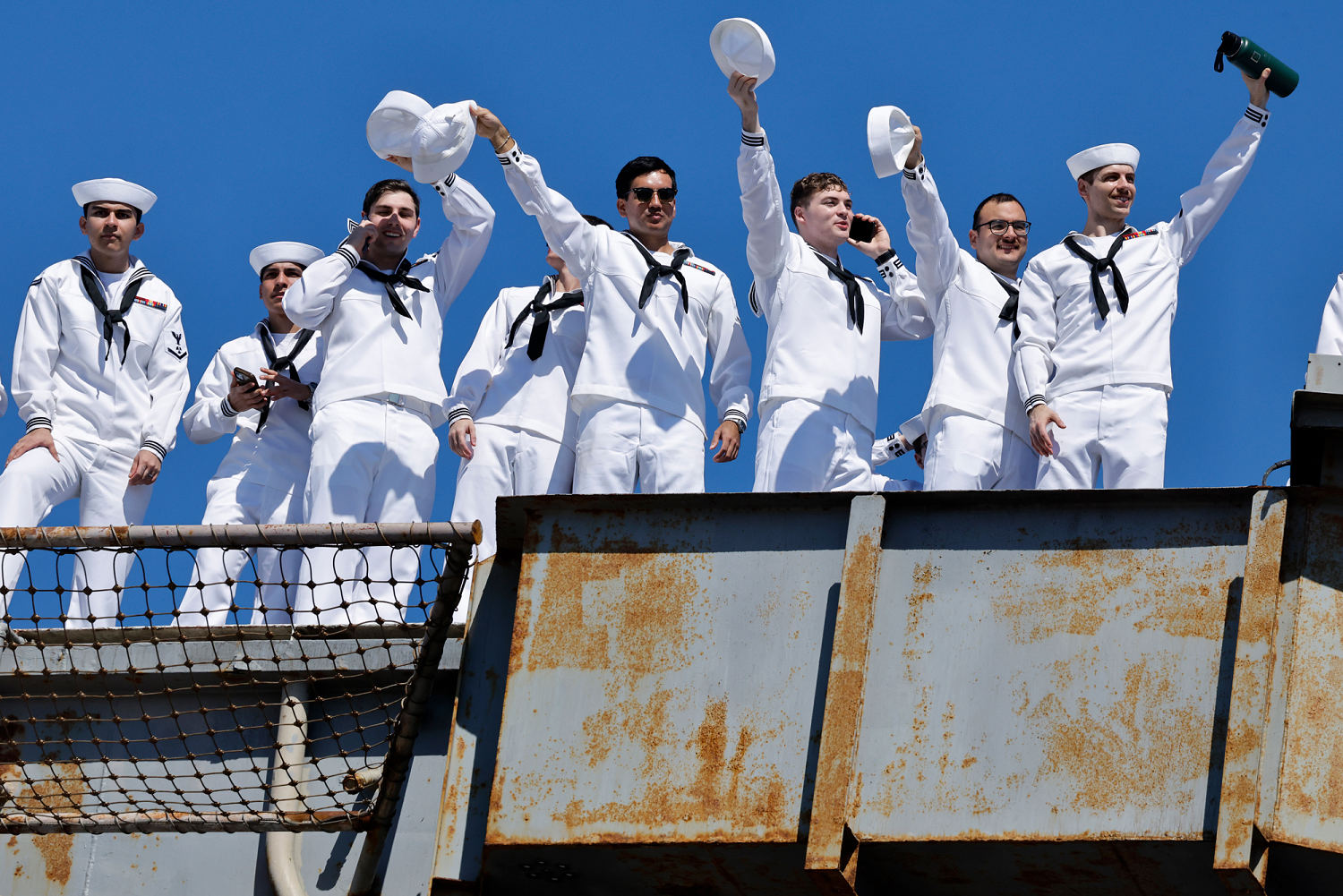
Ten months turned into nearly a year. When the USS Abraham Lincoln finally glided back into San Diego Bay, the homecoming felt less like a standard military rotation and more like the end of an endurance trial.
We are talking about 322 days away from home. Think about that for a second. Nearly an entire calendar year spent inside the cramped, humming hull of a nuclear-powered aircraft carrier, operating at the sharp edge of conflict in the Middle East.
Most civilians don't grasp what a deployment of this length actually does to a crew, a ship, and the military establishment backing them. This wasn't just a routine cruise. It was an exhausting marathon that pushed the United States Navy to its absolute operational limits, sparking intense scrutiny over how long we can keep floating cities at sea before something breaks.
The Reality Behind the Record Breaking Stint
When the Nimitz-class carrier left San Diego, families packed the piers expecting a standard six-to-eight-month tour. That is the rhythm sailors plan their lives around.
Then the geopolitical landscape shifted violently. With the outbreak of direct conflict involving Iran, the Pentagon needed a massive floating airbase parked right in the region. The Lincoln got the call to stay. And stay. And stay.
The ship ended up logging a staggering 265 uninterrupted days at sea without a single port visit. No shore leave. No mental break on foreign soil. Just grey water, flight deck operations, endless maintenance cycles, and the psychological weight of high-threat combat zones.
If you've never spent time on a deployed warship, the sensory deprivation alone is brutal. You live under constant white noise from the engines and ventilation. You eat institutional food, share tiny berthing spaces with dozens of other sailors, and operate multi-million-dollar aircraft under extreme sleep deprivation. Doing that for a few months is tough. Doing it for nearly a year changes a person.
The Cost of Extended Operations
Public attention during the homecoming naturally focused on the tearful family reunions on the San Diego pier. Kids holding homemade signs. Spouses crying tears of relief. It is powerful, cinematic imagery.
Behind those hugs, however, sits a heavy administrative and human cost. Defense leaders, including Defense Secretary Pete Hegseth, faced tough questions regarding the state of the crew and the physical wear and tear on the vessel itself.
Supplies ran thin at various points. Mail delivery became erratic. Spare parts for complex aircraft systems required emergency logistics rerouting. More importantly, mental health strain skyrocketed. When sailors spend close to 300 days staring at the same ocean horizon while launching strike packages, burnout isn't a risk—it's a certainty.
Critics of current naval deployment strategies argue that leaning this heavily on single carriers creates a dangerous domino effect. You stretch one crew to the breaking point to plug a strategic gap today, but you cannibalize readiness for tomorrow. Maintenance yards in dry dock are already backlogged. Pushing a carrier past the 300-day mark means its next scheduled overhaul period is going to require extensive, costly, and time-consuming repairs.
What This Means for the Future of the Fleet
We are watching a fundamental shift in how American sea power is managed. The era of predictable deployment rotations is cracking under the weight of simultaneous global flashpoints.
When adversaries test boundaries across multiple theaters, the Navy can't simply wave a magic wand and produce more ships. They have to squeeze more out of the hulls they already have. That means extending deployments, cutting port visits short, and asking eighteen-year-old recruits and seasoned master chiefs alike to bear the brunt of strategic shortfalls.
The Lincoln's marathon run proves that the machinery and the sailors can technically deliver when everything is on the line. F/A-18s launched, missions were executed, and the carrier served as an unmistakable projection of power. But just because the Navy can keep a carrier deployed for nearly a year doesn't mean it should become standard operating procedure.
Retention rates, mental health resources, and family stability are all tied to these deployment lengths. If the Pentagon keeps treating extreme endurance as the baseline rather than the emergency exception, they might win the tactical day while losing the institutional foundation of the force itself.
Welcome home, sailors. You earned every single minute of this rest.
USS Lincoln returns to San Diego after 322 days at sea
This video captures the emotional homecoming of the USS Lincoln crew as thousands of sailors reunite with their families in San Diego following their historic 322-day deployment.