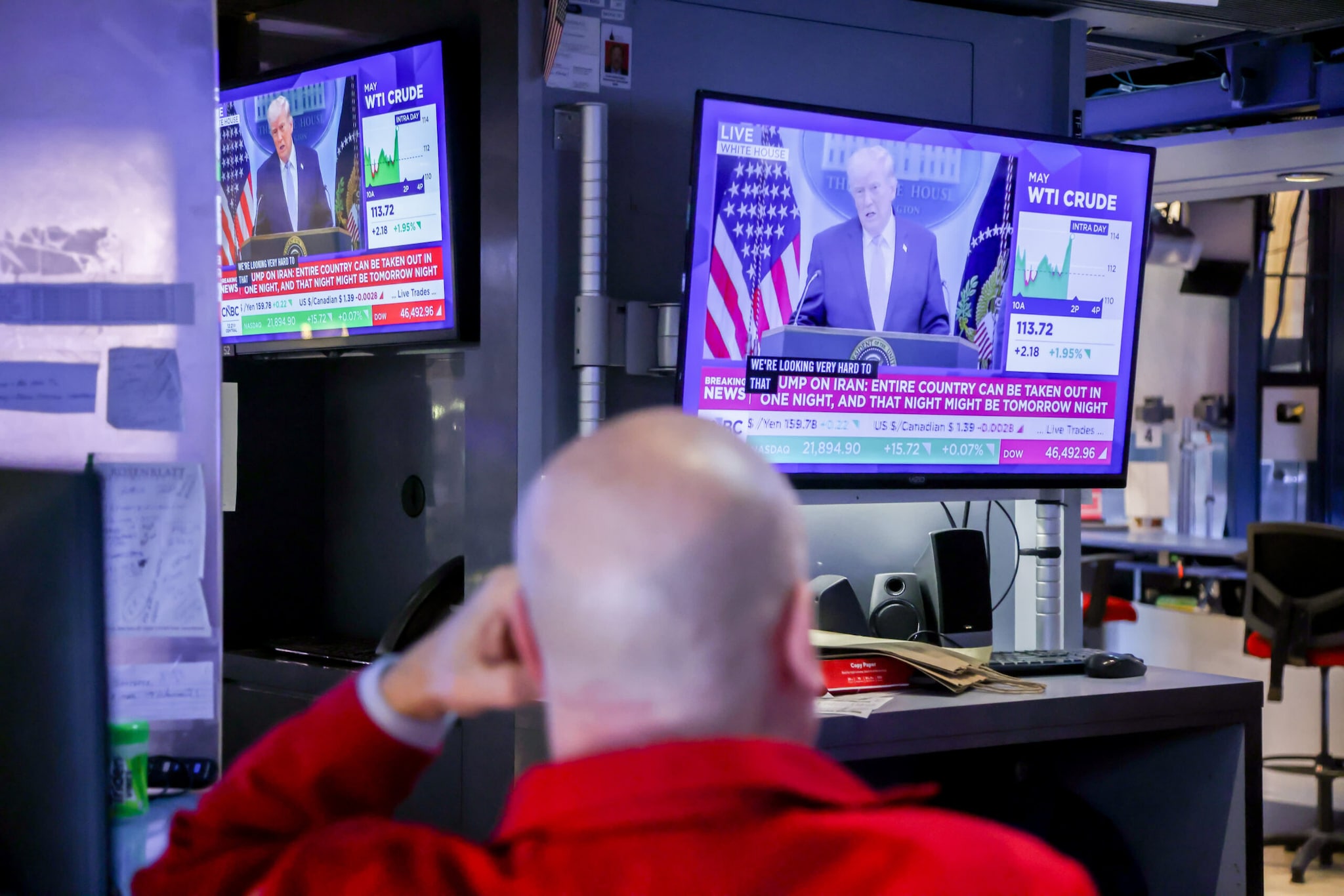
The headline proposition that a comprehensive diplomatic settlement between Washington and Tehran would instantly unblock $300 billion in investment capital for the Iranian economy misinterprets the mechanics of global finance and sanctions enforcement. In international political economy, capital does not flow efficiently through newly opened pipelines; it faces friction from structural risk, institutional inertia, and residual legal compliance frameworks. Evaluating the economic impact of potential sanctions relief requires shifting from speculative aggregate figures to an evaluation of three distinct capital tranches: repatriated frozen assets, sovereign credit capacity, and foreign direct investment (FDI).
The $300 billion figure frequently cited in geopolitical commentary combines these distinct pools of capital into a single, misleading metric. To understand the true fiscal trajectory of post-sanctions Iran, we must deconstruct this figure using strict corporate finance and macroeconomic liquidity frameworks.
The Liquidity Spectrum: Dissecting the Tripartite Capital Structure
The total capital theoretical pool accessible to Iran post-sanctions must be divided into three categories, each governed by unique velocity constraints and structural bottlenecks.
1. Frozen Sovereign Reserves (Immediate Liquidity)
This category comprises Iranian central bank assets currently locked in foreign financial institutions due to primary and secondary US sanctions. The actual volume of accessible cash reserves is significantly lower than gross asset calculations suggest.
- The Valuation Gap: While gross frozen assets globally are estimated between $100 billion and $120 billion, a significant portion is tied up in non-liquid forms or already committed to bilateral trade accounts (such as escrow accounts in China, India, and South Korea).
- The True Liquid Core: Estimates from the International Monetary Fund (IMF) and central bank tracking indicate that instantly usable, unencumbered foreign exchange reserves sit closer to $15 billion to $20 billion.
- Velocity of Deployment: This capital has the highest velocity. Upon formal regulatory clearance from the US Treasury’s Office of Foreign Assets Control (OFAC), these funds can be immediately allocated to stabilize the rial, clear domestic debt, and purchase critical imports.
2. Sovereign Credit and Multilateral Lending (Medium-Term Capacity)
Sanctions relief theoretically restores Iran’s ability to issue sovereign debt on international markets and access multilateral financing via institutions like the World Bank or the International Monetary Fund.
- The Credit Rating Deficit: Decades of isolation mean Iran lacks a contemporary, verified credit rating from major agencies (S&P, Moody’s, Fitch). This lack of a benchmark creates an immediate structural barrier to entering the international bond market.
- Risk Premium Pricing: Any sovereign debt issued by Tehran would command a high risk premium. The cost of capital would likely mirror distressed debt yields, limiting the net capital inflows realized through borrowing.
3. Foreign Direct Investment (Long-Term Capital Expenditure)
The largest and most volatile component of the $300 billion estimate is anticipated corporate investment, primarily in the energy, automotive, and infrastructure sectors.
- The Capital Expenditure Lag: FDI is not liquid cash; it is deployed over multi-year cycles. If a European energy major signs a $10 billion contract to develop the South Pars gas field, that capital is deployed as equipment, technology transfer, and construction services over a seven-to-ten-year horizon.
- The Disinvestment Factor: Corporate entities calculate risk via Expected Net Present Value (eNPV). As detailed below, the structural risk profile of the Iranian market significantly discounts the present value of future cash flows, leading to capital deployment levels that fall far short of initial announcements.
The Risk Discount Framework: Why Signed Deals Fail to Materialize
The gap between signed Memorandums of Understanding (MoUs) and actual capital deployment can be modeled as a function of political, legal, and operational risks. Historically, following the 2015 Joint Comprehensive Plan of Action (JCPOA), international corporations signed tens of billions of dollars in provisional deals, yet only a small fraction resulted in actual capital expenditure before sanctions were reimposed in 2018.
The economic discount factor applied by international compliance departments rests on three operational realities:
Regulatory Snapback Risk and the Corporate Capital Budget
The primary deterrent to long-term foreign investment is the structural mechanism of "snapback" sanctions. If a diplomatic agreement contains provisions allowing for the unilateral reinstatement of US sanctions in response to compliance disputes, the investment horizon for any foreign firm is effectively capped at the political cycle of the United States.
Corporate treasury departments evaluate investments using a modified capital budgeting equation where the discount rate ($r$) is adjusted for political risk ($p$):
$$Adjusted\ Discount\ Rate = r + p$$
For a standard infrastructure project, a high value for $p$ raises the hurdle rate—the minimum acceptable rate of return—to prohibitive levels. Because an energy project typically requires five to seven years to reach cash-flow positivity, the high probability of a political shift in Washington within a four-year window reduces the eNPV of long-term projects to zero or below. Consequently, rational corporate actors limit their exposure to short-term, asset-light service contracts rather than capital-intensive physical infrastructure.
The Compliance Chilling Effect and Chokepoint Banking
The formal lifting of US sanctions does not automatically restore banking relationships. Global financial institutions operate under strict anti-money laundering (AML) and know-your-customer (KYC) regulations.
[International Bank] ---> (Compliance Risk Filter) ---> (Correspondent Banking Network) ---> [Iranian Counterparty]
                                  |
                   (Residual US Secondary Sanctions)
The Financial Action Task Force (FATF), the global money laundering and terrorist financing watchdog, keeps Iran on its "black list" due to structural deficiencies in its financial regulatory framework. As long as Iran remains blacklisted by the FATF, international tier-1 banks will refuse to route transactions to Iranian counterparties, regardless of changes in US executive orders. The resulting absence of correspondent banking networks creates a clearing bottleneck, making it logistically difficult to transfer large tranches of investment capital into the country.
Internal Structural Distortions: The Domination of Quasi-Sovereign Actors
The third friction point exists within the domestic Iranian economy. A substantial percentage of the country’s industrial base, particularly in energy, mining, and telecommunications, is controlled by quasi-sovereign entities, including state-owned enterprises and bonyads (charitable foundations).
International corporations face significant legal risk under global anti-corruption and counter-terrorist financing laws when partnering with these entities. Conducting forensic due diligence to guarantee that an investment partner has no ties to sanctioned individuals or organizations is an expensive and complex process. This structural overlap between the state, military, and commercial sectors creates a legal minefield that deters risk-averse multinationals.
Sectoral Absorptive Capacity: Where Capital Can Actually Land
If a diplomatic breakthrough occurs and sanctions are eased, capital will not distribute evenly across the economy. It will target specific sectors based on immediate asset availability and global demand bottlenecks.
| Sector | Initial Capital Absorption Capacity (Year 1–3) | Primary Bottleneck | Dominant Source of Capital |
|---|---|---|---|
| Upstream Oil & Gas | High ($15bn - $25bn) | Technology degradation & extraction efficiency losses | Regional state-backed enterprises & specialized oilfield services |
| Automotive & Manufacturing | Medium ($5bn - $8bn) | Supply chain localization & currency volatility | European and Asian joint-venture automotive brands |
| Aviation & Infrastructure | Low ($3bn - $5bn) | Long production lead times & strict export control licensing | Sovereign credit allocations & state-to-state financing |
Upstream Oil and Gas: The Primary Capital Sink
Iran holds some of the world’s largest proven natural gas and crude oil reserves, yet its production capacity has been degraded by underinvestment and an inability to access modern extraction technologies, such as horizontal drilling and enhanced oil recovery (EOR) mechanisms.
The immediate capital requirement to stabilize and restore production to pre-sanctions levels is estimated at over $100 billion. However, initial capital inflows will be limited to brownfield rehabilitation rather than massive greenfield projects. Western supermajors are unlikely to commit balance-sheet capital; instead, initial investment will likely come from state-aligned enterprises from non-Western jurisdictions willing to accept higher political risk in exchange for long-term supply guarantees.
Automotive and Civil Aviation: Fast-Cycle Capital Recovery
Unlike the energy sector, which has long investment runways, the automotive and consumer manufacturing sectors can absorb capital rapidly through assembly kits and joint-venture manufacturing. This model minimizes fixed-asset investment inside Iran while allowing foreign companies to tap into a large, educated domestic market. Civil aviation represents another immediate sector for capital deployment, though this is primarily a procurement story rather than an industrial investment, constrained by the multi-year order backlogs of global aerospace manufacturers.
Strategic Playbook: The Reality of the Post-Sanctions Landscape
Based on the economic and structural constraints outlined above, a realistic projection of capital flows following a US-Iran diplomatic agreement yields a concrete set of outcomes distinct from the $300 billion scenario.
The Non-Western First-Mover Advantage
Capital deployment will be asymmetrical. While European corporations perform lengthy legal reviews and risk assessments, state-backed entities from jurisdictions less exposed to the US financial system will move to secure strategic assets. These actors will utilize non-dollar clearing mechanisms and bilateral barter frameworks (e.g., energy for infrastructure) to bypass the correspondent banking bottlenecks that constrain Western firms.
The Domestic Liquidity Surge and Inflation Risk
The initial influx of repatriated cash reserves will provide the Central Bank of Iran with the resources needed to stabilize the domestic currency. However, if this capital is injected too rapidly into the domestic economy without a corresponding increase in productivity or imports, it risks driving inflation higher. The monetary authority will face the challenge of managing this liquidity surge without triggering a domestic consumption bubble.
Strategic Capital Allocation over Mass Investment
Instead of an unmanageable $300 billion investment wave, the realistic outlook points to a highly targeted, phased capital integration process. The first phase will focus on restoring basic energy production and clearing trade credit backlogs. The second phase, dependent on structural domestic reforms like FATF compliance, will involve rebuilding international banking connections to facilitate mid-sized trade finance.
Large-scale, multi-billion-dollar foreign direct investment in infrastructure will remain frozen until the structural risk premium of the Iranian market drops significantly. Multinational corporations and state strategists should base their plans not on speculative headline numbers, but on the real-world operational bottlenecks, legal constraints, and risk-adjusted returns that define international finance.