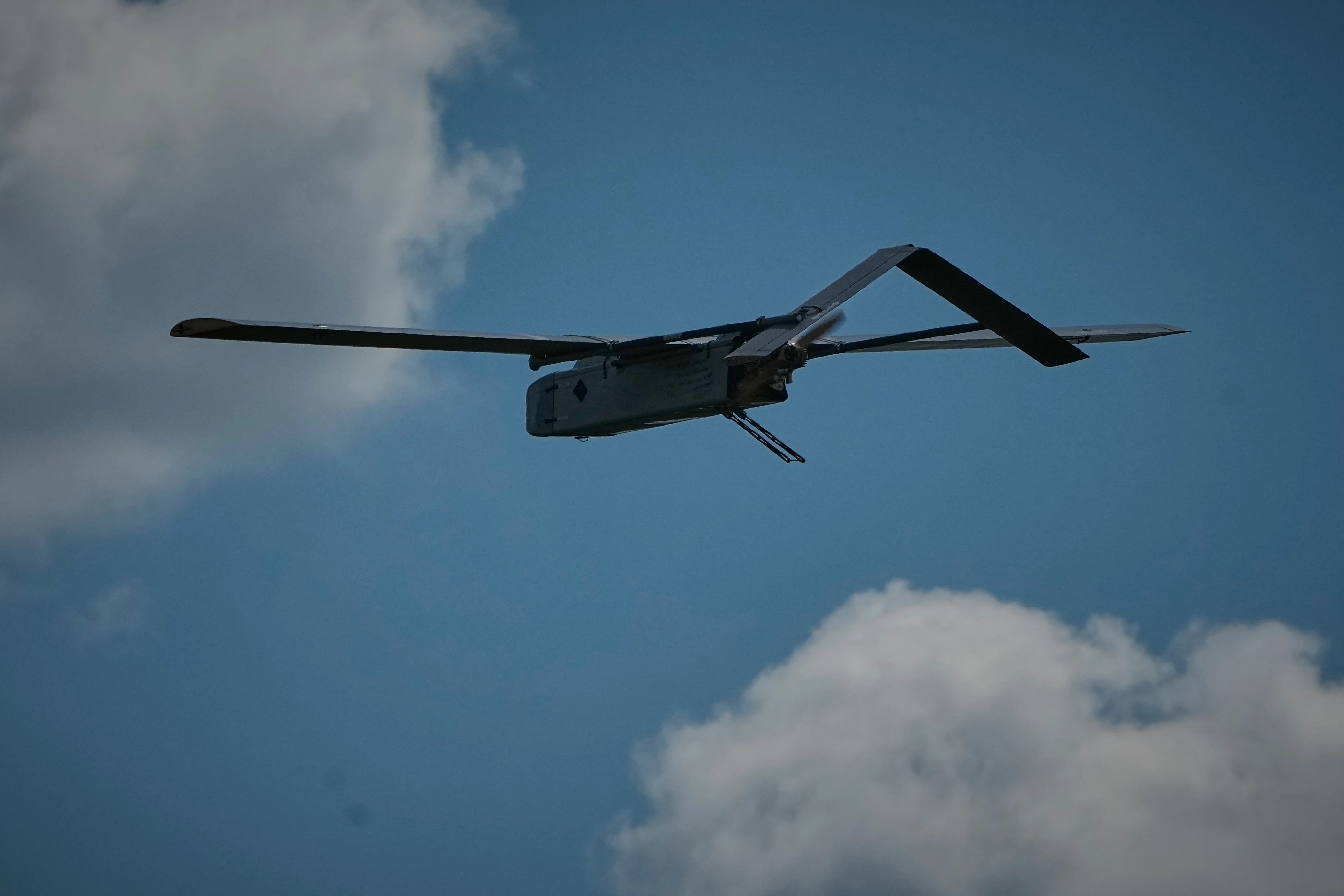
International diplomats have committed to "elaborating" on regulatory frameworks for autonomous weapons systems by 2028, a diplomatic milestone that masks a severe structural failure in global arms control. While surface-level reporting frames this consensus as progress toward restraining AI-driven warfare, an operational analysis reveals the opposite: a multi-year procedural delay that grants military superpowers an unobstructed runway to deploy lethal autonomy before binding legal constraints exist.
The core friction in regulating Lethal Autonomous Weapons Systems (LAWS) stems from the mismatch between diplomatic consensus cycles and the exponential velocity of machine learning integration. Under the United Nations Convention on Certain Conventional Weapons (CCW), decisions require absolute consensus among High Contracting Parties. A single state with an active autonomous defense program—such as the United States, Russia, China, or Israel—can veto binding prohibitions, forcing the international community to settle for lowest-common-denominator phrasing like "elaborating on rules." For another view, check out: this related article.
The Asymmetry of Diplomatic Velocity
To understand why a 2028 target date functions as a strategic deferral rather than a containment mechanism, examine the divergence between software deployment timelines and treaty ratification pipelines.
- Software Iteration Cycles: Modern military AI operates on continuous deployment architectures. Target-recognition weights, sensor-fusion algorithms, and swarm-coordination protocols update over weeks or months. Hardware platforms—from loitering munitions to unmanned surface vessels—already exist in inventory; transitioning them from human-in-the-loop to full autonomy requires a firmware update, not a new manufacturing plant.
- Consensus Treaty Pipelines: The CCW Group of Governmental Experts (GGE) meets for limited weeks annually. Moving from "elaboration" to a drafted protocol, securing consensus, opening for signatures, and achieving domestic ratification typically spans eight to fifteen years.
This creates a terminal regulatory lag. By 2028, autonomous target selection and engagement will no longer be experimental capabilities requiring preemptive bans; they will be embedded standard operating procedures across tier-one and tier-two militaries. Diplomatic frameworks negotiated after widespread field deployment inevitably shift from prohibition to mere codification of existing battlefield practices. Similar coverage on the subject has been shared by Ars Technica.
Deconstructing the "Meaningful Human Control" Fallacy
The central pillar of current diplomatic discussions relies on maintaining "meaningful human control" over lethal force. In operational terms, this concept breaks down under the physics and tempo of modern engagements.
Human cognitive processing operates on a reaction timeline of roughly 250 to 500 milliseconds for simple visual stimuli, extending to several seconds for complex contextual evaluation. In contrast, autonomous defense systems—such as counter-hypersonic interceptors, electronic warfare countermeasures, and high-density drone swarms—operate in millisecond-to-microsecond decision loops.
The Automation Bias Bottleneck
When a human operator is placed "on the loop" (supervising an autonomous system with veto power rather than manually authorizing every strike), two predictable failure modes emerge:
- Temporal Compression: When a system flags fifty incoming targets simultaneously across a contested electromagnetic spectrum, the human operator lacks the cognitive bandwidth to audit the sensor data behind each target classification. Veto power becomes a rubber stamp.
- Cognitive Offloading: Operators trained to trust high-accuracy neural networks exhibit automation bias, deferring to machine recommendations even when contextual anomalies suggest a false positive.
Requiring a human to press an authorization button does not establish meaningful control if the human has three seconds to evaluate an opaque, probabilistic output generated by a deep neural network. Diplomatic rules built around human-on-the-loop architectures provide legal cover for automated killing without imposing actual operational restraint.
The Verification and Dual-Use Dilemma
Traditional arms control treaties—such as New START for nuclear weapons or the Chemical Weapons Convention—rely on observable physical signatures. Inspectors can count missile silos, verify centrifuge cascades via satellite imagery, and detect trace chemical precursors through environmental sampling. Autonomous weapons invalidate this verification model entirely.
The differentiator between a remotely piloted drone and an autonomous lethal system is not visible on an assembly line. Both utilize identical airframes, propulsion systems, electro-optical sensors, and air-to-ground munitions. The distinction resides entirely within proprietary software weights and onboard compute architecture.
Why On-Site Inspections Fail for AI
- Code Volatility: A military can demonstrate compliant, human-controlled software during an inspection and flash autonomous targeting firmware onto the fleet hours later via encrypted over-the-air updates.
- Commercial Dual-Use: The foundational technologies driving military autonomy—computer vision, Simultaneous Localization and Mapping (SLAM), and reinforcement learning—are developed primarily by commercial technology firms for autonomous vehicles, logistics, and industrial robotics. Restricting the underlying compute or algorithmic research is economically impossible without dismantling civilian tech sectors.
- Black-Box Opacity: Even with direct access to source code, verifying how a deep neural network will behave in novel, adversarial battlefield environments is mathematically intractable. Predictability cannot be certified through static code audits.
Without a reliable verification mechanism, any binding treaty faces a classic Prisoner's Dilemma. Rational state actors will assume adversaries are covertly developing autonomous capabilities behind closed doors, creating an overwhelming game-theoretic incentive to maintain parallel programs to avoid catastrophic strategic surprise.
The Economic Cost Function Driving Proliferation
The push toward autonomous lethality is not driven merely by technological enthusiasm; it is dictated by brutal battlefield economics. Modern attrition warfare has inverted the cost-exchange ratio between offensive and defensive systems.
A low-cost, commercially derived loitering munition costs between $2,000 and $50,000. Intercepting that threat with a traditional surface-to-air missile system expends an interceptor costing between $500,000 and $4,000,000. No national defense budget can sustain an asymmetric cost exchange of 1-to-100 over a multi-year conflict.
Autonomy solves three critical economic and operational constraints simultaneously:
- Electronic Warfare Resilience: Remotely operated drones require continuous, high-bandwidth radio-frequency (RF) links back to human pilots. In high-intensity conflict, adversaries deploy aggressive RF jamming that severs these links, rendering remote systems useless. Onboard autonomy eliminates the need for an active data link during the terminal engagement phase, neutralizing jamming defenses.
- Force Multiplication: A single human operator can manage a swarm of dozens of autonomous units, reducing the personnel overhead and training pipeline required to project massed firepower.
- Attritable Mass: By removing human pilots and complex remote-control telemetry, militaries can field vast quantities of low-cost, expendable platforms designed to overwhelm high-value legacy assets through sheer saturation.
Because autonomy directly addresses the primary vulnerabilities of modern warfare—electronic jamming and unfavorable cost-exchange ratios—states view it as an existential necessity rather than an optional capability. Diplomatic appeals to humanitarian norms rarely override perceived survival imperatives.
Mapping the Divergence of State Interests
The agreement to work toward 2028 guidelines conceals a sharp tri-polar divide in how major powers approach autonomous governance.
- The Technological Hegemons (United States, China): Both nations favor non-binding "codes of conduct," transparency measures, and reviews under existing International Humanitarian Law (IHL). Their strategic objective is to retain full freedom of action while establishing minimal guardrails against accidental escalation or proliferation to non-state actors.
- The Asymmetric Adopters (Russia, Iran, regional powers): These actors rely heavily on electronic warfare denial and low-cost drone saturation to offset conventional disadvantages. They resist any definition of autonomy that restricts their ability to deploy fire-and-forget loitering munitions or automated air-defense networks.
- The Regulatory Coalition (Austria, Brazil, Costa Rica, and non-aligned states): Lacking advanced domestic AI-defense industries, these states push for a legally binding two-tier treaty: an outright ban on systems that select and engage human targets without human intervention, coupled with strict positive obligations on all other autonomous systems.
The 2028 mandate satisfies the Hegemons by delaying binding restrictions while allowing the Regulatory Coalition to claim incremental diplomatic momentum. In practice, it locks negotiations inside the CCW consensus trap, ensuring that no legally binding prohibition can emerge without the explicit consent of the very nations building the weapons.
Strategic Imperatives for Defense and Policy Leaders
Relying on a 2028 UN consensus framework to govern autonomous warfare is a losing strategy. Policymakers, defense technologists, and institutional analysts must abandon the pursuit of comprehensive, verifiable bans on AI algorithms and pivot toward enforceable operational constraints.
Shift regulatory efforts away from restricting software capabilities—which cannot be verified—and focus exclusively on hard cryptographic auditability and geographic bounding. Require all deployed autonomous systems to integrate tamper-resistant hardware flight recorders ("black boxes") that log sensor inputs, confidence thresholds, and target-classification vectors prior to munition release, enabling post-strike accountability under existing Geneva Convention war-crime statutes. Simultaneously, pursue bilateral confidence-building measures between major powers that prohibit autonomous systems from operating within designated strategic buffer zones—such as nuclear command-and-control nodes and contested maritime chokepoints—where algorithmic miscalculation could trigger irreversible nuclear escalation.