The earth remembers every pair of boots that walked across it. It holds the compression of tractor tires from nineteen-forty-something, the distinct, hurried footprints of children running toward a bonfire, and the slow, patient downward thrust of pine roots searching for water through decades of dry Augusts.
Most land in New Jersey doesn’t get to remember. Most land gets paved.
If you drive long enough through the central corridors of the Garden State—past the endless warehouses squatting on what used to be green, past the asphalt arterial roads pulsing with logistics trucks—you start to feel a strange kind of spatial amnesia. You begin to believe that concrete is the native bedrock of the state, that shopping plazas and distribution centers grew out of the soil naturally.
Then you stumble onto a farm that has stood its ground for eighty years. One hundred and thirty-five acres of living green, refusing to negotiate with developers.
The Smell of Pine and Persistence
To understand what it means to hold onto one hundred and thirty-five acres of Christmas trees through eight decades of staggering economic pressure, you have to understand the math of modern temptation. Every single year, real estate developers circled this property like hawks over an open field. They brought maps. They brought surveyors with tripods. They brought numbers—astronomical figures written on heavy cream paper that represented millions of dollars for signing a single piece of paper.
Millions of dollars can make a family forget a lot of things. It can make them forget the aching back that comes with shearing thousand of Douglas firs in the July heat. It can make them forget the bitter freezing rain of November when the tagging ribbons freeze to your gloves.
The family didn't sign.
Instead, they kept planting. They planted Fraser firs, Canaan firs, and Blue Spruces, knowing full well that a tree planted today is an investment in a future you might not even walk to see. That is a very specific kind of stubbornness. It is the stubbornness of people who view themselves not as owners of land, but as temporary custodians holding a baton in a very long relay race.
Consider what a Christmas tree farm actually represents in an ecological and emotional sense. It is not a static museum piece. It is a breathing, carbon-sequestering, oxygen-producing engine that takes seven to ten years to mature. For every tree that goes home strapped to the roof of a station wagon with twine and red bows, another seedling goes into the earth. It is a closed loop of regeneration.
Walk through the rows in late October. The air changes. The relentless hum of the nearby highway softens, muffled by dense walls of emerald needles. The scent of pine resin takes over your clothes, your hair, your lungs. It forces your shoulders to drop an inch or two. In a world hyper-optimized for digital speed and instant friction-free transactions, a Christmas tree farm operates on geological time. It grows at the speed of seasons.
The Invisible Stakes of Open Space
We talk a lot about land preservation as an environmental policy, but we rarely talk about it as a psychological necessity. When every square foot of horizon is boxed in by tilt-up concrete warehouses and strip malls, something quietly frays inside the human nervous system. We lose our reference points for scale. We forget what silence sounds like when it isn't punctuated by a siren or an engine.
This family farm became a fortress against that amnesia.
Over eighty years, three generations of hands have pruned those same branches. Grandparents who lived through the Second World War walked these exact ridgelines, watching the valley below them fill up with rooftops, little by little, until their farm was one of the last green islands left in a rising sea of suburban sprawl.
Imagine being the grandchild who inherits that ledger. The taxes go up every single year because the surrounding land value skyrockets. The zoning laws shift, making it harder and harder for agricultural businesses to survive the crushing weight of municipal overhead. Every spring brings a fresh financial panic. Do we hold? Or do we sell to the logistics park developers and never worry about money again?
They chose the trees.
They chose to preserve the property, locking it into permanent preservation programs that legally bar it from ever becoming a parking lot. In doing so, they performed an act of quiet radicalism. They chose history over liquidity. They chose the slow, muddy joy of agriculture over the clean, sterile windfall of a cash-out.
The Rhythm of the Harvest
There is a distinct theater to the December rush on a generational tree farm. It has nothing to do with retail commerce and everything to do with ritual.
For ten months of the year, the farm is quiet. It is just dirt, rain, pruning shears, and the occasional deer stepping cautiously between the rows. But the day after Thanksgiving, the gates open, and the modern world floods in.
Minivans kick up gravel. Children tumble out into the frosty air, their breath pluming white as they sprint down the lanes like pointers flushing game. Parents argue good-naturedly over whether a seven-foot Nordmann fir is too wide for the living room corner. The saws come out—manual saws, hand-powered teeth biting into wood, a rhythmic shhh-shhh-shhh that sounds like waves hitting a gravel beach.
No one comes here just to buy a piece of lumber. They come because they are starving for something tactile. They want to touch something real before the year closes out. They want sap on their hands. They want the memory of cold toes and hot cider poured from a dented thermos.
And the family who owns the land watches from the edge of the barn, drinking black coffee from mismatched mugs, recognizing faces that return year after year. The kid who was sitting in a stroller in nineteen-ninety-five is now standing there with a baby of his own, sawing through the base of a spruce.
That continuity is rare. It is endangered.
When you drive past places like this—places that resisted the gravitational pull of easy money and maximum density—you are looking at ghost stories of what New Jersey used to be, and stubborn blueprints of what it still could be if we valued green space as much as we value square footage.
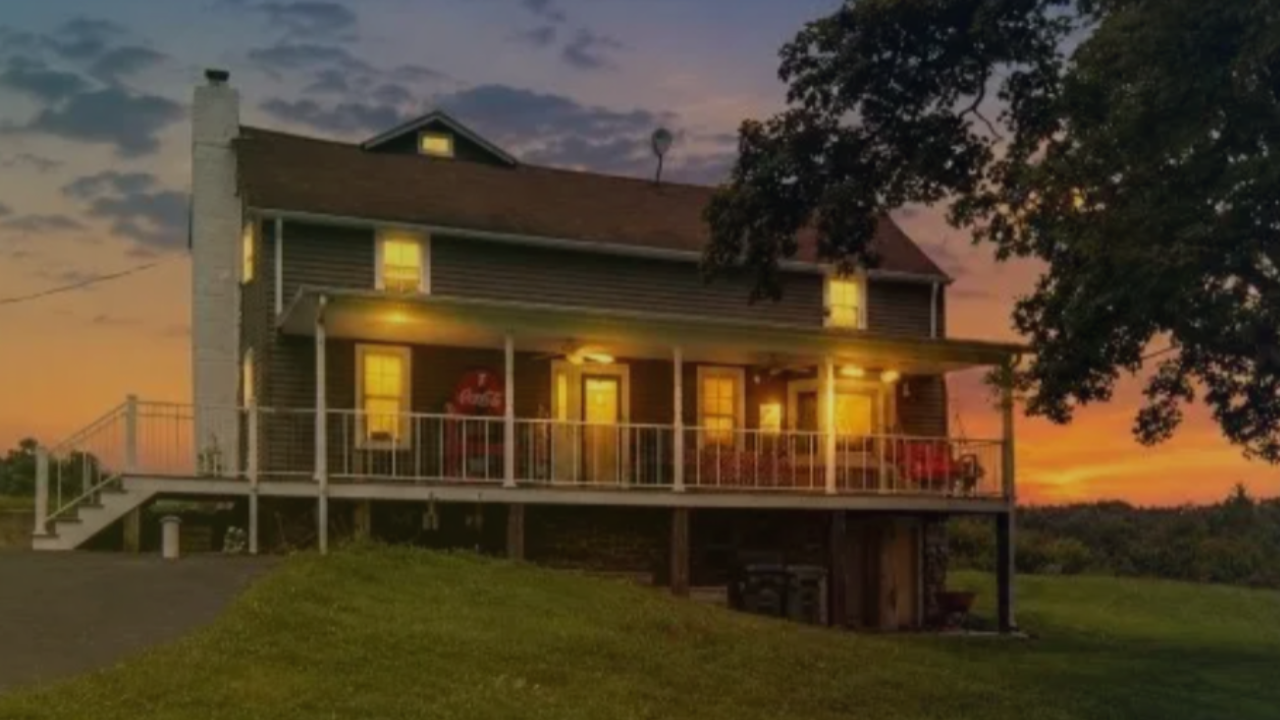
The snow will fall on those one hundred and thirty-five acres this winter, settling softly across the sheared tops of the firs, weighting down the heavy blue branches of the spruces, smoothing over the footprints left by a thousand families searching for perfection. The trees will sleep under the frost. The family will stoke the woodstove in the old farmhouse. And the concrete, for at least one more year, will keep its distance.