The USS Abraham Lincoln is not just a ship. It is 100,000 tons of sovereign American territory, a floating airbase that projects power into the most volatile corners of the globe. For decades, the mere presence of a Nimitz-class carrier off a coastline was enough to end a war before it started. That era is over. The reality facing the Pentagon today is that the carrier has become a massive, $13 billion liability. While the Lincoln remains a marvel of engineering, its dominance is being dismantled by a new generation of asymmetrical threats designed to exploit the fundamental physics of naval warfare.
The ship is vulnerable because it is visible, and in modern conflict, if you can be seen, you can be killed. The proliferation of low-cost, high-precision weaponry among both state and non-state actors has created a environment where the cost to destroy a carrier is a fraction of the cost to build and protect one. This is not a theoretical exercise in a wargame. It is the current state of maritime attrition.
The Mathematical Death Sentence of Saturation Attacks
The greatest threat to the Lincoln is not a single "silver bullet" weapon, but the cold math of a saturation attack. Every carrier strike group possesses a finite number of interceptors. The Aegis Combat System is arguably the most sophisticated defensive suite ever built, but it is limited by the number of targets it can track and engage simultaneously.
If an adversary launches fifty anti-ship missiles and twenty suicide drones at once, the defense must be perfect. The attacker only needs to be lucky once. Even if 90 percent of the incoming projectiles are intercepted, the remaining 10 percent are enough to turn the flight deck into a smoking ruin. Once the flight deck is compromised, the carrier is effectively neutralized. It doesn't need to sink to lose the fight.
The Dawn of the Hypersonic Gap
Velocity has always been a primary factor in naval engagements, but hypersonic glide vehicles (HGVs) have changed the timeline of survival. Weapons like the Chinese DF-17 or the Russian Zircon travel at speeds exceeding Mach 5. At these velocities, the reaction time for the Lincoln’s crew shrinks from minutes to seconds.
Hypersonic missiles do not follow a predictable ballistic arc. They maneuver within the atmosphere, staying below the optimal tracking range of traditional long-range radars until it is too late. By the time the ship’s Close-In Weapon System (CIWS) identifies the threat, the missile is already impacting. The kinetic energy alone from an object moving at five times the speed of sound is enough to split a hull, even without an explosive warhead. The Navy is currently scrambling to develop directed-energy weapons—lasers—to counter this, but the power requirements and atmospheric interference make them an uncertain shield for the immediate future.
Silent Killers and the Acoustic Shadow
While the world watches the skies for missiles, the most lethal threat to the Abraham Lincoln remains beneath the waves. The ocean is an opaque, noisy environment where a $300 million diesel-electric submarine can wait in total silence for a $13 billion carrier to pass overhead.
Modern air-independent propulsion (AIP) submarines are terrifyingly quiet. They can remain submerged for weeks, operating with an acoustic signature that is nearly indistinguishable from the background noise of the sea. In multiple naval exercises, smaller, cheaper submarines from allied nations have successfully "sunk" U.S. carriers by slipping through the destroyer screen undetected.
The Torpedo Problem
Anti-ship missiles hit the superstructure. Torpedoes hit the keel. A heavy-weight torpedo, like the Russian Type 53 or the Chinese Yu-6, is designed to explode underneath the ship. This creates a massive gas bubble that lifts the ship out of the water and then drops it. The vacuum created by the collapsing bubble snaps the ship’s spine. For a vessel the size of the Lincoln, a broken keel is a death sentence. There is no damage control team in the world that can weld a carrier back together in the middle of a combat zone.
The Drone Swarm and the Cost Curve
We are seeing a fundamental shift in the economics of war. In the Red Sea, the U.S. Navy has spent months firing $2 million missiles to down $20,000 drones. This is a losing trade.
An adversary does not need a sophisticated navy to threaten the Lincoln. They need a fleet of unmanned surface vessels (USVs) packed with explosives. These "suicide boats" sit low in the water, making them difficult for radar to spot in heavy seas. During the attack on the Russian Black Sea Fleet, low-cost USVs demonstrated that they could swarm a modern warship and overwhelm its manual defenses. If a dozen of these vessels approach the Lincoln from different angles, the ship’s machine guns and 25mm cannons simply cannot traverse fast enough to stop them all.
Cyber Warfare and the Blind Giant
The Abraham Lincoln is a digital fortress, but that connectivity is its Achilles' heel. Every system on the ship—from navigation to the catapults that launch F-35s—depends on a complex web of sensors and data links.
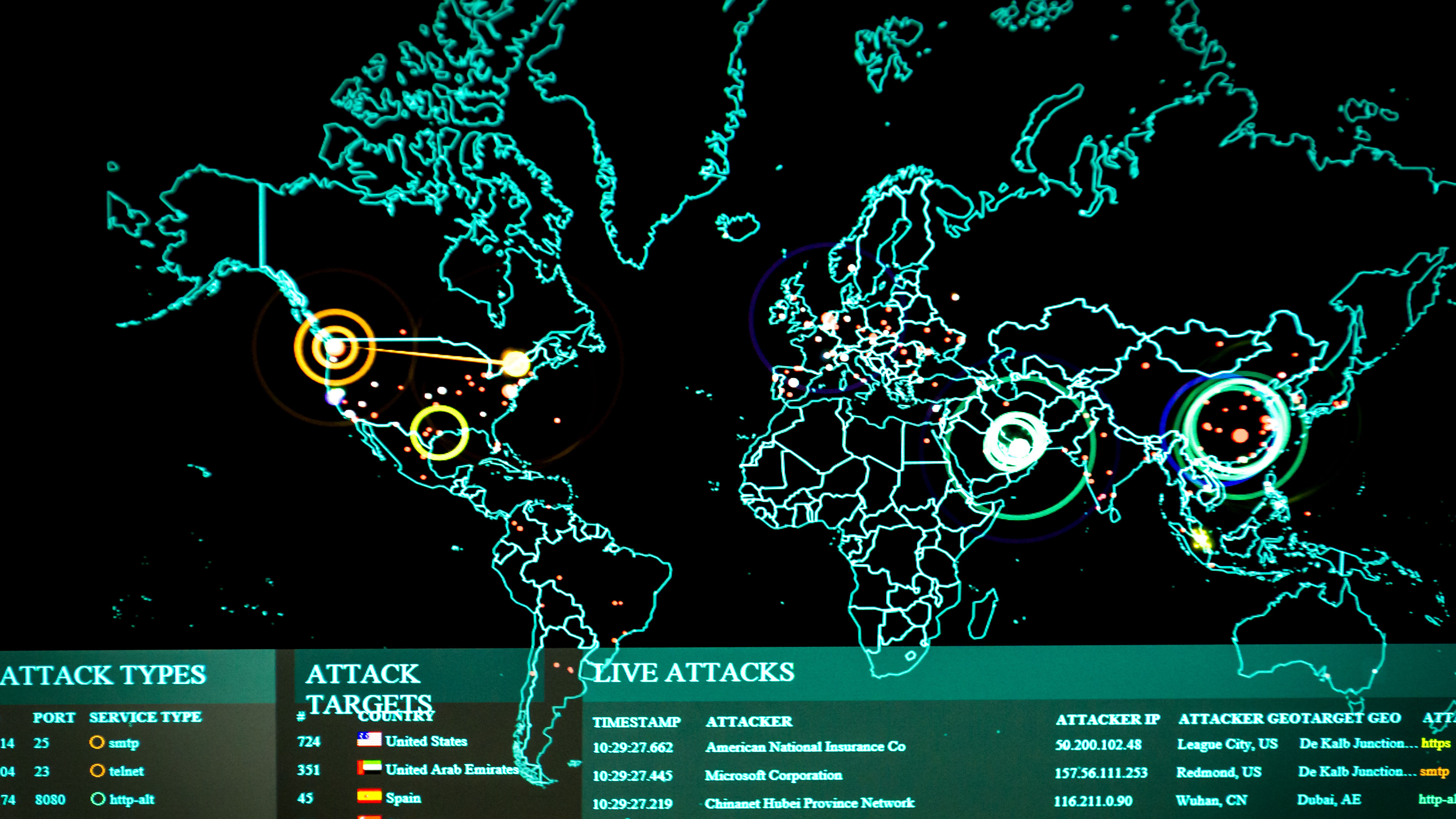
A successful cyberattack doesn't need to blow a hole in the hull to be effective. If an adversary can jam the GPS coordinates, spoof the radar returns, or disrupt the internal communication networks, the carrier becomes a blind giant. A carrier that cannot communicate with its strike group or see the threats around it is nothing more than a very expensive target. The Pentagon is increasingly worried about "left of launch" tactics, where the battle is won by disabling the ship's brains before the first kinetic shot is even fired.
The Tyranny of Distance and the DF-21D
For decades, the carrier’s reach was its primary defense. It could sit safely in the open ocean and launch strikes hundreds of miles away. The Chinese DF-21D, often called the "Carrier Killer," has pushed that safety zone back by over 1,000 miles.
This creates a tactical dilemma. If the Lincoln stays outside the range of land-based anti-ship ballistic missiles, its aircraft cannot reach the target without extensive aerial refueling—which is itself vulnerable. If the carrier moves closer to be effective, it enters a "no-go zone" where it can be targeted by mobile, land-based launchers that are nearly impossible to find and destroy. The carrier is being forced out of the very conflict zones where it is needed most.
The Fragility of the Logistic Tail
A carrier is only as good as its supply chain. The Lincoln requires a constant flow of aviation fuel, spare parts, and food. This "logistic tail" is made up of unarmored tankers and supply ships that are far easier to sink than the carrier itself. By targeting the support vessels, an enemy can effectively "starve" the Lincoln. A carrier with no fuel for its jets and no parts for its engines is just a floating warehouse.
The Political Risk of a Single Hit
We must acknowledge the psychological and political weight of the ship. The loss of the USS Abraham Lincoln would be a national trauma equivalent to Pearl Harbor. The death toll could reach 5,000 sailors in a single afternoon.
This reality makes commanders hesitant to deploy the carrier in high-threat environments. If the ship is too precious to lose, it becomes useless as a tool of war. This "fleet in being" strategy—keeping the carrier safe in the rear—effectively concedes control of the sea to the enemy. The mere threat of these seven weapons has already begun to change how the United States projects power, forcing a pivot toward smaller, unmanned, and more distributed forces. The era of the giant is fading, not because the ship isn't capable, but because the world has become too dangerous for anything that large and that expensive to survive.
The Lincoln is currently steaming through waters where every fishing boat could be a scout and every coastal truck could be a missile launcher. The armor is thick, the crew is the best in the world, and the technology is unparalleled. But in the age of the cheap, fast, and invisible, being the biggest target in the room is a losing strategy.