Every Tuesday morning, a specific kind of quiet panic plays out in the back rooms of New York’s medical clinics. It usually starts with a stack of billing codes. An extra zero added to a specialized wheelchair order here. A bill for an ultrasound that a homebound grandmother never actually received there. To a casual observer, it looks like paperwork. To the people who track it, it is the unmistakable scent of blood in the water.
Medicaid is designed to be a lifeline. It is the frayed safety net keeping millions of low-income New Yorkers from falling into absolute medical ruin. But precisely because it deals in staggering sums of public money, it attracts a highly sophisticated class of predators. People who do not rob banks with masks and guns, but with keyboards and medical licenses. For a different look, consider: this related article.
For decades, a specialized team of investigators, lawyers, and auditors known as the Medicaid Fraud Control Unit (MFCU) stood in the gap. They were the ones who noticed when a single pharmacy suddenly began dispensing more oxycodone than an entire zip code could reasonably consume. They clawed back stolen tax dollars and, more importantly, stopped the scams before they bled the system dry.
Then, the money vanished. Further reporting on this trend has been shared by NPR.
When the federal government abruptly cut off funding for New York’s fraud-hunting unit, it did not just create a budget deficit. It turned off the security cameras in the vault.
The Anatomy of a Heist
To understand why this matters, you have to look past the bureaucratic language of federal versus state jurisdictions. You have to look at how a scam actually breathes.
Consider a hypothetical scenario, though one stitched together from a dozen real case files. Let us call her Maria. Maria is eighty-one, lives in Queens, and relies on home health aides paid for by Medicaid. She cannot check her own billing statements. She does not know that the agency providing her care is billing the government for twenty-four hours of round-the-clock intensive therapy, while actually sending an untrained worker to sit with her for two hours a day.
Maria does not see the missing money. She just notices that her legs are swelling because no one is helping her walk. She notices that the nurse she was promised never shows up.
The agency pockets the difference. Multiply Maria by ten thousand, and you have a criminal enterprise that yields millions in pure, untaxed profit.
The MFCU was built specifically to hunt these enterprises down. Operating under a federal mandate, the unit was heavily subsidized by Washington, which traditionally picked up seventy-five percent of the tab. It was an investment that paid for itself. Every dollar spent on these investigators usually brought back several more in recovered funds.
But the federal oversight mechanism contains an Achilles' heel. To receive those federal matching funds, a state unit must be certified as entirely independent of the agency that actually administers Medicaid. It is a logical rule on paper, meant to ensure that the auditors are not grading their own homework.
New York, however, structured its unit inside the Attorney General’s office. For years, this arrangement was accepted, re-certified, and praised. Until a sudden shift in political winds transformed a technicality into a weapon.
The Bureaucratic Chokehold
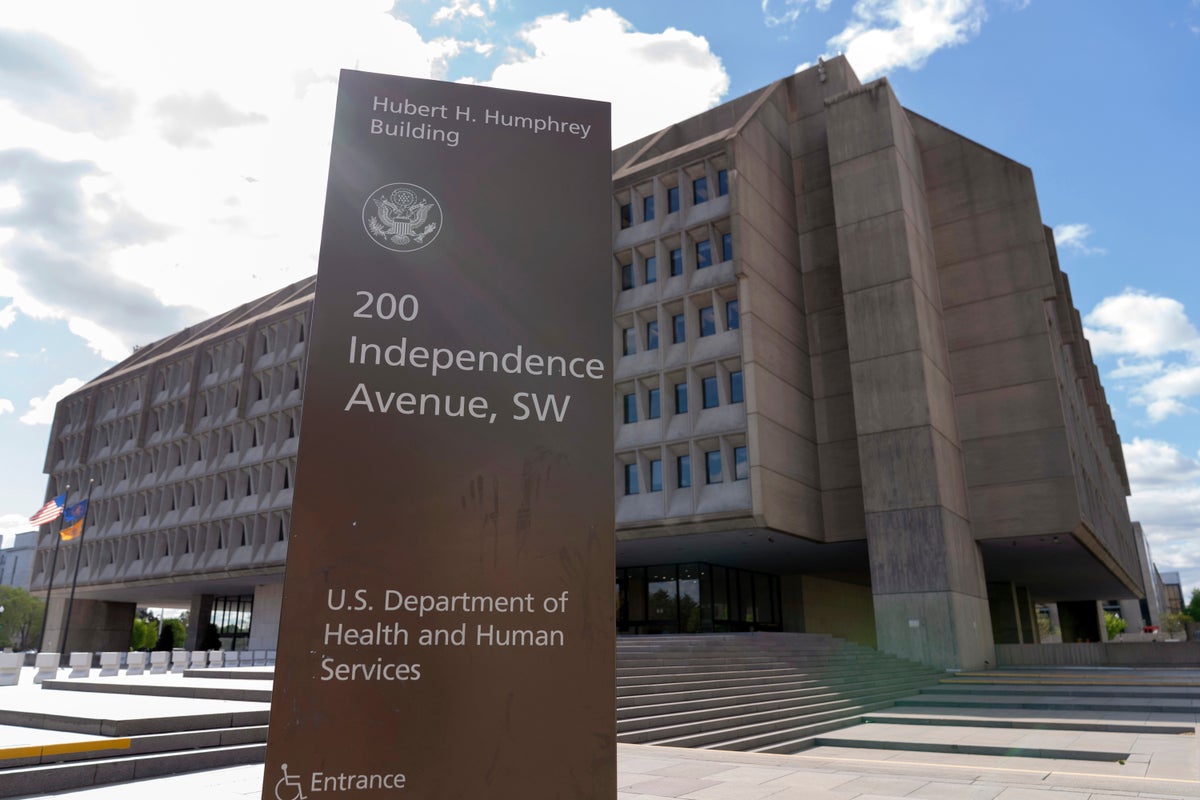
The official reason given for the suspension of funds was compliance. The Trump administration’s Department of Health and Human Services argued that New York’s unit had grown too entangled with the state’s executive branch, blurring the lines of total independence required by federal law.
If you read the official press releases, it sounded like a routine regulatory audit. A simple matter of re-aligning organizational charts to protect taxpayer integrity.
The reality on the ground felt entirely different. It felt like a ambush.
When you suddenly pull tens of millions of dollars out of a law enforcement unit, the wheels do not fall off immediately. Instead, the engine just begins to seize. Ongoing investigations into multi-million dollar pharmaceutical kickback schemes grind to a halt because there is no budget to travel for depositions. Data analysts, the people who write the algorithms that catch anomalies in millions of lines of billing data, look at the frozen funding and quietly update their resumes.
The predators notice this immediately. White-collar criminals are deeply rational actors. They weigh the probability of getting caught against the size of the payout. When the probability of getting caught drops to near zero, the scale of the fraud escalates exponentially.
The paradox at the heart of this conflict is glaring. The suspension was justified as a move to protect the integrity of federal dollars. Yet, by disabling the very mechanism that catches thieves, the decision left those same federal dollars vastly more vulnerable.
Who Pays When the Shield Drops?
It is easy to get lost in the political theater that followed. The public statements from Albany blasted the move as a partisan attack aimed at punishing a blue state. The responses from Washington maintained that New York simply refused to follow the rules that forty-nine other states managed to live by.
But while the politicians traded barbs on cable news, the actual cost of the freeze began to accumulate in places far away from television cameras.
The true victim of Medicaid fraud is never the abstract entity known as "the government." The victim is the healthcare system itself. When billions are siphoned off by corrupt clinic owners and fraudulent medical supply companies, the state is forced to make a choice. It cannot print money. So, it trims the edges of the program.
It lowers the reimbursement rates for honest doctors. It cuts dental coverage for adults. It shortens the list of approved medications for chronic illnesses.
The honest physician, already struggling to keep a practice open in an underserved neighborhood, looks at the lower rates and decides they can no longer afford to accept Medicaid patients. The clinic closes. The patients end up in the emergency room.
This is the invisible momentum of corruption. It does not just steal wealth; it degrades the quality of human life for the people who have the least to spare.
The Silent Safe Haven
There is a specific kind of cynicism required to look at a system designed for the vulnerable and see an ATM. The people who do this work are patient. They build elaborate networks of shell companies, using the names of dead relatives or unwitting immigrants to hide the flow of cash. They operate in the spaces between state oversight and federal bureaucracy.
By freezing the funding for New York’s primary defense system, the federal government did not just create a legal dispute over organizational charts. It created a sanctuary zone.
Resolving a bureaucratic standoff takes months, sometimes years. Statutes of limitations do not pause for political arguments. Evidence cools. Witnesses move away or forget details. A case that would have been ironclad in October becomes unprosecutable by May.
We tend to think of justice as something heavy and permanent, like a marble courthouse. But justice is actually a fragile ecosystem of momentum, expertise, and daily focus. Once you disrupt that ecosystem, you cannot simply flip a switch and expect it to work perfectly again. The institutional memory is gone. The momentum is broken.
Somewhere in a penthouse apartment or a fortified suburban estate, a person who makes their living by manipulating medical billing codes is looking at the news. They are not reading about compliance or federal mandates. They are looking at a green light.


