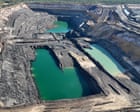
The red dust in central Queensland doesn’t just settle on the utilities; it gets under your fingernails, into the tracks of your screen doors, and eventually, into the way you talk about the future. For decades, the deal between the townsfolk and the massive open-cut coal mines ringed around them was unwritten but absolute. The earth gives up its black riches, the multinational companies provide the heavy-duty paychecks, and when the party is finally over, those same companies patch up the landscape, plant the native grasses, and hand back a healed countryside.
That was the promise. But promises are fragile things when governments begin tinkering with the fine print of environmental law.
Right now, a quiet bureaucratic shift is underway in Brisbane that could fundamentally alter who pays for the wreckage left behind by corporate giants. Under the guise of slashing "red tape," the Liberal National Party (LNP) is reviewing the state’s strict environmental financial assurance laws. To the casual observer, it sounds like dry, sleep-inducing policy. To the people living downwind of the void, it looks like a slow-motion heist.
The core question isn't political. It is mathematical, and it is urgent: when a multi-billion-dollar mining company walks away from a spent lease, who holds the shovel to clean it up?
The Phantom Landlord
To understand how a taxpayer living in a suburban Brisbane townhouse could end up footing the bill for a ruined landscape a thousand kilometers away, we have to look at how mining regulation actually works.
Consider a hypothetical grazier named Tom. For three generations, Tom’s family has run cattle on the edge of the Bowen Basin. Ten years ago, a mining consortium bought the subterranean rights to his eastern paddock. They dug a crater deep enough to swallow a skyscraper. Tom didn't mind the noise or the dust too much because he knew that, by law, the company had to log a massive cash bond with the state government before they turned over a single scoop of dirt.
This bond is called financial assurance. It is an insurance policy against corporate bankruptcy. If the company goes belly-up or vanishes into a maze of offshore subsidiaries, the Queensland government can seize that cash and hire contractors to fill the hole, manage the toxic wastewater, and replant the ridge lines.
It is a safety net designed to protect the public purse. But safety nets are uncomfortable for those who have to pay for them.
Mining corporations hate tying up hundreds of millions of dollars in government bonds. That is capital they could otherwise use to pay dividends, buy new equipment, or acquire more land. For years, industry lobbyists have whispered into the ears of policymakers that these regulations are too onerous, that they stifle economic growth, and that the modern mining sector can be trusted to do the right thing without a financial gun to its head.
The LNP’s current review of these environmental protections is the direct result of that whispering. The danger is that if these rules are relaxed, the state moves from a system of guaranteed corporate accountability to a system of cross-your-fingers optimism.
History shows us exactly how optimism ends in the resources sector.
When the Machinery Goes Silent
We have been here before. The landscape of Australia is littered with the ghosts of mining operations that simply ran out of money when the commodity cycle tanked.
When the Texas Silver Mine in southern Queensland collapsed into liquidation, it didn't just leave behind an ugly scar on the earth. It left a toxic cocktail of cyanide and heavy metals sitting in unlined ponds, threatening local waterways. The company was gone. The executives had moved on to new ventures. The cleanup bill, running into the millions, landed squarely on the desk of the Queensland taxpayer.
Multiply that crisis by a hundred. That is the scale of the risk currently on the table.
The mining industry likes to frame environmental compliance as a checklist of bureaucratic annoyances. They talk about "streamlining approvals" and "reducing regulatory burdens" as if they are simply trying to save paper. But these words are camouflage. What they are actually asking for is the freedom to defer the cost of rehabilitation further into the future.
The mechanics of a corporate vanishing act are beautifully simple. A massive parent company creates a small, proprietary limited subsidiary to operate a specific mine. As the mine nears the end of its economic life, the valuable assets are stripped out or sold off. The subsidiary is left with nothing but a giant hole, millions of liters of acidic water, and a mountain of debt. When the environmental order arrives demanding rehabilitation, the subsidiary declares insolvency.
The parent company walks away clean. The state is left holding a multi-billion-dollar liability.
If the current financial assurance laws are watered down, the requirement for these companies to post upfront cash or bank guarantees will dwindle. The state will be forced to accept corporate promises instead of cold, hard collateral.
The True Cost of a Scar
It is easy to get lost in the abstraction of balance sheets and legislative reviews. The real cost is measured in water, soil, and time.
An open-cut mine is not just a hole; it is a profound disruption of the regional plumbing. When you dig hundreds of meters into the earth, you cut through aquifers. The water that local farmers rely on for their crops and livestock begins to seep into the pit. To keep working, the mine must pump that water out, creating a massive cone of depression in the local water table.
Once the mining stops and the pumps are turned off, the pit begins to fill with water again. But this isn't a pristine lake. The exposed rock faces contain sulfides which, when exposed to air and water, create sulfuric acid. This acid leaches heavy metals like cadmium, lead, and arsenic out of the stone.
Left untreated, these final voids become permanent, toxic evaporating basins. They draw in fresh water from the surrounding landscape, contaminate it, and keep it trapped forever.
Properly rehabilitating a site like this requires re-profiling the walls of the pit to prevent landslides, capping the acid-forming rock with layers of clay and clean soil, and managing the water quality for decades. It is meticulous, exhausting, and phenomenally expensive work. It can cost upwards of tens of thousands of dollars per hectare.
When a government relaxes environmental regulations, it is essentially deciding that this work doesn't need to happen quickly, or worse, that it doesn't need to be paid for by the people who made the mess.
The Illusion of the Free Lunch
The political argument for reviewing these laws always centers on jobs and economic competitiveness. We are told that if Queensland is too tough on mining companies, they will take their capital elsewhere—to Western Australia, to South America, to Africa. We are told that cutting red tape is the only way to keep the regional economies alive.
This is a false choice. It relies on the bizarre assumption that a profitable mining industry and a protected environment cannot coexist.
More importantly, it hides the true nature of the economic transaction. If a mining company does not pay for the full cost of its environmental footprint, then the coal or mineral it produces is being subsidized. The subsidy isn't paid in cash upfront; it is paid by the next generation of citizens who will have to live with degraded rivers, unfunded cleanups, and a diminished state budget.
Imagine a restaurant where the patrons are allowed to eat their fill, walk out the door, and leave the bill for whoever happens to sit at the table next. That is the reality of a relaxed financial assurance framework.
The current system isn't perfect. It requires a delicate balance to ensure that small, junior exploration companies aren't crushed by compliance costs while ensuring the majors pay their fair share. But dismantling the core principle—that the polluter must pay, and must prove they can pay before they dig—is a dangerous step backward.
The review in Brisbane continues behind closed doors, filled with industry submissions, legal jargon, and economic modeling. The language used will be sterile. It will speak of "regulatory efficiency" and "investment certainty."
But out in the red dirt, where the wind whips across the edges of the open cuts and the cattle look for water in a changing landscape, the stakes are painfully clear. The holes in the ground are real. They aren't going anywhere. And if the laws are rewritten to favor short-term corporate liquidity over long-term environmental survival, the people of Queensland will eventually find the bill for those holes waiting on their kitchen tables, demanding to be paid.